I'm in the process of re-listening and re-evaluating my record collection, in no particular order. I'll be sharing the results of my evaluation and thoughts on the music in this blog.
Would you buy a CD just because the singer is the grandson of a legend? Do you think that's what I did? Well, yes, I might not have picked up this album if not for Hank Williams' name on the cover. Because apart from the music, there's also a nice story tied to this album. You see, his dad, Hank Jr., had started out by copying Hank Sr.'s style as a surefire road to success, only developing his own personal style later in his career. But Hank 3 was the complete opposite: he started by playing in punk and metal bands, collaborating with members of bands like Pantera and Eyehategod. Then, when he was still in his early 20s, he was informed that some time ago he had fathered a son, and was now due to pay child support. Playing live drums in underground punk and metal bands wasn't going to cut it, so he decided to capitalize on his name and knock on the door of the country music industry. He wouldn't even have to sing: put a cowboy hat on his head, and he's the spitting image of his legendary grandfather—enough to give any true country music fan the chills. Nashville's Curb Records signed him on the spot. But Hank 3 didn't sell out; instead, he came up with his own idiosyncratic brand of outlaw country with a punk-rock attitude. But the 15 years he spent recording for Curb Records meant a constant struggle between the artist trying to defend his vision and the label trying to rein in his anti-conformist attitude. When he finally freed himself from his contract, his creativity was unleashed: he put out four albums simultaneously, each in a different style. Two of them were bundled together as Ghost to a Ghost/Gutter Town. Ghost To A Ghost is the more “mainstream” of the two, a rock-infused outlaw country affair built around standard country instrumentation, with banjo and fiddle up front. Its lyrics revel in hard livin’ — drinkin’ whiskey, shooting guns, drivin’ trucks, chasing casual sex, the whole mythology. At times, he even sounds like ol’ Hank Sr., though I can’t picture Senior singing “I’m lookin’ all around / tryin’ to find me a girl / Who wants-to-fuck!” (“Don’t Ya Wanna”). Then again, I can’t imagine any country fan remaining indifferent to this infectious tune, with its party fiddle, accordion, and Southern rock guitar solos. "Gutter Town" and “Outlaw Convention” are similarly upbeat classic country, while “Day By Day” gallops along with a Southern rock feel. “Ridin’ The Wave,” meanwhile, hurtles toward metal and punk territory, albeit with banjo and other traditional country instruments in tow. “Ray Lawrence Jr.,” featuring the eponymous singer, strips things back to rough-hewn acoustic country, before two haunted ballads, “The Devils Movin’ In” and “Time To Die,” the latter featuring mournful violin. Perhaps sensing that things are getting too serious, he follows up with “Troopers Hollar,” a raucous number featuring his dog Trooper hollering on lead vocals. “Cunt Of A Bitch” is a questionable affair mixing punk, country, and hip-hop, but the album saves its best for last. The title track, “Ghost To A Ghost,” pairs cinematic strings with a tango-like rhythm and Tom Waits’ unmistakable growl. Even Trooper’s barks blend into the arrangement, helping shape a highly idiosyncratic, dramatic near-masterpiece. The second CD, Gutter Town, is by far the more experimental of the two, with several tracks peppered with sound effects, from croaking frogs and howlin’ dogs to out-of-tune organs and other assorted noises, like the soundtrack of a horror movie set in the Deep South. There are rewards to be found amid the chaos, though: a handful of boisterous zydeco numbers give Hank 3 a chance to try his hand at Cajun French (“Gutter Stomp,” “Musha’s,” “Dyin’ Day”), while a trio of raw, underproduced country tunes (“I Promised,” “Move Them Songs,” “I’ll Be Gone”) offer a more traditional counterpoint. There’s also a bizarre sea shanty featuring Les Claypool of Primus ("With The Ship"). Once again, the highlight is a Tom Waits collaboration: “Fadin’ Moon” is a Louisiana-inspired number whose earthy instrumentation and theatrical fiddle lend it a wonderfully offbeat character. All in all, Ghost To A Ghost/Gutter Town finds Hank 3 at his most uninhibited. The first disc delivers his trademark Hellbilly sound in all its glory, pitting honky-tonk and outlaw country against metal-inflected aggression. It's hardly commercial fare, but fans of outlaw country and alternative rock should find plenty to enjoy, even if traditionalists who worship at the altar of his legendary grandfather are likely to recoil. Gutter Town, meanwhile, ventures into territory no country label would have allowed him to explore, wandering through the shadowy, swamp-soaked corners of his musical imagination. It would probably have been too weird to enjoy on its own, but paired with the more accessible first disc, it completes a gloriously unruly portrait of an artist who was never going to fit anyone else's idea of country music.
**** for Gutter Town, Day By Day, Ridin' The Wave, Don't Ya Wanna, Time To Die, The Devils Movin' In, Outlaw Convention, Ghost To A Ghost
*** for Ray Lawrence Jr. Cunt Of A Bitch, Gutter Stomp, Musha's, Dyin Day, I'll Be Gone, Fadin' Moon
** for Troopers Hollar, The Dirt Road, I Promised, Chord Of The Organ, Move Them Songs, The Low Line, Thunderpain, I'll Save My Tears, With The Ship
* for Goin To Gutter Town, The Dream Of Before, Troopers Chaos, Chaos Queen, The Round, It's Goin Down
“What is this shit?” Probably the most famous opening line for a record review, this was Greil Marcus' reaction to Dylan's Self Portrait LP. Music critics at the time treated it as an abomination, but I see it as a labor of love. We now know of his love for country, old-time folk, and crooner music — he made it evident in his long-running radio show, and even released a whole album of Sinatra covers in 2015. On that album, he opted for a smaller band; here, however, he was considerably more ambitious, covering almost all of the tracks with lush, sometimes even schmaltzy, orchestral arrangements, not unlike those Sinatra used. Back to the beginning of our story: during 1969 and 1970, in what seems like an attempt to decompress and experiment, Dylan entered the studio with a bunch of Nashville session players instead of a rock band. Rather than teaching them new songs, he looked for common ground, playing standards and contemporary hits. Some, like Paul Simon's "The Boxer", don't work at all. Gordon Lightfoot's "Early Mornin' Rain" does. He digs deep into roots music, resurrecting the Appalachian murder ballad "Little Sadie" twice, playing steamboat work songs like "Alberta" (also presented in two versions), and traditional tunes about making moonshine whiskey ("Copper Kettle") and the California gold-digging fever ("Days of '49"). "Belle Isle" is a traditional ballad of Irish origin, and "Gotta Travel On" is another old-time folk tune, initially popularized by one of Dylan's early idols, Pete Seeger. It's the kind of material Dylan tackled in his Village days, some of which he recorded for his 1961 debut. Yet he takes a completely different direction here. He used to play these songs solo, accompanying himself on guitar and harmonica. Now he's backed by some ace musicians — I especially love the piano, pedal steel and violin — and often tops it all off with intricate orchestral arrangements. The liberal use of female chorus vocals (think the Andrews Sisters) is another surprising element. It's a novel, but questionable, approach. Probably the strangest cover choice here is Rodgers and Hart's "Blue Moon". How audacious of him to tackle the Great American Songbook, songs that have been sung by some of the greatest voices in American music history! You know what, though? I like it, certainly better than Elvis' version. His singing is the smoothest we've ever heard him, without straining for notes beyond his range; the arrangement is sympathetic, and the short violin solo at the end is a bold but pleasant addition. Additionally, he treats us to professional-sounding Nashville-style renditions of the classic country songs "Take Me as I Am (Or Let Me Go)" and "I Forgot More Than You'll Ever Know", as well as the Everly Brothers' "Let It Be Me" and "Take a Message to Mary". Then there are a few blues tracks: the '40s standard "It Hurts Me Too", the impromptu jam "Woogie Boogie", and Dylan's original composition "Living the Blues". Until now, nothing sticks out, and nothing offends my sensibilities. And yes, I do know that plenty of people were offended — trust Dylan to do that. But these fans had a very narrow-minded view of American music, refusing to consider country and pre-rock'n'roll crooner music as having any value. Perversely scattered among the string-laden ballads and country tunes, Dylan also inserted some recent live recordings with The Band, made at the Isle of Wight festival in England — a momentous occasion. These include "Like a Rolling Stone", "Quinn the Eskimo (The Mighty Quinn)", "Minstrel Boy", and "She Belongs to Me". I believe this was the first time the fruits of that historic collaboration were officially released, yet people didn't pick on that. It doesn't matter that these performances don't improve on the originals; they're simply great complete reworkings of older material, with Garth Hudson's organ and Robertson's guitar at the fore. Last but not least, we have two heavily overdubbed songs, interesting and wholly un-typical of Dylan. Opener "All the Tired Horses" doesn't feature Dylan at all; it consists of two lines sung by a small female choir, repeated in a loop with lush orchestral backing. "Wigwam" has Dylan doing some wordless vocalizing backed by a mariachi-style band. It shouldn't work, but it's an infectious melody, at once nostalgic and feel-good. It was released as a single, and while it didn't crack the Top 40, it received a much better critical reception than its parent album. To summarize: yes, I get why this album received so many bad reviews at the time. It's not a masterpiece; it's overproduced, overlong, and seemingly incoherent. Importantly, it contains almost no new songs, while the public was accustomed to Dylan releasing a masterpiece of songcraft each year. But it resurrects folk classics ripe for reappraisal, features great performances by Dylan's musicians, and shows him attempting to sing in a different, more melodic manner. Removed from the zeitgeist, it makes for fine listening.
**** for Alberta #1, I Forgot More Than You'll Ever Know, Days of '49, Early Mornin' Rain, Living the Blues, Like a Rolling Stone, Gotta Travel On, Blue Moon, (Quinn the Eskimo) The Mighty Quinn, Take Me as I Am (Or Let Me Go), Take a Message to Mary, She Belongs to Me, Wigwam, Alberta #2
*** for All the Tired Horses, Let It Be Me, Little Sadie, Woogie Boogie, Belle Isle, Copper Kettle, It Hurts Me Too, Minstrel Boy
** for In Search of Little Sadie, The Boxer
Another Self Portrait isn't really an alternate version of Self Portrait so much as a selection of recordings from the broader period in which Self Portrait and New Morning emerged. Some of these recordings ended up on Self Portrait, some on New Morning, while others remained unreleased until they were unearthed for The Bootleg Series. Regarding the Self Portrait material, rather than simply offering alternate performances of songs we already know, the compilers have removed many of the overdubs, allowing us to hear the songs more or less as they emerged from the studios in Nashville (1969) and New York (1970). The effect is revealing. The traditional material now sounds more like folk songs are supposed to sound: the focus shifts from the arrangements to the performance and the words. I'm reminded of the Dylan of his Village days, though with a more relaxed, less reedy vocal and the support of first-rate session musicians. The exception is "In Search of Little Sadie", which is more theatrical, with Dylan almost ironically recounting rather than singing the lyrics. "All the Tired Horses" is reduced to its vocal core, all 70 seconds of it, while "Wigwam"'s winning melody retains its charm - though the latter is one of the occasions where the overdubs actually enhanced the song. The compilation also adds a wealth of outtakes from the sessions, mostly completed songs that were left off the original albums rather than rough demos. They generally sound little different from the material that made the records: the musicianship is exceptional and Dylan's vocals are unusually smooth. Among the highlights are the Appalachian ballad "Pretty Saro", a different version of "Alberta", Tom Paxton's "Annie's Going to Sing Her Song", and a beautiful piano-led version of Charles Badger Clark's "Spanish Is the Loving Tongue". There is also a further group of traditional songs that recalls Dylan's early folk recordings, with his vocal and harmonica once again to the fore but now supported by superior guitar and piano work. "Railroad Bill", "Thirsty Boots", "This Evening So Soon", "House Carpenter", and "Tattle O'Day" all show how naturally Dylan could inhabit this material when the arrangements get out of the way. Some tracks here predate Self Portrait: A ragged version of "Minstrel Boy" comes from the 1967 Basement Tapes sessions with The Band, while demos of "I Threw It All Away" and "Country Pie" from Nashville Skyline remind us that Dylan's flirtation with country musimusic didn't begin with Self Portrait. The latter album was less an isolated stylistic detour than one point in a continuing exploration of country, folk, and traditional American music. We also get two more live recordings from the 1970 Isle of Wight festival with The Band, "I'll Be Your Baby Tonight" and "Highway 61 Revisited". Both differ sufficiently from the original recordings to be of interest. The deluxe version of Another Self Portrait adds a third CD containing the complete concert, which should make for a compelling standalone live album in its own right. The story doesn't end with the outtakes. Dylan went almost immediately from recording these covers to New Morning, using many of the same musicians but turning his attention back to his own compositions. The difference is striking: the grander excesses of Self Portrait are largely gone, there are no sweeping orchestral arrangements, and Dylan returns to his natural voice. Interestingly, some of the alternate versions from New Morning contain overdubs that were ultimately scrapped from the finished album. The horns on the title track push it closer to soul territory, while the orchestral backing on "Sign on the Window" is actually quite sympathetic. It seems that Dylan experimented with this approach before deciding that it wasn't for him after all. An alternate version of "If Not for You", featuring piano and gypsy violin, is particularly interesting, taking this familiar song in an entirely different direction. "Time Passes Slowly" appears in two versions, with the second fuller and better realized. Another song represented by two versions is "I Went to See the Gypsy", the song rumored to be about a meeting with Elvis. The acoustic demo already sounds great, while the second version takes on a more hypnotic, almost lounge-like quality. "If Dogs Run Free" is another oddity, with an unusually long spoken-word section. The finished version has a jazzier feel, driven by piano, whereas this one is considerably simpler. A few other songs were recorded during the New Morning sessions but left off the album altogether, including the bluesy "Working on a Guru" and "Bring Me a Little Water". From 1971 come a couple of demos recorded during the sessions for Greatest Hits Vol. II. "Only a Hobo" is a song Dylan had carried with him from his early folk years; this 1971 re-recording didn't make the cut either. "When I Paint My Masterpiece" is an early version with prominent piano and alternate lyrics, offering another glimpse of a song that would continue to evolve before reaching its familiar form. Having finished the cross-examination of the two albums, I have to conclude that it wasn't quite as good an idea as I originally thought it would be. Yes, stripping the overdubs from some of the Self Portrait songs is genuinely revelatory, allowing us to hear them in a way that changes our perception of the original album. But there simply aren't enough duplicate songs for a meaningful head-to-head comparison. Another Self Portrait is better understood as a snapshot of what was going through Dylan's mind during this period - a collection of experiments, demos, outtakes, and alternate versions that offer glimpses of the directions he was considering, rather than an alternate Self Portrait. Nevertheless, as The Bootleg Series has taught us to expect, the music is of such a high caliber that it makes for a worthy standalone collection rather than merely a deep archival dive for obsessive Dylanologists.
**** for Went to See the Gypsy, Pretty Saro, Alberta #3, Spanish Is the Loving Tongue, I Threw It All Away, Working on a Guru, House Carpenter, Thirsty Boots, This Evening So Soon, These Hands, If Not for You, Wallflower, I'll Be Your Baby Tonight, Highway 61 Revisited, Sign on the Window, Tattle O'Day, New Morning, Went to See the Gypsy, Time Passes Slowly #2
*** for Annie's Going to Sing Her Song, Time Passes Slowly #1, Only a Hobo, Railroad Bill, Country Pie, If Dogs Run Free, When I Paint My Masterpiece
I resent the fact that this album was re-released 4 months ago, and now looks at me from the front window of every record store in the world. I do, because it was among the rarest albums in my collection. I mean, a pre-fame LP by Buckingham and Nicks, the duo behind Fleetwood Mac's transformation from white blues copyists to huge pop stars? One that fell between the cracks and hadn't been reissued for 50 years, only heard by a select few, one of which was myself? What was I thinking, not presenting it when I could gloat that I am a proud owner of such a rarity? Now, even Limb Mary has a copy - I'm told it sold 30.000 copies in the first week of its release, in US alone. I will present it now, but I'll drop a star because it's become so common. This isn't one of those albums I ever sought after; I just happened upon it, which is one of those moments that make physical record hunting so much more satisfying than online buying. I used to work in a dental practice in The Hague, and had noticed an address on googlemaps with a title like Whatsitsname Records, a few blocks away. When I was mapping the city's record shops for this blog I went by and couldn't find the place, but on a day with nice weather that I had finished work early I decided to take a walk and make another try. This time I happened to catch it open, or at least the door was open; it was just a private house with no sign on the door. Doesn't function like a record store, the guy probably only sells online or at record fairs. The front room had a couch, some audio equipment and stacks of records, mostly techno 12'. The owner told me there were more records in the back, and indeed there were more stacks: electronic music, but also a lot of funk and disco which I mostly didn't recognise, as well as a few pop-rock ones. At first glance, the nude album cover looked like a typical 70's disco LP, but when I saw the names and looked closer at the couple's faces, I realized these were Lindsay Buckingham and Stevie Nicks from Fleetwood Mac. I knew that they used to perform together before they joined Mac, and I may have known but forgotten that they had ever released an LP as a duo. Because, if it was any good, it would be right up there with their later work, right? I nevertheless knew that I had a rarity in my hands, and being a fan of Rumours-era Mac, I was eager to hear how they started. So, I asked about the price, and it was a surprisingly modest €20 or something.
So I payed, went back home and put the record on my turntable. I had no preconception, but because of the duo format I kind of expected a collection of acoustic ballads or something similar. So it was a very pleasant surprise when the opener "Crying In The Night" sounded like an outtake of Rumours-era Fleetwood Mac; a smooth soft-rock ballad with Stevie's characteristic voice and nice harmonies, it's followed by a charming acoustic guitar piece called "Stephanie". "Without A Leg To Stand On" is pleasant but unremarkable, it somewhat reminded me of 70s Kinks. The next track "Crystal" sounded familiar - the reason being, that it was revived by Fleetwood Mac after the couple joined them. This first version has a more typical Californian sound, reminiscent of Linda Ronstadt and The Eagles. It's followed by "Long Distance Winner" which to my ears sounds more proggish, Supertramp-like. No piano solos of course, but masterful electric guitar by Lindsey. Side 2 opens with one of their louder rockers "Don’t Let Me Down Again". To me, it sounds like a precursor to "You Can Go Your Own Way" off Rumours. "Django" is another wistful instrumental showcasing Lindsey's guitar chops, while "Races Are Won" is a typical folk-rock ballad with country-ish harmonies, and "Lola (My Love)" a Southern blues with nice slide guitar. The album closes with another winner "Frozen Love" which encapsulates everything that's great about 70's rock: the smoothness of the West Coast sound, intricate folk harmonies, and prog rock intricacy, all spread over 7+ minutes. It was Lindsey Buckingham's guitar work on this track that made Mick Fleetwood invite him to join the band as lead guitarist. He insisted on bringing Stevie along, and that was the start of Fleetwood Mac's rise to stardom. Neither Mac nor Buckingham Nicks could have done it alone, but the combination of their songwriting and musical talents created pop genious. This album may not be up there with their best moments, but it's very, very good, and contains the seeds of their later success. The nude cover, I personally find very tasteful and concordant with the confessional nature of the lyrics, but I recently read a Stevie Nicks interview where she said she felt too awkward and embarassed by it. Who knew she was such a prude? Lastly, a word about the musicianship and production: it's no surprise that it sounds as good as it does, when you look at the credits: producer Keith Olsen, who later produced so many hits for mainstream artists, and studio aces like drummer Jim Keltner (Bob Dylan, Eric Clapton, solo Beatles), guitarist Waddy Wachtel (Rolling Stones, Warren Zevon, etc), and bassist Jerry Scheff (Elvis, The Doors, etc) - really the cream of the California session musicians. Highly recommended: 4* for my ® copy, 3* for yours. I don't care if yours is 180 gram colored vinyl, has booklets or other extras - I had it first. There!
**** for Crying In The Night, Crystal, Long Distance Winner, Don’t Let Me Down Again, Django, Frozen Love
*** for Stephanie, Without A Leg To Stand On, Races Are Won, Lola (My Love)
Only a week ago I wrote I only had one album off the best-of-year lists I published; yet within a couple of days I had gotten myself a second one, Classic Rock's #18, Bloom. I became aware of Larkin Poe a few years ago when I heard the Lovell sisters (Megan & Rebecca) sing backing vocals on an album by ZZ Top's Billy Gibbons. I liked their singing and made a mental note to check out their own work. The two young ladies (still in their early 30's despite being around for 15 years) are Larkin Poe, although there are obviously more musicians involved in recording and touring. They apparently named the band after their great-great-great-great-grandfather, a cousin of Edgar Allan Poe. Music-wise, at least on this album, they don't sound as country as I was expecting; if I was looking for just one word to describe the band's sound, "rootsy" would do much better. It's mostly Southern rock full of soulful vocals, hard rock riffs and bluesy slide guitar while the country element mostly comes out in the ballads, especially when the girls harmonize as in the closing "Bloom Again". Other country-ish ballads include "Little Bit", "Easy Love Pt. 2", and "You Are The River". Then there are some upbeat numbers halfway between gritty blues and commercial country pop: "Mockingbird", "Easy Love Pt. 1", "Fool Outta Me" - the instrumental part rocks, but Rebecca's vocals kind of remind me of Shania Twain - not a bad thing if you're chasing success, but I like her singing best in the grittier, bluesy hard rock, numbers ("Bluephoria", "Nowhere Fast", "If God Is A Woman", "Pearls") with their Beth Hart-meets-the-White Stripes vibe. Had it stayed on this course, this album would have gotten an extra star from me, but as it is there's a wider appeal to it. The production is a bit too polished for my taste, presumeably making it more appealing to commercial country radio, but I can't fault the passionate playing - I especially like the alternating loud sound of the electric guitar and more expressive and soulful slide and pedal steel. In the end, this record ticks a lot of boxes: the lyrics reflect on matters of love and life in general with maturity and insight, and the music will appeal equally to fans of rock, country, and blues. It’s hard to imagine any listener who enjoys those genres feeling let down.
**** for Easy Love Pt. 1, Bluephoria, Easy Love Pt. 2, Nowhere Fast, If God Is A Woman, Pearls, You Are The River
*** for Mockingbird, Little Bit, Fool Outta Me, Bloom Again
When I saw this LP at the bargain bin in my neighborhood record shop, I initially thought it was an album of actual interviews. There are LPs out there only containing spoken word interviews, but these usually concern more popular artists, people like The Beatles, Doors, Nirvana etc. The Alpha Band aren't really in the same league, which made me curious enough to give it another look - and sure enough, it wasn't a spoken word album at all, but a best-of compilation. Now, all I knew about The Alpha Band was that T Bone Burnett was a member, but that was enough. I mean, he's involved in so many great albums in my collection, either as a musician or -more often- as producer. Surely his own records should also be worth listening? Not that The Alpha Band was a personal vehicle for Burnett - Steven Soles has an equal share in vocals, guitar, and songwriting, while David Mansfield's playing on violin, mandolin, and other instruments is integral to the group's sound. All three of them were members of Bob Dylan's legendary Rollin' Thunder Revue. Apparently, their chemistry was so strong that they elected to keep playing together even after the tour was over. Their eponymous debut The Alpha Band (1976) was recorded and released immediately after the tour ended, and was extremely well-received - by critics and music biz insiders, at least. To my ears, it sounds like an updated take on The Band's folk rock, incorporating power pop and new wave influences - I hear similarities to Elvis Costello and Tom Petty, especially in the first tracks ("Interviews", "Cheap Perfume", "Ten Figures"). "The Dogs" and "Last Chance To Dance" are more country-oriented - the latter features some inspired violin playing, too. From the second album Spark In The Dark (1977) we get "East Of East" (co-written, same as many other Alpha Band songs, by Bobby Neuwirth), electric blues "Spark In The Dark" and Dylan cover "You Angel You". The latter is performed in a Buddy Holly-like rockabilly style, and features one Ringo Starr on drums. Adopting a more commercial sound didn't improve sales, and neither did the famous guests - which may be the reason that their next album, The Statue Makers of Hollywood (1978) was to be their last. There's a strong religious theme to this one; actually, the only song that hits the mark for me is "Mighty Man", which sports a big, Cinematic, sound, and reminds me of the better tracks on Dylan's "Christian" albums from the same period. "Back In My Baby's Arms Again" is a repentant/moralistic country ballad, and "Rich Man" an overlong piece whose only saving grace is Mansfield's mandolin playing. In general, The Alpha Band display great craft in their compositions, playing, and orchestrations. For some reason, they were never as successful as other bands with a similar sound (Doobie Brothers, America, Bread etc.) but they certainly were their equals. Burnett, Soles, and David Mansfield went out of the limelight, producing and playing on other people's records, working on soundtracks, and releasing the odd, low-key, solo album. Their legacy as The Alpha Band is well worth discovering, and this compilation is a good place to start.
**** forThe Dogs, Last Chance To Dance,You Angel You, Mighty Man
*** for Interviews, Cheap Perfume, Ten Figures,East Of East, Spark In The Dark, Rich Man, Back In My Baby's Arms Again
I found this LP in the $1 bin at the Right On!!! Napa record store in California. Judging purely from its cover, I thought this is the type of record I should bring back from the USA. The fact that the songs were personally selected by Dancing Dan enhanced my decision to buy it even though I didn't know who he was - I thought he'd probably be a famous DJ on some country radio station, but the truth turned out to be even more impressive, as, according to the liner notes, "Dancing Dan is the foremost authority on Country Swing dancing. Dan pioneered the dance and owns the nation's largest Country Swing dance school through which he graduates eight to ten thousand people a year. He is author of the best book ever written on the subject entitled, Dancing Dan's Official Guide to Country Swing. Dan also sponsors a national Country Swing contest each year. Every song on this album has been personally selected by Dan not only for its dancibility but also for its listening pleasure. We are proud to bring you this tremendous collection of fine artists. Be looking for Volume II!"
Now I'm not a C&W connoisseur, but I'd expect the name of at least one artist among the best of Country Swing to ring some bell - but no! And that's entirely understandable because while the album clearly states it's about Country Swing, I was translating it in my mind as Western Swing - that old illegitimate child of hillbilly folk and dixieland jazz. Instead, country swing isn't exactly a type of music, but a dance: imagine a bunch of couples wearing cowboy hats and boots doing all the turns, dips, and flips you're familiar with from swing ballroom dancing, but set to country music - although apparently not always in tune with it. I mean, I watched country swing videos on youtube before this review, and it's like watching people dance on a TV with the sound switched off while some different music plays on the stereo. Have you tried it? Occasionally, the music matches the dancers' moves with hilarious results, but it's not like ballet or ballroom where the music and dance are in harmony. Which is fine, because it allows for the inclusion of some non-dancey but very agreeable tunes including the Eagles-like country rock of The David Dollar Revue on "Looking For Love" that opens Side 2. On the other end of the spectrum, Side 1 opens with Troup Deluxe's "Cherokee Fiddle" - that fiddle will make your feet move to the beat whether you like it or not! Most of the tracks are recorded at the same studio in Tucson, Arizona, possibly specifically for inclusion here. Nevertheless many of them were included in previous albums by the said artists, so these are probably re-recordings? Not that any of them has a long discography behind them - with the exception of Chuck Wagon & The Wheels who, according to discogs, have released 5 albums to their name. The lyrical content of the songs is as banal as can expected: the suffering of love, the joys of the simple life, and the celebration of music and dancing - as in Chuck Wagon's "Dance Tonite" or, even better, The Saddle City Band's "Dancing Cowboys". I mean that one starts off with "We like boots and saddles/We like girls and guitars". These are words to live by, these are the words I want written on my gravestone. On second thought, probably not; people would think they've got the wrong grave and I'd never get flowers. Musically, it's all more or less typical country music from a time before it became overtly polished and commercial. I especially like the jaunty banjo onFrank & Woody's "Sometimes I Think" and the bar room piano of Two Crisp Bills' "Back Door Man". Duncan Stitt's (from The Saddle City Band) "It's The Music In Me" and Deadly Earnest's "Wheeler Inn Cafe" get me humming every time, too. But generally this is a compilation of, mostly nondescript, not highly danceable, C&W - from a time, I repeat, that country was still an organic and genuine music style - which counts for something.
**** for Cherokee Fiddle (Troupe Deluxe, John E. Mann), Looking For Love (The David Dollar Revue), It's The Music In Me (Duncan Stitt)
*** for A Hundred Miles From Denver (Chuck Wagon & The Wheels), Dancing Cowboys (The Saddle City Band), Wheeler Inn Cafe (Deadly Earnest And The Honky Tonk Heroes), Sometimes I Think (The Frank & Woody Show), Draw The Line (Billy Odom), Back Door Man (Two Crisp Bills),
** for Dance Tonite (Chuck Wagon & The Wheels), Haloed Hearts (The David Dollar Revue), Being Alone Is Better Than Going Back To You (Chuck Wagon & The Wheels)
When random selection produced this CD for review, I realized an omission on my part: when an artist I like passes away, as it happened with Gordon Lightfoot a year ago, I usually spend some time listening to their records. In his case, I must have been preoccupied with something else; I don't remember listening to these songs recently. Granted, I don't have many of his albums in my collection: just this compilation and a 60's LP on vinyl. I remember owning one or two more vinyl records of his, but I seem to have sold them during the great vinyl purge. Infuriatingly, this compilation is one of those budget CDs that contain no information on the artist or recording year of the tracks within. I can't fathom why; would it cost more to add a few words? They wouldn't even waste more paper, the inner side of the booklet is completely blank. In any case, I researched the provenance of the selections, and it turns out that this isn't so bad a selection: almost all of the albums he released during this period (a dozen, in as many years) are represented by one of two tracks each, neatly presented in chronological order, the better to appreciate the artists' evolution. Starting with his very first 7' single "(Remember Me) I'm The One", a 1962 Elvis-like ballad, and the only cover here. The next entry ("I'm Not Sayin") comes from 1966, and his LP debut, Lightfoot. It shows a definite Dylan influence, with a touch of Phil Ochs in the vocal department. From 1967's The Way I Feel we get "Go Go Round" and "The Way I Feel", songs that remind me of Simon & Garfunkel. These are followed by the more upbeat, socially conscious, "Black Day In July" (Did She Mention My Name, 1968), a vivid recounting of the bloody Detroit race riots of the previous year. "Bitter Green" (Back Here On Earth, 1968) is lighter, with a hint of country a la Glen Campbell. "If You Could Read My Mind" (Sit Down Young Stranger, 1970) is another ballad in the same vein; from here on his songs retain the same influences but have richer, albeit always tasteful, orchestration, bridging the gap between earnest folk and MOR easy listening. I can only think of one other artist who did it as successfully, and that was Cat Stevens. "Talking In Your Sleep" and "Summer Side Of Life" come from the Summer Side Of Life LP (1971), "Beautiful" from Don Quixote (1972), and "Sundown" and "Carefree Highway" from 1974's Sundown. All are great, but the best are the ones on the two opposite ends of his pop folk hybrid: "Rainy Day People" (Cold On The Shoulder, 1975) is a smooth pop ballad, while "The Wreck Of The Edmund Fitzgerald" (Summertime Dream, 1976) is narrative folk at its very best. The compilation closes with "Race Among The Ruins" (also from Summertime Dream), and two selections from Endless Wire (1978): "The Circle Is Small" and "Daylight Katy". After that, Lightfoot's international popularity declined, although he still held national treasure status in his native Canada. Now, as with any compilation, the question is how good is this as an introduction to the artist? The plus points here are that it covers his most acclaimed period, and aims to be representative by including something from each release. Is this really "The Best Of" Gordon Lightfoot? To be fair, the compilers don't make any such claim; and indeed, there are some obvious omissions. On the other hand, what's here is pretty good; after all, if Dylan's quote that “Lightfoot died without ever having made a bad song” is true, one could not go too wrong with selecting material for this comp. I'd give this collection 3,5* for the songs, but 2* for the packaging. It should suffice for the very casual fan who only knows 3 or 4 of his songs, which they'd probably find here. I was one myself, but I'm now tempted to dig deeper.
***** for The Wreck Of The Edmund Fitzgerald
**** for I'm Not Sayin', The Way I Feel, Black Day In July, Bitter Green, If You Could Read My Mind, Talking In Your Sleep, Sundown , Rainy Day People
*** for (Remember Me) I'm The One, Go Go Round,Summer Side Of Life, Beautiful, Carefree Highway, Race Among The Ruins, The Circle Is Small, Daylight Katy
As a general rule, any Neil Young LP should be a solid purchase. There are at least 50 of them, and they mostly fall in one of two categories: folk rock balladry or guitar-heavy psychedelic rock, the latter usually featuring Crazy Horse as a backing band. He is an expert on both styles, and remarkably consistent - the sole exception being his time on Geffen Records (1982-1987). Indeed during this period his work was so inconsistent and unpredictable that the record company sued him for making "unrepresentative" and "uncharacteristic" albums. Those records get such a bad rep that I too avoided buying any of them: I have all 13 LP's that preceded the Geffen contract, as well as the first 8 that followed. Post-2000 my Neil Young collection gets patchy - like I said, most of them are solid but samey. So Mystery Train marks my first approach to the maligned Geffen period. It's the second attempt to anthologize it, after Lucky Thirteen which contained mostly alternate/live mixes. As expected, it doesn't gel that well as an album; besides Neil's voice, each album of the period has a wildly different character: First off, we have Trans (1982), his electronic/synth album which baffled everyone when released. On most of the tracks he used a vocoder device to scramble his vocals, rendering the words incomprehensible. Ηe later provided an explanation, connecting this creative decision with what was happening in his personal life, raising a quadriplegic child lacking the capacity to speak. That inspired the main theme behind Trans, which is communication, or difficulty thereof, hence the vocal distortion. Only one of these vocoder songs is included here: "Transformer Man" which, despite the alien feel you get by the electronic effects, is a rather sweet ballad. "Little Thing Called Love" and "Like an Inca" are two great guitar rockers; especially the latter which, with its 10-minute duration, sounds like "Like A Hurricane" given a typical 80's production. Recorded in 1983, but shelved by Geffen until 1985, Old Ways is the polar opposite of the futuristic Trans; an album of straight up traditional country, complete with fiddles, mandolines, steel guitars, and cameos by country legends. Half of it is included here: upbeat country "California Sunset", blues-influenced "Old Ways", and sappy ballads "My Boy" and "Once an Angel". Willie Nelson adds more authenticity on the Hank Williams-like "Bound For Glory". Old Ways is a passably good country record, but when Young presented it to the company, they initially told him to stick it where the sun don't shine and give them a rock album. Which is what he did, as a fuck-you: Everybody's Rockin'(1983) is rock alright, just not the 80's kind: it's 50's rockabilly, half of it original songs and the other half covers. It's the only one I was familiar with, as a former girlfriend had it on cassette tape and I had listened to it with her a few times; my opinion then and now is that it's pleasant enough but nothing special. The covers are better than the originals, which is why we get 4 of the former and only one new composition, retro rocker "Everybody's Rockin'". Neil's voice doesn't suit these oldies a lot (with the possible exception of Jimmy Reed's "Bright Lights, Big City") but there's otherwise nothing wrong with these covers. The compilers bypass Young's next album for Geffen (Landing On Water, 1986), and only include one track from Life (1988). Featuring Crazy Horse, "Around the World" is an all-out hard rock basher that sounds to me like a predecessor to "Keep On Rockin' In The Free World" - except for the weird synth-dominated chorus, that is. Despite the infamy surrounding the albums anthologized here, they evidently contained some good songs. Certainly there's nothing in this compilation that might be considered embarrassing for the artist. I might even go ahead and buy some of the original LP's, if I find them cheap enough. Until then, this CD will suffice.
**** for Around the World, Like an Inca, Transformer Man
*** for Everybody's Rockin', Little Thing Called Love, Mystery Train, California Sunset, Bright Lights Big City, Bound for Glory, Betty Lou's Got a New Pair of Shoes
** for My Boy, Old Ways, Once an Angel, Rainin' in My Heart
Another unlikely country album in a row, before we return to random selection. This time by English new wave icon Elvis Costello. Costello may not have been a punk, but he was part of a movement spearheaded by punk, one that professed a break with pop and rock tradition. So his decision to record an album of old-fashioned country songs in 1981 came as a shock to those who focused on musical surface. Truth is, he had flirted with country during his pub rock years, as well as in a few isolated instances including a duet with George Jones. But as he was a prolific songwriter who almost never recorded covers, a whole album of them -let alone of country and western tunes- was an unlikely (and unpopular) move. The songs were chosen to evoke a "blue" state of mind, mirroring the singer's own frame of mind at the time (crumbling marriage, substance abuse etc). With the exception of sped up/punky opener (Hank Williams' "Why Don't You Love Me?") the rest of the songs mostly follow the original arrangements. The band excel themselves playing in an unfamiliar genre; special mention must be made for keyboardist Steve Nieve whose piano gives the whole album a genuinely "blue" jazzy feel. The material nevertheless cried for a more authentic country touch, which was attained with the help of pedal steel guitarist John McFee (The Doobie Brothers) and George Jones' producer Billy Sherrill. Apparently the band and producer didn't always see eye to eye, but that's not easily noticeable in the end product. Costello himself approaches the songs with the respect one reserves for the Great American Songbook, trying to interpret the material as well as possible, without emulating the vocal stylings of the original artists, much less their accents. As a result, there's a less authentic but more timeless quality to his performance, which I really like. Two songs were singled out and were given extra embellishment (strings, backing vocals): "Good Year for the Roses", featuring one of Costello's hitherto best vocal performances and Don Gibson's "Sweet Dreams", reminiscent of ballads by that other, more famous, Elvis. Classic country tunes by George Jones, Charlie Rich, and Gram Parsons follow. Billy Sherrill's own "Too Far Gone" is another deep country number, with great pedal steel playing. Big Joe Turner's rockabilly "Honey Hush" kind of breaks the blue mood, while "Tonight the Bottle Let Me Down" is also more upeat than usual, featuring some nice honky tonk piano. This is one of my favorite country tunes; one you can often catch me humming, preferably with a glass of whisky in front of me. It was originally written by Merle Haggard, but to me that's also a Gram Parsons song, because when I was in my 20's I found the Flying Burritos version in a sampler CD, and had been listening to it for a full decade before discovering the original - and more than two decades before I was acquainted with Costello's version. At initial release, Almost Blue was met with mixed reviews; maybe the term "cultural misappropriation" didn't exist yet, but the jest of many reviews was "by what right does this English pop star sing country and western?"Now it's easier to view this for what it was: the first of Costello's many genre-hopping experiments. Not one for country purists, certainly, but a good introduction to country for fans of the artist - or, simply, just a good collection of songs.
**** for Sweet Dreams, Tonight the Bottle Let Me Down, Good Year for the Roses
*** for Why Don't You Love Me (Like You Used to Do)?, Success, I'm Your Toy (AKA "Hot Burrito No. 1"), Brown to Blue, Sittin' and Thinkin', Color of the Blues, Too Far Gone, Honey Hush, How Much I've Lied
After presenting country-fied bands from Germany and Greece, I thought I'd do the same for probably the most surprising C&W album in my collection: Plava Trava Zaborava formed in 1982 in Zagreb (then part of The Socialist Federal Republic of Yugoslavia, now Croatia). The band's name translates as "Blue Grass Oblivion", and they deal strictly in traditional country, mostly bluegrass. This is their 2nd LP, released in 1985 by the local (state-owned, of course) Jugoton label. Apparently, in a time when Ronald Reagan spoke of the Soviet Union as the "Evil Empire" and Eastern Europe supposedly lived behind an impenetrable Iron Curtain, the denizens of communist Yugoslavia got their kicks dressing like cowboys and lovingly recreating the "enemy's" music. Who knew? I don't know whether this was a trend in other Eastern European countries, but it certainly wasn't a unique occurence: during a recent visit in Prague I was surprised by the many old Czechoslovakian C&W records I found in used record bins. I'm not by any means a country music connoisseur, but there's no denying that Plava Trava Zaborava play with skill and gusto and generally sound to me like a legit country band. The instrumentation is just right for this genre, and includes lots of fiddle, as well as mandolin, banjo, dobro, and pedal steel guitar.With the exception of sprightly instrumental "Yugo Goes to Nashville", the rest of the songs are covers: each side starts with a traditional bluegrass tune (Bill Monroe's"I'm Ready to Go" and "Blue Moon of Kentucky") and closes with a John Denver cover ("Country Boy" and "Take Me Home Country Roads"). Inbetween we get covers from Johnny Cash and The Band, among others. The singers' English sound natural without the heavy foreign accents one might fear to come across. Eduard "Jimmy" Matesic takes lead on most of the songs, while a couple of them feature female lead vocals by Rajka Sutlovic. (Pedal steel guitarist) Davor and (banjo and bass player) Vladimir have one lead vocal each, while all of them harmonize nicely throughout. It's strange to associate these Slavic names with this kind of music, but that just proves what we all knew all along: that music is a universal language. Asians can rap, whites can play funk, blacks can play metal, and Slavs can play country and western, and it all sounds good as long as the music connects with something deep inside. I'll admit I only bought this LP as a curious addition to my collection, but it's actually a very enjoyable record within its genre. A solid C&W album, recorded in the Balkans at a time when Nashville was moving away from tradition and towards crass commercialism. How about that?
**** for Voila an American Dream, Thank God I'm a Country Girl, Take Me Home Country Roads
*** for I'm Ready to Go, Corina Corina, Cripple Creek, Country Boy, Blue Moon of Kentucky, Yugo Goes to Nashville,Evangeline, Shot Full of Love, I Been to Georgia on a Fast Train
After last week's post on Bob Wayne's cover album Hits The Hits, I thought I'd present a similar CD by a bunch of German "cowboys" from "Berlin, Mississippi" called Bosshoss. Unlike Wayne who's a genuine red blooded redneck, these guys seem to come from a punk/rockabilly background and take a half-jocular approach towards country. The end result is less Johnny Cash and more Leningrad Cowboys, even though Bosshoss never break character, employing their best twanging guitars and fake South U.S. accents with a straight face. Their punk roots nevertheless do come out, more noticeably on covers like Plastic Bertrand's "Ca plane pour moi" and Ministry's "Jesus Built My Hotrod". They both remind me of Jello Biafra's one-off cowpunk classic Prairie Home Invasion, while the frantic pace of Cardigan's cover "My Favourite Game" is also punky. Own compositions "I'm on a High" and "Hell Yeah" have pop-punk hooks, while opener "Radio Rodeo" is a speedy hoedown with an ultra-catchy chorus which in some places reminded me of RUN DMC's "Walk This Way". Good fun as their originals are, though, it's the unlikely countrified covers that steal the show - especially De La Soul's "Ring Ring Ring", Diana Ross' "Upside Down", and Donna Summer's "Hot Stuff". Less satisfactory are the way-too-camp covers of "I Say a Little Prayer" (Dionne Warwick), "It's Not Unusual" (Tom Jones) and faux-Elvis ballad "You'll never Walk Alone". In any case, the band sound like they're having fun, and that feeling is infectious, which accounts for their lasting success in Germany and Austria. I'm not crazy about them myself, but when I'm in the mood for something slightly silly but entertaining, this CD usually hits the spot.
**** for Rodeo Radio, Ring Ring Ring, My Favourite Game, Hot Stuff
*** for I'm on a High, Hell Yeah, Rodeo Queen, Shake a Leg, Mary Marry Me, Upside Down, Ca plane pour moi
** for I Say a Little Prayer, It's Not Unusual, Jesus Built My Hotrod, You'll Never Walk Alone
I remember seeing Bob Wayne play the Paard at The Hague and thinking he had a real rock and roll attitude - as if Wayne had to be emulating any rocker, when country music has its own share of bad boys. Johnny Cash certainly had a hell of a lot more rock and roll attitude than most rockers. Even so, I always considered Wayne as somehow bridging alt.rock and country, so I wasn't too surprised when I saw he had recorded a whole album of rock and pop hits. That might have counted as a novelty, if Hayseed Dixie hadn't already been doing it for 15 years. But, good as they are in what they do, Hayseed Dixie have never been able to shake the label of the "novelty act" whereas Bob Wayne is considered a bona fide Outlaw Country artist, also known for his collaboration with Hank Williams III - and Hank's name sure carries some weight in country circles. Bob doesn't usually sing covers, not even live, but in this case he lost a bet and, as a result, he hadto record a version of Meghan Trainor's pop hit "All About That Bass". What started as a joke soon became his next project. He thought that, if Johnny Cash can cover Nine Inch Nails and U2 and make them his own, then nothing's off limits. So Bob tried his own spin on a bunch of songs. Some of them were stone cold rock classics, others were really random choices. The common thread was that, while Cash's cover albums were acoustic and had a sober quality, Wayne chose to record with a full band and to present upbeat versions with banjos and fiddles replacing electric guitars. Which results in, if nothing else, an album that is fun to listen to from beginning to end. It doesn't take much to transform rockabilly to hillbilly, so opener "Rock And Roll" sounds great, an upbeat country number with nice harmonica and lots of hoots by Bob. "Sympathy For The Devil" is a hoedown with supersonic fiddle and banjo, Offspring's "The Kids Aren't Alright" sounds great (once again the fiddle steals the show), but on "Sweet Child O' Mine" and "I Shot The Sheriff" he goes for a talking blues vocal style that doesn't suit the former song. "Come Together" is one of the songs that don't need too much changing to fit to his style, while the album closes with Ozzy's "Crazy Train", a relaxed version that reminded me of Pat Boone's. Which brings us to the -more unexpected- pop covers: "All About The Bass" is re-imagined with mariachi horns and female backing vocalists. It's a joke, and it sounds like it, but at least it's a funny one! Adele's James Bond anthem "Skyfall" on the other hand sounds fantastic, you'd think it was originally written this way i.e. as a George Jones/Tammy Wynette-style country duet. Gnarls Barkley's "Crazy" and Imagine Dragons' "Radioactive" are almost unrecognizable, but work surprisingly well as as honky tonk country, as does the Red Hot Chilli Peppers ballad "Under The Bridge". "Disturbia" (originally by Rihanna) is the only song here I wasn't already familiar with - again an upbeat country number with nice fiddle and a slightly menacing vocal. Bob Wayne's choice to mostly try his hand on transforming overly familiar songs had me prepared for a sort of Weird Al Yankovic-meets-Hayseed Dixie parody. It sometimes does work like that, but at the same time it's a highly enjoyable country and western CD featuring Bob's trademark country drawl, imaginative arrangements and virtuoso playing (have I mentioned the fiddle already?) Like Johnny Cash's American Recordings, it demands a sequel!
**** for Rock And Roll (Led Zeppelin), Skyfall (Adele), Sympathy For The Devil (The Rolling Stones), Crazy (Gnarls Barkley), Under The Bridge (Red Hot Chili Peppers), The Kids Aren't Alright (The Offspring)
*** for I Shot The Sheriff (Bob Marley), Radioactive (Imagine Dragons), Come Together (The Beatles), Disturbia (Rihanna), All About That Bass (Meghan Trainor), Crazy Train (Ozzy Osbourne)
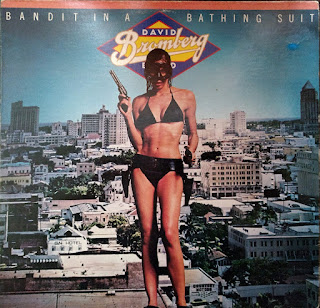
I was only vaguely familiar with the name of David Bromberg when I saw this album in a 2nd hand record stall, but the price was right and the funny title and album cover caught my eye. So I listened to a sample on my mobile and decided to add it to my collection. I often look for albums of this period, especially if they have never been re-released: ignored as irrelevant during the onslaught of punk and new wave, they ended up in cutout bins and the like, but they sometimes yield rare and unexpected pleasures. This one actually did briefly become available in CD form: back in '98, it was part of a compilation that also includedprevious year's Reckless Abandon. From what I gather, Bandit is the less beloved of the two, probably because it is less typical of the artist. Not having any expectations, I enjoyed listening to it but was surprised by the stylistic changes in every turn. Side One (labeled: Mostly Electric) opens with the eponymous rocker. At first, the singer reminded me of Lou Reed in "Rock And Roll" - but then the jovial horns kicked in, and all similarities were gone. This was followed by "If You Don't Want Me Baby", a swampy funk number sung in the style of Dr. John, and then two old-fashioned folk ballads "Queen Ellen" and "Sweet Sweet Sadness". Side 1 closes with a funk blues instrumental called "Peanut Man", sporting great sax and electric guitar. Then Side 2 (a.k.a: Mostly Acoustic) opens with something completely different: a bluegrass medley ("Love Please Come Home / Blackberry Blossom / Dixie Hoedown / June Apple"). I'm not a big fan of that style, but I quite enjoyed the spirited playing, especially the nimble banjo and fiddle solos. "Ugly Hour" is another understated ballad, followed by two live recordings: the upbeat "Travelling Man" in which Bromberg recounts a humorous story with country/cajun backing, and a Dr. John-meets-The Band country funk tune called "Northeast Texas Woman". To be honest, the two sides are not too dissimilar: one has a bit more electric guitar, while the other is a bit more country influenced. In the end, mixing acoustic and electric instruments, studio and live recordings, jazz, country, rock and blues, doesn't work in favor of the album: the sum turns out to be less than its parts. Each track is enjoyable, and the musicians' playing is first class, but unfortunately all the elements don't gel together into something coherent. A worthy purchase, nevertheless.
**** for Bandit In A Bathing Suit, If You Don't Want Me Baby, Love Please Come Home medley
*** for Queen Ellen, Sweet Sweet Sadness, Peanut Man, Ugly Hour, Travelling Man, Northeast Texas Woman
Each time I see an album given glowing reviews by the press, I can't help but wonder whether it will prove to be a future classic or get forgotten after a decade or two. Lambchop's Nixon got great reviews when it was released, and was even awarded the Album Of The Year 2000 title by Uncut Magazine, prompting me to buy it at the time. I've since sometimes used it as background music, but given it little attention otherwise. So when my random album selection method picked it for review in this blog, I was curious to see whether, 20 years after its release, I'd recognize it as a classic album. Seeing that Lambchop come from Nashville Tennessee, one expects to hear some country influences in their music. It's in there somewhere, but don't expect the familiar country twang: the band's sound initially was understated indie folk, augmented with judicious string and brass arrangements that made them sound like a cross between The Cowboy Junkies and Tindersticks. Singer/songwriter Kurt Wagner remains the focal point for Lambchop, which by this time had grown into a 13-member band, not counting session musicians. Despite that fact, the music is always breezy, never busy. Wagner himself employs two different singing styles: One is a sing-talking voice that reminds me of Leonard Cohen, packing similar warmth but without Cohen's gravitas. The other is a surprising falsetto that he seems to have copied from Prince, and probably uses here a bit too liberally - most notably in tracks "You Masculine You" and "What Else Could It Be?" - both fine songs, despite the unconvincing, pseudo-black, falsetto. "Grumpus" is another mid-tempo funky piece. The arrangements here are reminiscent of the smooth soul of Barry White and Isaac Hayes (I'm talking Hayes, as in his version of "Walk On By", not "Shaft"), but apparently since he can't emulate their rich baritone, he tries for Prince's high register. The result isn't sensual as in the case of the aforementioned black artists, but it is quite warm and pleasant, at least to my ears. The tempo is generally pretty slow, with two exceptions: lead single "Up with People" is rather upbeat, with the handclaps and choir giving it a gospel colour. Closer "The Butcher Boy" is also fast, with relatively louder drums and a more abrasive, experimental guitar sound. Penultimate track "The Petrified Florist" may differ in its lethargic pace and sparse arrangements, but also makes for a relatively "difficult" listening. Their placement at the end of the disc is probably meant to undermine the comfortable feeling created by the previous smooth easy listening sounds, and to remind you you're still listening to an "underground" artist - in case you weren't listening to the lyrics, which is a twisted, David Lynch-like, take on American suburban life. In interviews, Wagner trolled reporters about Nixon being a concept album about the same-named former U.S. president, but apparently the title was inspired by the album cover, not the other way round. So, is Nixon a classic album after all? I'd say yes - not just because of its quality, but also of the sense that something new is happeing here, that this mix of country, chamber pop, alt-rock, and soul is a bold and successful experiment. Its follow-up Is A Woman is another great step in the same direction - with the funk overtones slightly turned down. Only downside: the lack of any great standalone songs, with the exception of "Up With People". But as a whole... the atmosphere, the arrangements, the musicians' playing, everything about it is top notch!
***** for Grumpus, Up with People
**** for The Old Gold Shoe, Nashville Parent, What Else Could It Be?, The Book I Haven't Read,
*** for You Masculine You, The Distance from Her to There, The Petrified Florist, The Butcher Boy