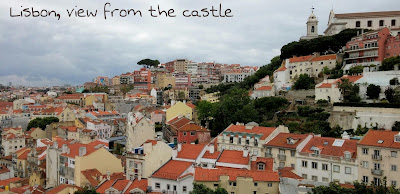
Showing posts with label Portugal. Show all posts

Friday, 14 October 2016

Banda Do Casaco "Hoje há Conquilhas, Amanhã não Sabemos" 1977*****

Banda Do Casaco is a highly-rated but little known Portuguese prog-folk band. Some of their other albums are closer to pure folk, while this is considered their most experimental and is the highest rated at progarchives.com. It's not quite what expected from a supposedly prog album: it is an eclectic mix of jazz, folk and chamber music - everything but rock: it most definitively does not rock and that's fine with me. There are upbeat folk songs ("Despique", "Dez-Onze-Doze", parts of "Acalanto") but these were also surprising to me as they are closer to Celtic music or Italian tarantellas than to fados, the only traditional Portuguese music I was familiar with. Goes to show how little I know. "Acalanto" opens the album with delicate acoustic guitar and flute, then some chanting followed by the upbeat folk part I mentioned earlier featuring some kind of traditional percussion, festive male/female chorus and swinging violin. "Despique" is robust folk dominated by masculine lead vocal and violin, while "País:Portugal" starts as a pastoral piece with a sweet female voice reminiscent of nostalgic bossa nova before breaking into Steeleye Span-like folk rock, with wild saxophone and playful violin. The lyrical focus seems to be a juxtaposition of a mythical Portugal of "goblins, witches on brooms, rivers and forests" with the modern "country of uniformed force/country forced into uniform/country doomed to the gallows" - or it could be something completely different, what do I know? I'm using google translate here. "Alvorada Tio Lérias!" is a beautiful instrumental mixing classical and ethnic elements in a way that reminds me of Dead Can Dance. "Geringonça" is melodic psychedelia with strings, flutes, mellotron and gorgeous female vocals by Gabriela Schaaf. "Ont' À Noite" is another atmospheric ballad. This time the female vocal parts are handled by the angelic Mena Amaro who sounds like a precursor to Madredeus' Teresa Salgueiro.  The record closes with instrumental "Água De Rosas", an airy piece dominated by gentle strings, oboe and flute. A beautiful and eclectic album, lovingly composed and expertly realised. Makes you wonder how many musical treasures remain hidden just because they come from outside the English-speaking world.
***** for País:Portugal, Gerinçonça, Dez-Onze-Doze, Ont' À Noite
**** for Acalanto, Despique, Alvorada Tio Lérias
*** for Água De Rosas

Tuesday, 2 August 2016

Rodrigo Leão "Cinema" 2004****

If I knew that Rodrigo Leão was a founding member of Madredeus I'd be better prepared for what I listened when I slipped this in the CD player of a used records shop in Lisbon. The name of Portishead's Beth Gibbons on the cover sticker had me thinking this'd be some kind of Portuguese trip-hop, but opener "Cinema" welcomed me with soft keyboards and lyrical strings that did indeed seem to belong to an arthouse movie rather than a pop CD. Follower "Rosa" continues in the same mood, with dreamy vocals by Brazilian singer Rosa Passos giving it a bossanova flavour. "Lonely Carousel" is a smoky, sensual tango with Gibbons on vocals, "Jeux D'amour" is a soft ballad and "La Fête" a sweet waltz, both sung in French by the Belgo-Portuguese Helena Noguerra. The album justifies its title by containing many instrumentals that sound as if they've escaped from the soundtrack of Amelie or some other equally stylish European film. Of those, "A Comédia de Deus" and "A Estrada" are lively quasi-tangos with strings and accordeon, "Memórias" and "Uma História Simples"' strings will make you feel warm and fuzzy, while "A Cidade Queimada", "O Último Adeu" and "António" (featuring Ryuichi Sakamoto on piano) are stark and melancholic piano pieces. The Gift's Sónia Tavares takes the lead vocal for the Portishead-like "Deep Blue", jazzy torch song "Happiness" and Americana-waltz "L'Inspecteur" (think Calexico in French). This is an album I can listen to countless times back-to-back. It's not pop, classical, jazz or folk, just beautiful introspective music - perfect for relaxation and daydreaming. I feel stingy for only giving it 4* but I'm convinced it's an objectively fair rating.
***** for Lonely Carousel, Jeux D'amour
**** for Cinema, Rosa, A Comédia de Deus, Memórias, Deep Blue, Happiness, La Fête, A Estrada, L'Inspecteur, António
*** for A Cidade Queimada, Uma História Simples, O Último Adeus

Sunday, 22 May 2016

Ornatos Violeta "O Monstro Precisa de Amigos" 1999***


I came across Ornatos Violeta at a Lisbon FNAC shop. Both their albums were on special offer and I was in the mood to acquaint myself with the Portuguese rock scene of which I knew absolutely nothing. No, that's not quite true: I had seen a metal band called Moonspell a couple years back at Rotterdam's free Baroeg Open Air festival and I wasn't impressed - but then again, it's not my favourite style of music. Anyway, I listened to samples of Ornatos' albums at FNAC and finally decided on this, their second album. Their debut had an amateurish funk/punk charm a la early Red Hot Chili Peppers, but this one exhibited more variation, better production and more "mature" compositions. Its mix of grungy guitars and experimental pop reminded me of dEUS, but there are also elements of RHCP, Smashing Pumpkins and the Violent Femmes whose singer Gordon Gano guests here in the folky "Capitão Romance". It's an uncharacteristically acoustic song, mixing country, Iberian and Balkan folk (at least it reminded me of certain Goran Bregovic ballads). Opener "Tanque" is a different beast altogether, opening as it does with some Kraftwerk-like electronics to get heavier and funkier with anguished Kurt Cobain-like vocals. "Chaga" is a grungy guitar rocker embellished with dramatic strings. If it wasn't for the language it could totally be a hit with American college radio of the time. "Dia Mau" is another radio-friendly song, albeit with a more playful folk-punk tone. "Para Nunca Mais Mentir" is a ballad that reminds me of RHCP circa Californication. Lead single "Ouvi Dizer" starts off as a piano ballad, later making good use of the quiet-loud-quite dynamics that characterised so many indie hits of the 90's. "Pára De Olhar Para Mim" is almost proggy in its various turns and twists, while "O.M.E.M."' revives the first album's funk/punk stylings.  "Coisas" sounds like a Coldplay/Radiohead pastiche and "Novem", "Deixa Morrer" and "Notícias do Fundo" are melodic indie-pop, gaining from the lyrical string arrangements. "Fim da Canção" is excellent indie pop with traces of REM, Posies and even bossanova (or am I imagining it because of the language?). In any case, this CD makes for a great introduction to the Portuguese alternative rock scene. It's every bit the equal of popular indie US and UK albums of the period but it misses that something that would distinguish it from the rest - other, of course, than the Portuguese lyrics of which I don't understand a single word. Funny how that incomprehension doesn't impede on our enjoyment of the fados or bossanova, but bothers us in pop and rock. Well, don't let that put you off. As the album title says "O Monstro Precisa de Amigos (The Monster Needs Friends)", so give it a try!
**** for Chaga, Dia Mau, Ouvi Dizer, Capitão Romance, Fim da Canção
*** forTanque, Para Nunca Mais Mentir, Pára de Olhar Para Mim, O.M.E.M, Coisas, Nuvem, Deixa Morrer, Notícias do Fundo

Tuesday, 17 May 2016

Lisbon Record Shops

I spent a few days in Lisbon lately and, like always, visited as many record shops as I could. Walking around in Lisbon is somewhat different than what I got used to in the Low Countries, too many hills to make this a pleasant experience (especially when it's hot and damp) despite the evident beauty of the city and the exotic tiled house facades. Yet I'd rather walk under any circumstances than use the tourist buses and trams - for me the only way to experience a city is on foot. At nights the city center is teeming with people enjoying themselves, restaurants and bars full with locals and tourists alike. Glad to see that 5 years of troika austerity haven't ruined the people's appetite for partying. The neighborhood I stayed in (Bairro Alto) is a very touristic one, and filled with bars and live fado joints, Fado being of course Portugal's biggest musical export - a 100-year old emotional and mournful musical idiom that used to be the music of the underworld, the sailors and prostitutes around Lisbon's harbor. Like Argentinian tango, it slowly crossed over and became internationally reknowned to the point of being synonymous to Portuguese music. Which, while I honestly love this kind of music, is just wrong. My visit here made me realise that Portuguese must sometimes look at fado as we Greeks look at syrtaki and Zorba - though, of course, fados do have deep roots in Portuguese tradition while syrtaki is pseudo-folklore for the tourists. In any case all stereotypes tell lies, so one should approach fados as one of many components making up a nation's cultural identity rather than the key to its soul. But the international success of the fados and Lisbon's touristic development constantly pose us the question of whether we are witnessing the real thing or a recreation playing to the tourists' stereotypes of what the original would look and sound like. When I'm in Greece I can instantly tell the real thing from imitations, but here it's much more difficult. For starters, I'd advise visitors to avoid the joints around Bairro Alto. Maybe 20 years ago they were still authentic but today they cater only to the tourists. "Povo" at the city's pink street, a nightlife hot spot, offers good food and fados with no extra charge: you only pay for the -reasonably priced- food and drinks. Also, being in the city's old red light district, you feel you haven't strayed too far from the genre's seedy beginnings: there's still a strip-joint opposite, and the bar next door is painted with erotic graffiti and has a small sex shop inside. Trendy it all may be, but still nowhere as gentrified as, say, London's Soho. If you do end up in Povo, try the octopus salad, steak sandwich, bacalhau a braz, or pica-pau: all traditional and yummy. And the pasteis de bacalhau (codfish muffins) of course: The absolute must-try Portuguese snack.
Back to our subject and the city's record shops, the single most important advise is check the opening hours. Unlike everywhere else in the world, they don't keep normal shop hours. Some open at 11:00, others at 12:30, 14:00 or 17:00. Some open and close at different times every day of the week and may work for 4, 5 or 6 days per week - I'll try and give some info on opening times, but that won't do much good as they change from one day to the next. Time limitations and irregular opening times meant I didn't get through my list. For example Vinil Experience (Rua do Loreto 61, 1st Floor) was only 400m from the apartment I stayed, but I couldn't catch it open. Too bad, since it's supposedly a good place for garage/psych/prog (mostly used vinyl and CD) and these are my favorite genres.
Thank God, then, for Groovie Records (Rua de São Paulo 252) a stylish record store with a big selection of garage and psych vinyl, some used but mostly quality reissues. UPDATE: New address is Rua Angelina Vidal, 80A. Pretérito Perfeito (Rua Sampaio Bruno 39) is another shop with folk, psych and prog but it's off the beaten path and open only on Wed-to-Fri, 15:30-19:00. Now, when I was in Lisbon I saw posters advertising the Communist Party's campaign for a 35-hour working week (as if!) but these cats have gone way beyond and instigated the 11-hour week. Good for you, guys! (UPDATE: This shop is now permanently closed). Near the Bairro Alto, on Rua da Misericórdia no.14 you can find Espaço Chiado, a luxe shopping/cultural center in a state of disarray. Most shops inside were vacated or closed (could it be a sign of the financial crisis? If yes, it was the only one I saw. It seems the Portuguese made it through relatively unscathed, compared to Greeks at least). Here are 3 record stores: Carpet and Snares on the mezzanine is specialized in dance music, while on the same floor you can find the (vinyl shop) Sound Club. Most (used) LP's cost €15-20 but there are also some offers for €2,5-10. CD's are on their other shop on the 1st Floor. UPDATE: Another record store in Espaço Chiado is Peek-A-Boo, also with funky/dance stuff. Not far from there, on the nice but uphill pedestrian street Calçada do Duque, you can find Discolecção at no. 53.
A great source for used vinyl of all kinds, mostly priced between €10-20. Too often I'm exasperated when I'm in a vinyl place going through LP after LP of Tom Jones, Demis Roussos or Madonna. You can recycle vinyl, you know. Just give it an honorable death and make way for the good stuff! Like what they have here. When I visited, July was playing on the turntable. Respect! A bit further down on no.17 you'll find Magic Bus, probably the smallest record shop I've ever seen yet definitely worth a visit. CD's cost  €5-10 (used) or €7-15 (new) and LP's usually €10-20 (rare ones €30-50). If the ever-changing opening hours of Lisbon record stores drive you crazy, there's always fnac on Baixa/Chiado (Rua Do Carmo 2) open from 10 a.m. to 10 p.m. It's got the usual books, DVDs and technology stuff, but also a good selection of (new) CD's and some LP's. As always with these chain stores you can have variety, listening stations and special offers. I came away with some Fado and Portuguese prog and indie CD's for €5-€7,90. On a pedestrian street round the corner (Escadinhas do Sto. Espírito da Pedreira 3) there's Louie Louie a big LP/CD shop with a variety in pop, fados and Brazilian music. Lots of CD's for €5-10, LP's typically €10-15 (special offers €2,5 and new vinyls €20+). Both this and fnac have a bigger selection of fados than Discoteca Amália, a shrine to Amália Rodrigues which is mentioned in many tourist guides but whose inventory of fado, classical and pop seems not to have been renewed since the diva's death in the 90's. CD's cost an average €15, while the store also sells cassette tapes - either they're super hip or, more likely, a few decades behind.

Descending Rua Das Flores on my way to Povo, I stumbled into Clockwork. Apparently primarily a tattoo studio, it also offers "Urban Culture" items, including punk clothing and CD's. Spotted lots of tattoo'd and pierced alternative guys and gals in the region, too. The last of the shops I visited was Carbono (R.Telhal 6B, close to the Avenida metro station and Av. da Liberdade). It's the biggest and best of the ones I've seen in Lisbon, with a huge selection of used records and CD's of all kinds in unbeatable prices. I left with 15 or so CD's, some of which were rare and out-of-print and others just plainly too cheap to pass on. Lots and lots of CD's for €2,5, a big metal section €5, and the rest €5-10. I didn't have space for vinyl in my suitcase so I didn't take a good look at the LP's but the average prices were €10 (used) and €20 (new). Also some offers between €1-5. I especially liked their wall of matching record covers (originals and tributes), so I'm posting a photo of that, here. Also on the upside, for once, it's a shop with regular hours (11:00-19:00). Not far from there (Rua Cecílio de Sousa 76) you can find Twice records. It looks like a regular house with a green door and was closed when I visited (supposedly open 17:00-20:30, a 20-hour working week for them). A record shop I was looking for but must have passed right by was Flur near Santa Apollonia (Avenida Infante D. Henrique, Armazém B4 Cais da Pedra) by the dockside. Supposedly the right place for indie/alternative music. Then, there's Crew Hassan (Rua Andrade 8A, indie and reggae), punk-metal joint Glam-O-Rama on Rua Viriato 12, and TNT (Tό n' Ticha) on Rua de Campolide 54 C (Hard Rock). Didn't have time to check these out but, according to internet sources, they're worth a visit. 
I didn't get as far as Benfica (kind of far from the city center), but apparently it houses one of the biggest 2nd hand CD and vinyl stores in the city (Mau Génio, Estrada de Benfica 731A/Shopping Center Nevada) - not to mention the stadium of the same-named football team who won the championship last Sunday, prompting a night of celebration all around the city. Hope this little walk around Lisbon's record shops will be useful to the city's visitors. Just remember that info and prices are current as of May 2016 and don't forget to check opening hours on either googlemaps or lisbonrecordshops, an indispensable guide not just to the city's record shops but foremost to live music happenings. Of which there doesn't seem to be a shortage: at least 5 concerts every day, including (in a space of two weeks) AC/DC, Peter Murphy, Queen, Bruce Springsteen and Adele. Not bad!

Thursday, 10 March 2016

Misia "Paixões Diagonais" 1999*****

Misia is one of the greatest modern performers of fado, a Portuguese musical tradition of at least 200 years. It's sorrowful and passionate music, originally the musical expression of the society's urban outcasts. People have often compared it to American blues, Spanish flamenco and Greek rembetiko. Although each one is very distinctive of the country and society that gave birth to them, there are similarities in the way they express emotion, especially sadness and longing. In 1990 there had only been one recognisable fado star: Amália Rodrigues, who was already a septuagenarian. Her retirement from recording and performing seemed to foreshadow the genre's decline, but instead it signified its rebirth: Misia (and, later, others like Mariza and Cristina Branco) managed to renew and modernize it, making it even more popular internationally than in Rodriguez's heydey. The traditional setup of classical guitar and lute-like 12-string portuguese guitar is augmented here with piano, violin and accordion, adding an extra layer of sensuality and accentuating the subtle tango influences in Misia's music. Two of the album's stand-out tracks, "Paixões diagonais" and "Triste sina" have found unexpected audience in the U.S. through their use in the romantic Hollywood comedy Passionada, starring CSI:Miami star Sofia Milos. "Paixões diagonais" appears here in two versions, the sensual,tango-inflected opener and melancholic piano-led closer. The lush orchestration of the following tracks "Ainda que" and "Triste sina" manages to highlight rather than drown Misia's emotional and dramatic singing. "O corvo" is a rather rhythmic track that reminds me of Cabo Verdean music, while "Fado triste" is, as you may have guessed, a sad song introduced by mourning violin. At no point of the record does the quality level drop, but some further highlights include the sad portuguese guitar in "Minha alma de amor sedenta" and her excursions away from traditional fado territory (cabaret and chamber music on "Liberdades poéticas", Broadway balladry on "Nascimento de Vénus"). No doubt about it, "Paixões diagonais" is an exceptional record in its marriage of the traditional and modern, local and universal - probably my favorite of the fado albums we have at home (my girlfriend really loves this music). I'll present some of them in the future and hope to also make some interesting new discoveries during my planned trip to Lisbon in May. I know from experience that, beside the dozen or so artists that break through to the world music circuit and achieve international careers, there's always a vibrant scene with important artists that never achieve fame beyond their country's borders and I'm eager to tap into that source. Until then, I still have a lot of great Portuguese CD's to present in this blog: Madredeus, Cristina Branco, Mariza, Dulce Pontes, Amália and, of course, more Misia. Who knows if we'll ever get to them all? So much music, so little time...
***** for Paixões diagonais (1st version), Ainda que, Triste sina, Liberdades poéticas
**** for O corvo, Fado triste, Se soubesse o que sentias, Minha alma de amor sedenta sequiosa, Nascimento de Vénus  
*** for A palavra dos lugares, Par rêve, Paixões diagonais (2nd version)