Friday, 22 February 2019

The Lemonheads "Lovey" 1990***

Like most people I discovered The Lemonheads with 1992's It's A Shame About Ray, one of the quintessential 90's indie rock albums featuring, among other songs, a power pop version of Simon & Garfunkel's "Mrs Robinson". Little did I know they had already 4 albums behind them tracking a course from post-hardcore punk to melodic jangle pop, and shedding band members on the way until Evan Dando was the only original member left. The transformation would be complete by the time of "...Ray", but here the band still featuring original bassist Jesse Peretz (currently a film/TV director) and guitar hero Corey "Loog" Brennan (currently a professor of classical studies) is in transition. Dando's love of melody takes the upper hand on lead single "Half the Time" (the blueprint for his future MTV hits: Byrds-like melody, emotional "wounded" vocals and distorted guitars), as well as power ballad "Ride With Me" and a cover of Gram Parson's country ballad "Brass Buttons". Opener "Ballarat" is a more muscular affair, loud and grungey but never devoid of melody. As with other of the heavier tracks, I'm reminded of Dinosaur Jr. "Stove" is catchy punk-pop and "Come Downstairs" a combination of the aforementioned styles. "Year Of The Cat" starts with an acoustic intro before straying in punk-pop/grunge territory. "Li'l Seed" is more atypical, a pro-weed anthem with shredding guitar, co-written with "professor" Brennan and reminiscent of The Wipers. Brennan's other contribution is "(The) Door", starting as another power ballad but escalating in the kind of metallic solos I would never have associated with The Lemonheads. Last but not least, "Left for Dead" is a pleasant punky tune based on a song by the infamous mass murderer Charles Manson and previously recorded by The Lemonheads under the title "Clang Bang Clang". Admittedly this album sounds somewhat awkward in its attempt to combine the new sensitive and melodic indie direction with the band's heavier past (it's telling that Atlantic totally ignored it when they compiled "The Best Of Lemonheads"). They'd settle into a better fitting and more commercial sound in the future, but it's the mix of all those disparate elements that make "Lovey" worth listening to now. Without them it'd just be an inferior Shame About Ray clone, and would want to listen to that? 
**** for Half the Time, Stove, Brass Buttons, (The) Door
*** for Ballarat, Year of the Cat, Ride With Me, Li'l Seed, Left for Dead
** for Come Downstairs

Saturday, 16 February 2019

Prins Obi "Prins Obi And The Dream Warriors" 2018***

As I've probably written before, I left Athens behind a decade ago to settle in The Netherlands. I used to follow the local scene very closely from the late 80's until the early 00's. Back then we learned about gigs from posters around Exarchia or flyers at our favourite bars. Bands gigged for years before they got a 7' single out, and later an LP or CD. No way would you browse the Greek Rock section at a record store and think "just who are these guys?" because you would have already seen them play live - if not supporting a foreign act at Rodon, then at the AN Club, or the indie free festival at Pedio Tou Areos or one of the anarchist's squats like Villa Amalias. At some point during the early 00's this seems to have changed: people began hearing about bands from facebook and watching them on youtube, while the next decade had even bigger changes in store: financial and political crisis, austerity and deep recession rocked the foundations of Greek society. Which, amazingly, didn't seem to hurt the local scene: maybe the monstrous (above 50% at the crisis' height) youth unemployement turned young people away from futile career hunts towards self-expression. The closing of big record shop chains and relative withdrawal of major labels left the field open to indie record shops and labels run by people motivated more by a passion for music rather than for profit. One of them is Inner Ear Records, which has released a great many albums by local indie bands in the last years. Based on the ones I've heard, it seems that the new scene is more open and genre-defying, experimental and introverted. Many many hours playing with recording software, I suspect, not so many playing in front of an audience. Look at this guy Prins Obi: apparently he's got 3 solo albums out plus 5 more as a member of Baby Guru, but in all my visits to Greece I never caught a whiff of them playing anywhere. Or maybe he did, and I just wasn't paying attention?
His new band Dream Warriors gathers musicians from different groups including Chickn who I presented some months ago in this blog. Their music falls broadly under the neo-psychedelic category, though it's by no means the usual Nuggets-style 60's revival stuff (nothing wrong with that, of course!). Side 1 is closer to, say, Ty Segall in its eclectic incorporation of elements from psychedelia, punk and glam. "Concentration" for example reminds me of Iggy Pop circa '77, "Fingers" of Marc Bolan, while "Flower Child (Reprise)" and "Astral Lady Blues" are heavier (think Monster Magnet albeit without the superhuman testosterone levels). "Negative People" similarly starts as heavy drone music, but surprises you with a Greek chorus (by which I mean a song chorus sung in Greek, not a tragedy troupe) right out of the country's cult 70's hippie past (i.e. Nostradamos, Poll etc). They continue to explore this hitherto uncool direction on side 2 with two more Greek songs ("Δίνη" [Vortex] and "Αδαμάντινα Φτερά" [Diamond Wings]). This side is generally lighter and more whimsical, reminiscent of 60's UK pop psych - e.g. in "Sally Jupinero" I hear traces of Nirvana - not Kurt Cobain's band of course, but the one with Patrick Campbell-Lyons and Alex Spyropoulos. "Guilty Pleasure Theme" made me happy by echoing Greece's topmost (90's) psych heroes Purple Overdose with its organ and swirling Eastern melodies, while the closing "Wide Open" is a simple -for once- piano melody. A very pleasant record despite the jumble of influences, it compares favorably to any neo-psychedelic album produced in this decade. It may be a tad too smart for it's own good though, so I'll give it 3* for now and reserve another* until I see how it all translates in a live setting. You can listen to the whole album or buy it here.
**** for Flower Child (Reprise), Δίνη, Guilty Pleasure Theme
*** for Concentration, Negative People / Άμοιρε Άνθρωπε, Astral Lady Blues, Fingers, Αδαμάντινα Φτερά, Sally Jupinero, For Absent Friend, Wide Open

Friday, 8 February 2019

Cocky "Twelve Inches Of Cocky" 1976***

I found this record at my neighbourhood thriftshop (or, as we say here in Holland, "kringloopwinkel"). Nowadays you can scarcely find any good LP records in them, people don't give them away because they think vinyl is the new black gold. But someone did unload his collection of 60's/70's novelty records, including a few Bonzo Dog Band albums as well as this one by an unknown to me band called Cocky. The title 12 Inches Of Cocky "sounds a bit rude" as they say. Many of the songs are of a similar slightly naughty nature, which took me back to my first experience with British humor The Benny Hill Show, which aired on the state TV channel (we had no other kind) when I was a kid. Side 2 opens with a faithful cover of Bonzo Dog's "Jollity Farm", and if you're familiar with the original you will know what to expect from this album: a similar mix of country, trad jazz and music hall with a dash of Monty Python-esque humour. Country instrumental "Dallas Rag" is followed by Phil Ochs' anti-war satire "Draft Dodger Rag" which is played for maximum laughs, while another familiar tune is their jaunty version of jazz standard "Sheik Of Araby" (in which for some reason the chorus gleefully repeats "with no pants on"). Country folk and music hall tunes make up most of the rest, as well as some blues (Leadbelly's "Keep Your Hands Off Her", "Maggie Campbell", "You Can't Leave Me Now") though always played fast an' feisty. Side One closes with "Medley À La Cocky" comprised by "Five Foot Two Eyes Of Blue/ Ain't She Sweet/ When You're Smiling". The internet, for once, doesn't reveal much information on the band so we'll have to make do with what little info is available on the album's back cover. The members are: Kevan (dobro, guitar, harp, bass, shiny banjo, well-scrubbed pine tables), Keith (guitar, base, madolin, jews harp), Clive (guitar, ukelele, bass, jug) and Mal (washboard, wooden bits and brass round things on sticks). It was "Recorded at Riverside Studios with the help of David Le-Neve Foster. Produced by Dave 'Hot Licks' Peabody." It has never been re-released on either CD or vinyl.
*** for Cocaine Habit, I'm Satisfied With My Gal, You Can't Leave Me Now, Medley À La Cocky, Supper At The Ritz, Draft Dodger Rag, Maggie Campbell, Sheik Of Araby
** for Keep Your Hands Off Her, Astor, Side By Side, Jollity Farm, Dallas Rag, Somebody Stole My Wife

Friday, 1 February 2019

Harry Muskee Band "Love Vendetta" 1977****

Rather unknown internationally, Harry Muskee was a living legend in The Netherlands. He came from the north of the country, where he was especially loved - in his native province of Drenthe, as well as in neighbouring Groningen, which is where I lived in 2011 when his death was reported in the local media. Only then did I realize how popular a figure he was: more than the leader of 60's stalwarts Cuby & The Blizzards, he was the embodiment of the Blues to his fellow countrymen. In their minds, at least, Muskee was as much an authentic bluesman as Muddy Waters. Skin colour or nationality had nothing to do with it - and, indeed, why should they? He did serve the blues faithfully for decades. Like his British counterpart Alexis Korner, he started from trad jazz but decided to turn to the blues after listening to John Lee Hooker for the first time. In 1964, he founded beat/blues band Cuby And The Blizzards, whose music was more or less similar to contemporary British Blues Boom bands like John Mayall's Bluesbreakers, Yardbirds, Animals, Savoy Brown etc. They proved to be quite successful, while an early incarnation of the band featured future Dutch rock star Herman Brood on keyboards. They broke up in 1972, with Muskee forming other units before reverting to the more successful Blizzards name. "Love Vendetta" was the only LP he made under the Harry Muskee Band moniker. Something of a lost classic, it appears to have never been re-released. More pop/rock-oriented than his previous records, it opens with the upbeat "Devil Daisy" with soul horns and female backing vocals, somewhat reminiscent of mid-70's Rolling Stones. It was the album's first single, followed by "Mr. Cool" sporting a Country-meets-Southern Soul vibe. Another popular album track was "Victor". For some reason, and despite the bluesy instrumentation, this reminds me of Cockney Rebel. "Claws" and "Bad News" are typical, Eric Clapton-style, blues rockers, and "Piece of Mind" a nice instrumental. "Solid Sender" and "Love Vendetta" are atmospheric slow blues with emotive guitar (played by Bernard Reinke). Probably my favourite songs on the record, thanks to their smoky late night vibe. An album that's definitely worth saving from obscurity, highly recommended for fans of Clapton, Joe Cocker, J.J.Cale, Chris Rea, Eric Burdon etc.
**** for Devil Daisy, Victor, Solid Sender, Love Vendetta, Bad News
*** for Claws, Mr.Cool, Piece of Mind 

Tuesday, 22 January 2019

Record Shops Of Santiago de Compostela

Santiago Mist
Pulpo a la Gallega
Galician Bagpipes
I  recently had the chance to visit Santiago De Compostella in Galicia, at Northwestern Spain, with friends - a mixed company of Greek and Spanish expats from the Netherlands. Santiago is a beautiful Medieval city, made all the more atmospheric by the kind of misty weather we don't usually relate to Spain. Probably because of all the famous Spanish sea resorts, which are at the Mediterranean coast, while Galicia lies by the Atlantic Ocean. We were lucky enough to have a local among us, so we knew in which bars to drink, where to eat tapas, and where to find the delicious seafood which is the region's specialty. Do indulge when you're over there, certainly don't leave before you try the famous Galician octopus. The region has its own cuisine, traditions, dialect and culture, rich in Celtic influences. This is most evident in the local music scene, which is distinctly Celtic and often features bagpipes. You'll be sure to find some bagpipe players under the arc of the city's impressive Cathedral, which (ostensibly) hosts the holy relics of St. James, the city's biggest draw since the Middle Ages. You see, this has been for centuries the destination of the famous Camino De Santiago, a medieval pilgrim's trail which is nowadays at least as popular with hiking enthousiasts as it is with devout Catholics. You'll find a multitude of Camino-related items at the souvenir shops there, but if you're a vinyl junkie you'll want another kind of souvenir: the kind that is round and black with a hole in the middle, give or take 30cm (that's 12 inches for you Americans) in diameter. Thankfully, I know exactly where you can find it.

The city has 2 record shops, plus a third place which sells vinyl in addition to vintage clothing, books and comics. I'll start with that one, it's called A Reixa Tenda (Rúa do Hórreo 46). It carries very few records, all sealed or new (€12-25), mostly 60's mod and some Spanish indie pop, unknown to me but likely also mod-influenced judging from the album covers. I haven't asked, but it's probably related to the A Reixa Bar in downtown, a cool underground place with good rock music and posters of garage bands. A bit down the road on Rúa do Hórreo 80, you can find Discos Fans, which is apparently one of the oldest record shops in Galicia (since the 70's). It's rather small and has a random selection of CD's (2nd hand €3-7, new around €12) and LP's. Vinyl is rather overpriced, expect to pay about €15 for a good classic rock album in acceptable condition, almost twice of what you'd pay online. The last one, Disco Precio, is also in the same neighborhood (Rúa de Santiago de Chile 13). This one is a proper record store, where you can find a good sized selection of new and second-hand records and CD's. Albums are catalogued by artist and genre or by decade. Prices are usually €10-15 (used) and €15-25 (new), with many offers €5-6. There was a surprising variety of garage rock, as well as a lot of classic rock, alternative/punk, Spanish rock, and folk. It's also the only place I found Galician (Celtic) folk records, with the exception of some CD's in souvenir shops. There's also a good but random selection of used CD's, around €6.
Lastly, during my visit to the city, I chanced upon a feria del disco (record fair) at the back room of a local club. There were a few sellers with crates of goodies. CD's cost mostly €5-8, some interesting LP's both used and new reissues for €15-25. Anything below that was either in bad condition or just not interesting. I generally didn't find many good buying opportunities in Santiago, but I guess that's normal for a medium-sized town. If I expected better, it's because of the large student population, which supports a vibrant night life and a multitude of bars many of which play great rock music - not much of that going on in The Netherlands.

Tuesday, 15 January 2019

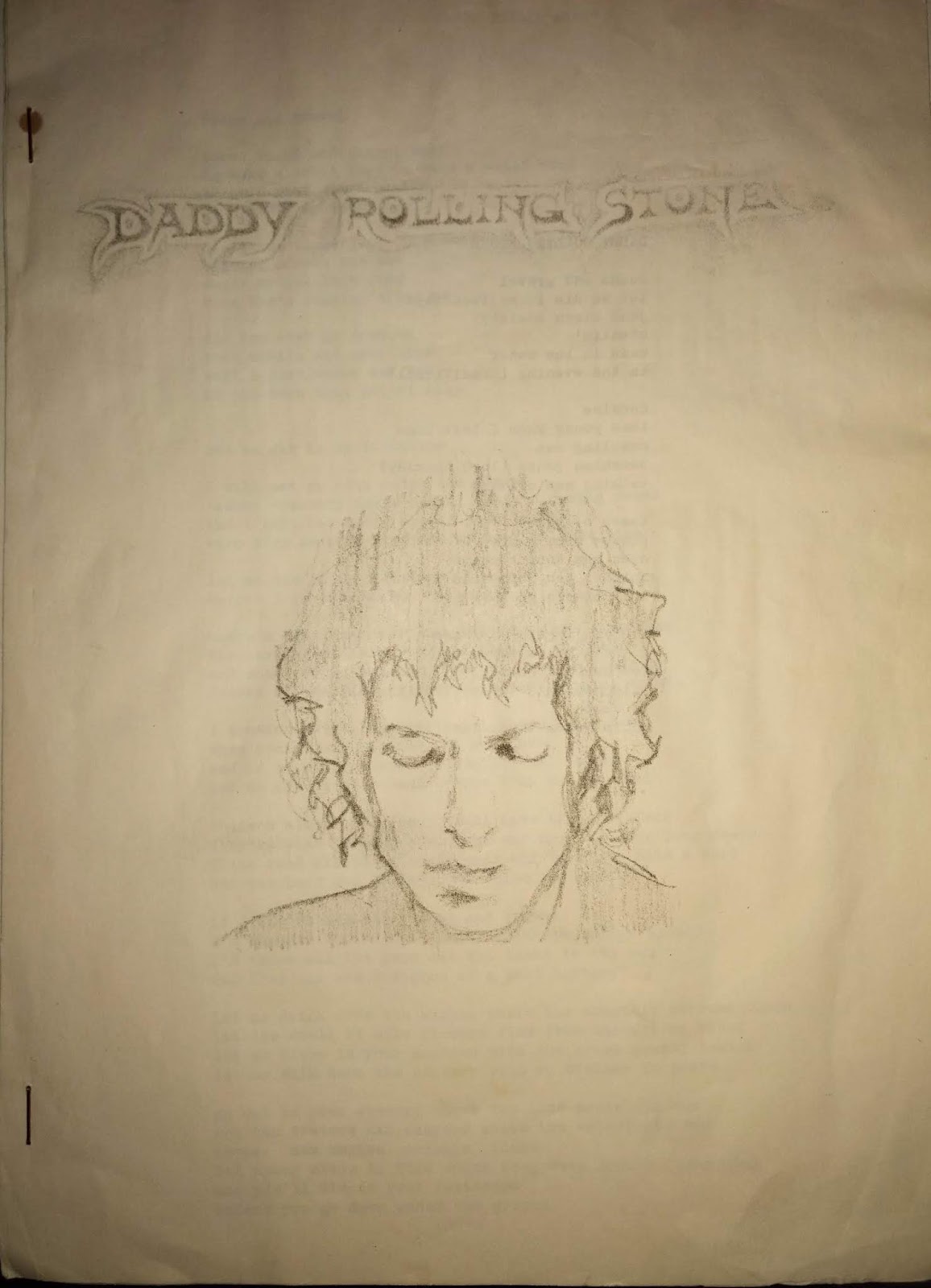
Bob Dylan "Daddy Rolling Stone" rec.1961-1969 (bootleg 1970)****

I got this 1969 or 1970 Bob Dylan bootleg from a record shop in Leiden. It's a great copy with very few hairline marks, and includes the original artwork by Dutch cartoonist and illustrator Peter Pontiac and original lyric booklet. All housed in an unmarked white sleeve, as can be expected for an illegally marketed product (even now, it's banned from sale in discogs). It's a collector's item, even though the contents are not the valuable rarities they once were: Dylan has recently been making his legendary archive of unreleased recordings available at an incredible rate: his official Bootleg Series is reaching now number 14, not mentioning unnumbered releases like Live At The Gaslight 1962 and various other copyright-free demos and live recordings from 1961-1962, all now available in superior quality. No, I bought it thinking about what it represented at the time of its release. Remember, Dylan retired from the public eye after his motorcycle accident in 1966. Up to then, people were looking forward to his next record as if he was a prophet pointing the way. When the psychedelic revolution came, instead of leading, he disappeared into a cabin with The Hawks (later renamed The Band) to make a bunch of recordings he initially left on the shelf, while the two albums he released in 1967 (John Wesley Harding) and 1969 (Nashville Skyline) were acoustic folk and country in stark contrast to what he had been doing before his accident and what his fans expected (and wanted) to hear. Which is when, in July 1969, rock's very first bootleg album appeared. It became known as the Great White Wonder because it was released in an unmarked white sleeve. Later editions came stamped with the title but still no artist name on. About half of it consisted of acoustic demos and solo recordings made in a Minnesota hotel room in December 1961. But what really blew people's minds were the new songs he had recorded with The Band at the Woodstock cabin in '67, and which were arguably superior to his recent LP's. Immediately other artists fell on this songwriting treasure trove: The Byrds, Jullie Driscoll, Joan Baez, Manfred Mann, and -of course- his co-conspirators The Band recorded their own hit versions many years before Dylan's own emerged (as The Basement Tapes, in 1975). GWW was quickly followed by other Dylan bootlegs, including Stealin', John Birch Society Blues and Isle of Wight Live. Drawing from all of these sources and released almost simultaneously, albeit in The Netherlands only, Daddy Rolling Stone must have been Europe's first introduction not only to these songs, but to music bootlegs in general.
LP1 contains Dylan solo acoustic demos and live recordings, while LP2 features The Band. No information is given other than the titles, but by comparing with what has been released elsewhere one can make an educated guess about the origin of these recordings. For example "Rocks & Gravel" (heavily borrowed from bluesman Mance Lipscomb) and "Let Me Die in My Footsteps" are known to have been recorded during the Freewheelin' sessions (1962) but left out of the album at the last moment. The former has officialy resurfaced in the True Detective series soundtrack, and the latter in Dylan's Bootleg Series Volumes 1 - 3, as has the talking blues "John Birch Society Blues", recorded live at Carnegie Hall at 1963 - provided of course it's the same version. A lot of the other acoustic tunes on LP1 come from the heavily bootlegged Minneapolis Party Tape, recorded in 1961 at the apartment of his activist/actress friend, Bonnie Beecher. These include the traditional "Wade in the Water" and "Stealin'", Brownie Mc Ghee's "In The Evening", Woody Guthrie's "Ramblin' 'Round", and the wonderful "I Was Young When I Left Home" (later included in The Bootleg Series Vol. 7: No Direction Home: The Soundtrack). Revd. Gary Davies' "Cocaine", Lord Buckley's "Black Cross" and the talking blues "Hezekiah Jones" were probably recorded at The Gaslight café in 1962 (the whole concert was officially released in 2005, initially only available to buy at... Starbucks). Two songs ("Cocaine","New Orleans Rag") are cut short, signifying that they have been lifted off another bootleg, Stealin', where they were also edited. Unlike the stark solo performances on disc 1, the songs on disc 2 are very familiar: recorded with the help of The Band at that Woodstock cabin, they include some of Dylan's best known songs, then appearing for the first time. 
The lyric booklet
The poetry is as excellent as ever, while the music draws from all kinds of American tradition: folk, blues, soul, country and rock. The performances here may not be as fleshed out as the ones appearing in the official release but they still sound full, with The Band all playing with gusto and singing together with Dylan. His great song of hope and redemption "I Shall Be Released", sung from a prisoner's perspective, has a gospel feel. "Open The Door Homer" is warm folk rock, "Tears Of Rage" a soulful ballad, and "Please Mrs. Henry" a drunken bawdy tune. "Nothing Was Delivered" sports some bluesy piano and guitar, while the mystical "This Wheel's on Fire" is dominated by Garth Hudson's churchy organ. All of the songs have a singalong campfire quality to them, which is even more evident in the more country-ish "You Ain't Going Nowhere" and "Too Much of Nothing". The sound quality is generally below par, but otherwise the versions here do not depart too much from the ones officially released later. Three songs probably come from Dylan and The Band's live appearence in the Isle Of Wight festival in '69: the traditional ballads "Wild Mountain Thyme" and "Minstrel Boy", and a band version of Dylan's "To Ramona", originally a solo number from his '64 album Another Side Of Bob Dylan. Such was the quality of these unreleased songs that they were immediately snatched by other artists who had hits with them, but the importance of them appearing out of nowhere in an unmarked sleeve to be sold under the counter in '69 is easy to forget now that they've been available in better form for decades. As a testament to that age, bootlegs like this and Great White Wonder remain valuable and worth spending the extra penny to add in one's collection.
***** for I Shall Be Released
**** for Let Me Die in My Footsteps, I Was Young When I Left Home, Tears of Rage, Please Mrs. Henry, Open the Door Homer, Nothing Was Delivered, This Wheel's on Fire, You Ain't Going Nowhere, Wild Mountain Thyme, Minstrel Boy
*** for Rocks & Gravel, John Birch Society Blues, Stealin', Wade in the Water, In the Evening, Cocaine, Ramblin' 'Round, Black Cross, To Ramona
** for Hezekiah Jones, New Orleans Rag

Thursday, 10 January 2019

R.I.P. 2018

Another year gone by, another hard list of rock'n'roll deaths to compile: Aretha, post-punk pioneers Mark E. Smith and Pete Shelley, the unexpected demise of still-young Dolores O'Riordan, the last surviving member of the original Motörhead, and many beloved rock, jazz and soul musicians. But who knows? Maybe in the future we'll remember 2018 as the year our favourite rock star was born. No matter how heavy the losses, rock and roll will never die - or so Neil Young has promised us...

Thanks for the music,
Aretha Franklin (Queen Of Soul)
Mark E. Smith (Singer, leader of The Fall)
Dolores O'Riordan (Singer, The Cranberries)
Pete Shelley (singer/guitarist, The Buzzcocks)
Ray Thomas (Singer/flautist, Moody Blues)
Tony Joe White (US South Singer "the swamp fox")
Marty Balin (Singer, Jefferson Airplane)
Jimmy Farrar (Singer, Molly Hatchet)
Dennis Edwards (Singer, The Temptations)
Jon Hiseman (jazz rock drummer, Colosseum)
Ed King (guitarist, Lynyrd Skynyrd)
Uli Jon Roth (Scorpions 70's guitarist)
Conway Savage (Keyboardist, Nick Cave's Bad Seeds)
Hugh Masekela (jazz trumpeter)
Mike Harrison (Spooky Tooth)
"Fast" Eddie Clarke (Motörhead guitarist)
Dave Holland (drummer, Trapeze/Judas Priest)
Danny Kirwan (guitarist, Fleetwood Mac)
Cecil Taylor (Jazz pianist)
Yvonne Staples (The Staple Singers)
Charles Neville (The Neville Brothers)
Chas Hodges (Singer, Chas & Dave)
Otis Rush (Blues singer/guitarist)
France Gall (French 60's yé-yé singer)
Denise LaSalle (Soul singer)
Jim Rodford (Argent, The Kinks)
Vince Martin (folk singer)
Buzz Clifford (60's pop singer)
Pat Torpey (drummer, Mr. Big)
Lazy Lester (Blues singer/harmonica player)
Josh Fauver (bassist, Deerhunter)
Glenn Schwartz (guitarist, James Gang)
Hugh McDowell (cellist, Electric Light Orchestra)
Vic Damone (big band singer)
Barbara Alston (Singer, The Crystals)
Craig MacGregor (bassist, Foghat)
Nick Knox (drummer, The Cramps)
Steve Soto (bassist, Agent Orange)
Charlie Quintana (drummer, Social Distortion)
Hardy Fox (composer, avant guard collective The Residents)
Irvin Jarrett (reggae percussionist,Inner Circle/Third World)
Alec Finn (Irish folk band De Dannan)
Dražen Janković (Zabranjeno Pušenje/No Smoking Orchestra)
Victor Hayden a.k.a. Mascara Snake (Captain Beefheart's Magic Band)
Eddy Clearwater (Chicago Blues guitarist)
DJ Fontana (drummer, Elvis Presley)
Matt Guitar Murphy (Blues Brothers/Muddy Waters)
Randy Rampage (D.O.A./Annihilator)
Eddie Chunk Willis (Motown studio guitarist)
Spencer P Jones (singer/guitarist, Beasts Of Bourbon)
Neil Harris (guitarist, punk rockers Sham 69)
George Butler (drummer, Pink Fairies/Dirty Strangers)
Didier Lockwood (violinist, Magma/Gong)
Norm Rogers (drummer, The Jayhawks)
Dean Ford (Singer, 60's pop band Marmalade)
Glenn Branca (composer, pioneer of No Wave)
Pete Boot (drummer, Budgie)
Martin Cockerham (Singer, UK folk band Spirogyra)
Chris Tsangarides (Producer, Judas Priest/Depeche Mode)
Phil Emmanuel (guitarist, INXS)
Mick Fowler (singer, Overkill)
Roy Young (pianist, Chuck Berry/David Bowie)
Tim Calvert (guitarist, Forbidden/Nevermore)
Roy Hargrove (American jazz trumpeter)
Peter "Mars" Cowling (Pat Travers Band)
Jerry Williams  (Swedish rockabilly singer)
John "Jabo" Starks (James Brown, The J.B.'s)
Ralph Santolla (guitarist, Obituary/Deicide/Iced Earth)
Vinnie Paul Abbott (drummer, Pantera)
Alan Longmuir (Bay City Rollers)
Neil Jones (guitarist, Amen Corner)
Don Gardner (R&B Singer)
Michael Weiley (Singer/guitarist, Spy vs Spy)
Wah Wah Watson (studio guitarist, The Funk Brothers)
Sam Spoons (Bonzo Dog Doo-Dah Band)
Jill Janus (singer, Huntress)
Mark Shelton (guitarist, Manilla Road)
Mickey Jones (drummer, Bob Dylan/Kenny Rogers)
John Wicks (singer, The Records)
Al James (bassist, Showaddywaddy)
Trevor McNaughton (ska/reggae band The Melodians)
Deborah Coleman (Blues singer/guitarist)
James Calvin Wilsey (bassist, Avengers)
Nancy Wilson (jazz singer)
Joe Osborn (studio bassist, The Wrecking Crew)
Todd Youth (guitarist, Warzone/Danzig)
Honey Lantree (drummer, 60's pop band The Honeycombs)