Wednesday, 8 June 2016

Lula Côrtes e Zé Ramalho ‎"Paêbirú" 1975****

This collaboration of Brazilian artists Lula Côrtes and Zé Ramalho was recorded in 1974, released the following year and remained virtually unheard for 30 years due to a warehouse fire that destroyed almost all of the existent copies. A curiously fitting fate for an album dedicated to the four elements: earth, air, fire and water, each of which dominates one side of this double LP. When it finally emerged, people were surprised with how difficult it is to categorize. The obvious link with the Tropicalia movement is there, but "Paebiru" travels much further than that familiar mix of jazz, psychedelic rock, samba and avant garde. Sometimes it brings to mind the experimental Kraut rockers of the 70's like Amon Duul and Can, other times it sounds like the work of 21st century hipsters with a vast library of sounds and highly advanced mixing software. Now that I think about it, I could tell you it's Brazilian stoned hippie jam music and describe it as completely as I can in 2000 words. But it wouldn't be fair: "stoned jams" implies there isn't any melody or structure when in fact these exist, if only to provide the framework within which the musicians freely chase their muse. The Earth side starts with the almost conventional "Trilha de Sumé", a percussion-driven psychedelic samba with fluttering flutes and relaxed vocals not unlike Giberto Gil's early sides. This is followed by the almost cacophonous "Culto à Terra" with tribal drumming, chants and fuzzed out electric guitar, and the charming and melodic "Bailado das Muscarias" with its flute, piano and acoustic guitar. The Air side consists of the beautiful and introspective "Harpa Dos Ares" and "Omm" and the more experimental "Não Existe Molhado Igual Ao Pranto" with its chanted vocals and bebop sax. The Fire side starts with "Raga Dos Raios" shattering the quiet with acid fuzz guitars howling on a backdrop of Indian sounds. The rocking "Nas Paredes de Pedra Encantada" tries to lure us to the dancefloor with its propulsive beat, soul vocals and organ. That vibe continues with an experimental piece with a dancing beat called "Marácas de Fogo". The Water side opens with African-style chanting on "Louvação a Iemanjá" and continues with the psychedelic guitar improvisations of "Regato da Montanha". "Beira Mar" is an acoustic folk guitar interlude, followed by the joyous "Pedra Templo Animal" and instrumental coda "Trilha de Sumé part2". This album is a rare treat for the musically adventurous, but also has enough moments of pastoral beauty and exhilerated fun to hook in the casual listener. One can hardly believe that there are any "lost masterpieces" left in the world, but from time to time a record like "Paêbirú" emerges and proves us all wrong. Here's hoping there are more surprises like that to come...
***** for Bailado das Muscarias, Nas Paredes de Pedra Encantada
**** forTrilha de Sumé, Harpa Dos Ares, Omm, Raga Dos Raios, Marácas de Fogo, Louvação a Iemanjá, Regato da Montanha, Pedra Templo Animal
*** forCulto à Terra, Não Existe Molhado Igual Ao Pranto, Beira Mar, Trilha de Sumé part2

Saturday, 4 June 2016

Harmonium "Si On Avait Besoin D'Une Cinquième Saison" 1975*****

Harmonium were a folk/prog band from Montreal, Canada. They wrote exclusively in French and supported Quebecois independence. 1975's "Si On Avait Besoin D'Une Cinquième Saison" ("If there was need for a 5th season") was their 2nd LP and it represented a huge leap forward from the acoustic folk of their debut. The sound is still acoustic and drumless, but incredibly rich, with flutes, accordion, pianos and mellotrons, vocal harmonies etc. The orchestration and the long and complex compositions push the album from folk to prog territory, despite the absense of the usual heaviness and grandiosity. Of course, the "4 seasons" concept has been done before (Vivaldi is more than a popular name for pizzerias, you know) but they give it a new twist: after presenting a song for each season, they top it off by adding "Histoires Sans Paroles", representing the hypothetical "fifth season" of the title. As for its musical worth, no reason to be coy: It's an album of sublime beauty, period. Some may find it a bit too pretty for its own sake, but that's their problem. "Vert" (spring) opens the album with a sweet flute melody and is, despite the instrumental flourishes, basically folk rock with airy vocal harmonies. "Dixie" is a playful ragtime jazz tune that will remind you of carefree summers and silent movies. It's followed by the 10-minute "Depuis L'Automne", a melancholic song with wonderful passages of classical guitar and Chopin-like piano. It's all given a lush symphonic feel by washes of floating mellotron. "En Pleine Face" (i.e. winter) is another broody piece which reminds me more of French chanson - maybe  it's the effect of accordion that closes the song creating a nostalgic effect. The last song in the 5-season cycle is a 17-minute suite called "Histoires Sans Paroles". As in classical music, this is comprised by five movements. The first "L'Isolement" is a charming flute-and-acoustic-guitar melody. It ends with majestic mellotron segueing into "L'Appel", dominated by electric piano and acoustic guitar. It made me think of Pink Floyd circa Atom Heart Mother, a feel that became even stronger with the shift to "La Rencontre" (the meeting) a psychedelic collage creating an uneasy feeling akin to walking through an enchanted fairytale forest. This is followed by new age symphony ("L'Union") with soaring mellotron, soothing beach sounds (wave and seagulls) and some of the most beautiful vocals you'll ever hear on an instrumental, courtesy of ms. Judi Richards. The last movement "Le Grand Bal" starts off like carousel music, and is slowly enriched with piano, reeds and mellotron playing a waltz-like tune to match that movement's title. Harmonium would go on to record a double studio album and a live one, before disbanding in '78. I have in my collection many albums I prefer to listen to (especially louder ones), but few can compare to this for sheer beauty. I can't understand why Harmonium are not mentioned in the same breath with Pink Floyd, Genesis and Yes. Their music is as accessible as any in prog, though I guess they lacked radio hits. "Dixie" was released as a single (maybe because of its short duration) and was a local hit, but it's atypical of the band's sound and not indicative of their capabilities. Oh well...
***** for Vert, Depuis L'Automne, Histoires Sans Paroles (HSP)1: L'Isolement, HSP4: L'Union 
**** for Dixie, En Pleine Face, HSP2: L'Appel, HSP5: Le Grand Bal
*** for HSP3: La Rencontre

Wednesday, 1 June 2016

Rush "A Farewell to Kings" 1977****


Rush are legendary. Some would stop here, others would add legendarily uncool. Received wisdom has it that Rush fans are immature man-children playing air guitar and drums while their virtuoso heroes play pompous solos. The comedy "I love you, man" illustrated that opinion pretty well. Women supposedly hate them. Rock critics certainly do, never more so than when "Farewell to Kings" came out  in 1977 - year 1 of the punk revolution. Which were the 7 deadly sins according to punks? Long hair? check! Long songs? check! Power trios? Guitar solos? check! Big-ole synthesizers? check! Concept records? Sci-fi lyrics? double check!! As history has taught us revolutionaries make the worst tyrants, so it took a long time for rock writers to free themselves from the punk orthodoxy and view bands like Rush without prejudice. At that point of their career, they were at their proggiest stage, having moved away from the simpler hard rock of their early records, but not yet embracing radio-friendly new wave as they would do later. "A Farewell To Kings" opens the album with some gentle classical guitar of the kind that can even mellow down a punk. Until, of course, Geddy Lee invades with his shrieking high voice - one of those that you either love or hate and most people usually hate. Regardless of the vocals, the song does evolve into a tremendous hard rocker, which later gives way to the 11-minute "Xanadu", an epic with many time changes and impressive playing, employing a number of additional instruments (synths, various bells and chimes etc). "Closer to the Heart" is relatively short and simple, a psychedelic rocker starting off as a ballad, that reminds me somewhat of The Who. A natural choice for the lead single and one of Rush's most popular songs. Second single "Cinderella Man" pales in comparison, although I quite like the bass lines in it. "Madrigal" is a short and pretty ballad that functions as an interlude to "Cygnus X-1 Book I: The Voyage" - a 10-minute space rock epic recounting the tale of an explorer's spaceship getting sucked into a black hole. Those anxious to learn the astronaut's fate had to wait for Rush's next album which contained the sequel "Cygnus X-1 Book II:Hemispheres". Jeezus, they were asking for it with those hilariously pretentious and pompous titles - not to mention the idea of splitting songs between records! Musically "Cygnus X-1 Book I" is a complex composition split in 4 movements, featuring some nice Zeppelin-ish riffs and great drumming. Geddy Lee reaches some impossibly high notes, but otherwise it's a bit all over the place and not that memorable. Dedicated Rush fans and progheads are nevertheless going to like it, as it showcases the band's most typical qualities, both good and bad. In any case, as a whole it's a pretty good album and worth having. I've had an extensive 2CD Rush compilation for years and thought I had them figured, but it wasn't until I started getting their individual albums and listening to them as a whole that I really got it.
**** for A Farewell to Kings, Xanadu, Closer to the Heart
*** for Cinderella Man, Madrigal, Cygnus X-1 Book I: The Voyage

Saturday, 28 May 2016

Dio "Holy Diver" 1983 (Deluxe ed. 2012)*****

I can totally dig Jack Black's adulation of Ronnie James Dio, as showcased in his albums with Tenacious D and the "Pick Of Destiny" movie. Before him, RJD had always been a bit of a guilty pleasure. OK, heavy metal in general is a guilty pleasure if you're over 18, but the likes of Metallica invite less ridicule than Dio and his sword-and-sorcery imagery. His grandstanding on stage also made for a comical contrast to his dwarf-like stature and age - 40 when this, his solo debut, was released. I know technically Dio were a band and not a solo act but they've always been Ronnie and whoever. This album features the best Dio line-up ever: RJD's former colleagues Jimmy Bain (from his Rainbow days) on bass and Vinnie Appice (Black Sabbath) on drums plus the young and talented Vivian Campbell on guitar. Few people knew then that Dio existed before Metal - he actually cut his first record in 1958, just three years after Elvis. His Italian-American family were opera fans and, unlike other kids, Ronnie (real name:Padavona) did not abandon his early influences for rock'n'roll. He instead remained an opera fan, something that shows in his singing. Although he wasn't -as is often wrongly mentioned- classically trained, the power and range of his voice are unmatched in rock and metal music. His singing style and lyrical preoccupations were evident in previous work with Rainbow and Black Sabbath, but this time the voice takes center stage. No more lengthy Blackmore guitar solos and heavy Iommi riffs to steal the show; instead of the doom laden Sabbath music, Dio's is uplifting and anthemic, setting the blueprint for power metal. Opener "Stand Up And Shout" is a perfect power metal anthem, drums setting a breakneck pace, Campbell delivering his solos with supersonic speed and RJD screaming his rebellious empowerment message to young metal fans. "Holy Diver"'s iconic riff reminds me of Dio's work with Sabbath. "Gypsy" and "Invisible" are mid-tempo tracks closer to Deep Purple, while "Caught In The Middle" has a commercial AOR feel. "Don't Talk To Strangers" may be Dio's best vocal performance ever, starting off as a fragile ballad and abruptly turning into an epic metal piece with incredibly powerful, even menacing, vocals. A trick he had previously employed on Black Sabbath's Sign of the Southern Cross. "Straight Through The Heart" could have come straight from the seminal Rainbow Rising album. "Rainbow In The Dark" introduces itself with a cheesy keyboard part (played by Ronnie himself), but Dio's fantasy lyrics and epic vocal leave no doubt: this is still heavy metal. Thanks to the radio-friendly keyboard part and catchy chorus it was Dio's biggest crossover hit. Ironically, they kept their most cheerful melody for the most pessimistic lyrics: "There's no sign of the morning coming/ You've been left on your own/ Like a rainbow in the dark...". The album closer "Shame On The Night" is a typically theatrical metal number, introduced with the sound of a howling wolf and fading out with a satanic laughter. Today "Holy Diver" stands not only as Dio's finest achievement but as one of Heavy Metal's most emblematic records, both for its powerful music and its lyrical context. The album cover was almost as iconic as the music. It seemed to picture a demon (actually Dio's mascot, nicknamed Murray) whipping a drowning priest with an iron chain. RJD denied this explanation but that didn't do much to deter the ensuing moral outrage and accusations of satanism.
My copy of the album is the 2012 Deluxe edition containing a second CD with B-sides and Live tracks. This opens with "Evil Eyes", a driving song too good for a B-side, which is why the band re-recorded it for their next album "The Last in Line". It's followed by two rough and ready live versions of "Stand Up And Shout" and "Straight Through The Heart" originally released as B-sides to "Rainbow In The Dark". The rest of the bonus tracks come from a contemporary live performance professionally recorded for radio's "King Biscuit Flower Hour". The band is in smokin' form playing their own songs ("Stand Up And Shout", "Shame On The Night", "Holy Diver" and "Rainbow In The Dark") as well as some from RJD's previous bands. Their live attempts on Sabbath's "Children Of The Sea" and Rainbow's "Man On The Silver Mountain/Lady Starstruck" are interesting and nice to have, but let's face it: comparisons to Tony Iommi and Ritchie Blackmore aren't about to be favourable for any guitarist, let alone a 20-year old kid from Belfast in his first big tour. Which is not to undermine his considerable ability: even at that age he was among the best heavy metal guitarists. He left Dio in '86 and has since played in some of the genre's top groups, including Whitesnake and Def Leppard. Bain and Appice also came and went, as the band never had a stable line-up: 17 musicians have at various times been members. A large number, sure, but still far behind The Fall's 66 (at last count!)
***** for Stand Up And Shout, Holy Diver, Don't Talk To Strangers, Rainbow In The Dark 
**** for Gypsy, Straight Through The Heart, Evil Eyes, Stand Up And Shout (Live), Holy Diver (Live), Rainbow In The Dark (Live)
*** for Caught In The Middle, Invisible, Shame On The Night, Stand Up And Shout (Live B-Side), Straight Through The Heart (Live), Shame On The Night (Live), Children Of The Sea (Live), Man On The Silver Mountain (Live, incorporating "Lady Starstruck")

Wednesday, 25 May 2016

After Forever "Remagine" 2005**

Pretty cool on the part of record companies to stamp promos with big capital letters PROMOTIONAL COPY-NOT FOR SALE. That way, when they do appear for sale they're dirt cheap. I got this one for €1. My knowledge of symphonic metal doesn't go too deep, but After Forever have a good name here in (their home country of) The Netherlands - so I thought I'd try them out. I had an idea of what to expect because I'd already seen the band of their former guitarist/co-leader Mark Jansen, Epica. They played a free festival in The Hague and had a huge show with exploding fireballs and a pretty female singer with an impressive operatic voice. Listening now to After Forever (and looking at the CD cover) it's obvious what their blueprint was. Singer Floor Jensen is the main draw here, and not only for the reasons obvious on the record cover. Throughout the record she showcases her vocal abilities to the max, singing in an operatic soprano style as well as in earthier rock tones. She has immaculate technique, not surprising since she's classically trained and -before going professional- made her living as a vocal coach. Guitarist Sander Gommans adds occasional infernal death metal growls as well as metal riffage, while a further ingredient is the atmospheric synths. The overall sound is an amalgam of Nightwish's symphonic metal, Opeth's prog-meets-death metal sound and compatriots The Gathering's goth rock. As it invariably happens, though, the result is less than the sum of its parts, suffering from lack of inspiration and discernible hooks. This album takes a more pop approach than their previous ones - nothing wrong with that, if you have the hooks to support it. Fans, of course, cried "Sell Out!", starting their criticism from the cover and Floor's see-through blouse -a blatant attempt for commercialization. I mean if you have to show some skin, why not dress her as Xena the Warrior Princess? I can't think of any metal fan objecting to that. The music is a mix of metallic riffs, operatic vocals, symphonic orchestral passages and choirs. "Boundaries Are Open" is the stand-out track, as it has a memorable chorus and introduces synth-pop elements in the usual mix. "Being Everyone" is the one with the most commercial sound, Floor abandoning the opera for a straight pop performance with a catchy chorus and synths reminiscent of 80's pop-metal acts like Europe. "Living Shields" is a personal fave: although the Carmina Burana choir does sound slightly ludicrous, I like how it integrates with the metal riffs, death growls and rolling bass line. "Free of Doubt" is full of symphonic/prog passages, "Strong" is the token power ballad and "Face Your Demons" tries a more alternative/nu-metal approach with Floor wailing like a rock singer instead an opera one. "No Control" sees the male vocalist taking the lead (both growling and clean vocals) and "Forever" is the big prog moment, with everyone giving his best in an oriental melody that reminds me of Rainbow's "Gates Of Babylon". The rest of the album is a nondescript mix of all the elements I mentioned before. It's well played and cleanly produced and I imagine it may appeal to fans of its genre as it ticks the right boxes. Personally, though, I found it rather uninspired. After Forever recorded one more album before they disbanded in 2009, while Floor Jensen has found a home for her considerable vocal talents with the champions of symphonic metal, Finland's Nightwish. For those wondering how she's doing with replacing the ever-popular Tarja Turunen here's a link to a fan-made video mixing their performances on the same song. Meanwhile, you can see After Forever in a clip from Remagine...
*** for Come, Boundaries Are Open, Living Shields, Being Everyone, Free of Doubt, Strong, Face Your Demons, Forever
** for Enter, Attendance, Only Everything, No Control

Sunday, 22 May 2016

Ornatos Violeta "O Monstro Precisa de Amigos" 1999***


I came across Ornatos Violeta at a Lisbon FNAC shop. Both their albums were on special offer and I was in the mood to acquaint myself with the Portuguese rock scene of which I knew absolutely nothing. No, that's not quite true: I had seen a metal band called Moonspell a couple years back at Rotterdam's free Baroeg Open Air festival and I wasn't impressed - but then again, it's not my favourite style of music. Anyway, I listened to samples of Ornatos' albums at FNAC and finally decided on this, their second album. Their debut had an amateurish funk/punk charm a la early Red Hot Chili Peppers, but this one exhibited more variation, better production and more "mature" compositions. Its mix of grungy guitars and experimental pop reminded me of dEUS, but there are also elements of RHCP, Smashing Pumpkins and the Violent Femmes whose singer Gordon Gano guests here in the folky "Capitão Romance". It's an uncharacteristically acoustic song, mixing country, Iberian and Balkan folk (at least it reminded me of certain Goran Bregovic ballads). Opener "Tanque" is a different beast altogether, opening as it does with some Kraftwerk-like electronics to get heavier and funkier with anguished Kurt Cobain-like vocals. "Chaga" is a grungy guitar rocker embellished with dramatic strings. If it wasn't for the language it could totally be a hit with American college radio of the time. "Dia Mau" is another radio-friendly song, albeit with a more playful folk-punk tone. "Para Nunca Mais Mentir" is a ballad that reminds me of RHCP circa Californication. Lead single "Ouvi Dizer" starts off as a piano ballad, later making good use of the quiet-loud-quite dynamics that characterised so many indie hits of the 90's. "Pára De Olhar Para Mim" is almost proggy in its various turns and twists, while "O.M.E.M."' revives the first album's funk/punk stylings.  "Coisas" sounds like a Coldplay/Radiohead pastiche and "Novem", "Deixa Morrer" and "Notícias do Fundo" are melodic indie-pop, gaining from the lyrical string arrangements. "Fim da Canção" is excellent indie pop with traces of REM, Posies and even bossanova (or am I imagining it because of the language?). In any case, this CD makes for a great introduction to the Portuguese alternative rock scene. It's every bit the equal of popular indie US and UK albums of the period but it misses that something that would distinguish it from the rest - other, of course, than the Portuguese lyrics of which I don't understand a single word. Funny how that incomprehension doesn't impede on our enjoyment of the fados or bossanova, but bothers us in pop and rock. Well, don't let that put you off. As the album title says "O Monstro Precisa de Amigos (The Monster Needs Friends)", so give it a try!
**** for ChagaDia MauOuvi DizerCapitão RomanceFim da Canção
*** forTanque, Para Nunca Mais MentirPára de Olhar Para MimO.M.E.M, CoisasNuvemDeixa MorrerNotícias do Fundo

Tuesday, 17 May 2016

Lisbon Record Shops

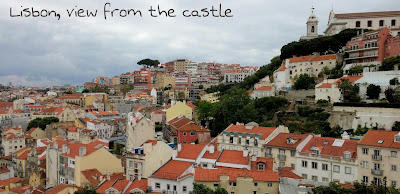
I spent a few days in Lisbon lately and, like always, visited as many record shops as I could. Walking around in Lisbon is somewhat different than what I got used to in the Low Countries, too many hills to make this a pleasant experience (especially when it's hot and damp) despite the evident beauty of the city and the exotic tiled house facades. Yet I'd rather walk under any circumstances than use the tourist buses and trams - for me the only way to experience a city is on foot. At nights the city center is teeming with people enjoying themselves, restaurants and bars full with locals and tourists alike. Glad to see that 5 years of troika austerity haven't ruined the people's appetite for partying. The neighborhood I stayed in (Bairro Alto) is a very touristic one, and filled with bars and live fado joints, Fado being of course Portugal's biggest musical export - a 100-year old emotional and mournful musical idiom that used to be the music of the underworld, the sailors and prostitutes around Lisbon's harbor. Like Argentinian tango, it slowly crossed over and became internationally reknowned to the point of being synonymous to Portuguese music. Which, while I honestly love this kind of music, is just wrong. My visit here made me realise that Portuguese must sometimes look at fado as we Greeks look at syrtaki and Zorba - though, of course, fados do have deep roots in Portuguese tradition while syrtaki is pseudo-folklore for the tourists. In any case all stereotypes tell lies, so one should approach fados as one of many components making up a nation's cultural identity rather than the key to its soul. But the international success of the fados and Lisbon's touristic development constantly pose us the question of whether we are witnessing the real thing or a recreation playing to the tourists' stereotypes of what the original would look and sound like. When I'm in Greece I can instantly tell the real thing from imitations, but here it's much more difficult. For starters, I'd advise visitors to avoid the joints around Bairro Alto. Maybe 20 years ago they were still authentic but today they cater only to the tourists. "Povo" at the city's pink street, a nightlife hot spot, offers good food and fados with no extra charge: you only pay for the -reasonably priced- food and drinks. Also, being in the city's old red light district, you feel you haven't strayed too far from the genre's seedy beginnings: there's still a strip-joint opposite, and the bar next door is painted with erotic graffiti and has a small sex shop inside. Trendy it all may be, but still nowhere as gentrified as, say, London's Soho. If you do end up in Povo, try the octopus salad, steak sandwich, bacalhau a braz, or pica-pau: all traditional and yummy. And the pasteis de bacalhau (codfish muffins) of course: The absolute must-try Portuguese snack.
Back to our subject and the city's record shops, the single most important advise is check the opening hours. Unlike everywhere else in the world, they don't keep normal shop hours. Some open at 11:00, others at 12:30, 14:00 or 17:00. Some open and close at different times every day of the week and may work for 4, 5 or 6 days per week - I'll try and give some info on opening times, but that won't do much good as they change from one day to the next. Time limitations and irregular opening times meant I didn't get through my list. For example Vinil Experience (Rua do Loreto 61, 1st Floor) was only 400m from the apartment I stayed, but I couldn't catch it open. Too bad, since it's supposedly a good place for garage/psych/prog (mostly used vinyl and CD) and these are my favorite genres.
Thank God, then, for Groovie Records (Rua de São Paulo 252) a stylish record store with a big selection of garage and psych vinyl, some used but mostly quality reissues. UPDATE: New address is Rua Angelina Vidal, 80A. Pretérito Perfeito (Rua Sampaio Bruno 39) is another shop with folk, psych and prog but it's off the beaten path and open only on Wed-to-Fri, 15:30-19:00. Now, when I was in Lisbon I saw posters advertising the Communist Party's campaign for a 35-hour working week (as if!) but these cats have gone way beyond and instigated the 11-hour week. Good for you, guys! (UPDATE: This shop is now permanently closed). Near the Bairro Alto, on Rua da Misericórdia no.14 you can find Espaço Chiado, a luxe shopping/cultural center in a state of disarray. Most shops inside were vacated or closed (could it be a sign of the financial crisis? If yes, it was the only one I saw. It seems the Portuguese made it through relatively unscathed, compared to Greeks at least). Here are 3 record stores: Carpet and Snares on the mezzanine is specialized in dance music, while on the same floor you can find the (vinyl shop) Sound Club. Most (used) LP's cost €15-20 but there are also some offers for €2,5-10. CD's are on their other shop on the 1st Floor. UPDATE: Another record store in Espaço Chiado is Peek-A-Boo, also with funky/dance stuff. Not far from there, on the nice but uphill pedestrian street Calçada do Duque, you can find Discolecção at no. 53.
A great source for used vinyl of all kinds, mostly priced between €10-20. Too often I'm exasperated when I'm in a vinyl place going through LP after LP of Tom Jones, Demis Roussos or Madonna. You can recycle vinyl, you know. Just give it an honorable death and make way for the good stuff! Like what they have here. When I visited, July was playing on the turntable. Respect! A bit further down on no.17 you'll find Magic Bus, probably the smallest record shop I've ever seen yet definitely worth a visit. CD's cost  €5-10 (used) or €7-15 (new) and LP's usually €10-20 (rare ones €30-50). If the ever-changing opening hours of Lisbon record stores drive you crazy, there's always fnac on Baixa/Chiado (Rua Do Carmo 2) open from 10 a.m. to 10 p.m. It's got the usual books, DVDs and technology stuff, but also a good selection of (new) CD's and some LP's. As always with these chain stores you can have variety, listening stations and special offers. I came away with some Fado and Portuguese prog and indie CD's for €5-€7,90. On a pedestrian street round the corner (Escadinhas do Sto. Espírito da Pedreira 3) there's Louie Louie a big LP/CD shop with a variety in pop, fados and Brazilian music. Lots of CD's for €5-10, LP's typically €10-15 (special offers €2,5 and new vinyls €20+). Both this and fnac have a bigger selection of fados than Discoteca Amália, a shrine to Amália Rodrigues which is mentioned in many tourist guides but whose inventory of fado, classical and pop seems not to have been renewed since the diva's death in the 90's. CD's cost an average €15, while the store also sells cassette tapes - either they're super hip or, more likely, a few decades behind.

Descending Rua Das Flores on my way to Povo, I stumbled into Clockwork. Apparently primarily a tattoo studio, it also offers "Urban Culture" items, including punk clothing and CD's. Spotted lots of tattoo'd and pierced alternative guys and gals in the region, too. The last of the shops I visited was Carbono (R.Telhal 6B, close to the Avenida metro station and Av. da Liberdade). It's the biggest and best of the ones I've seen in Lisbon, with a huge selection of used records and CD's of all kinds in unbeatable prices. I left with 15 or so CD's, some of which were rare and out-of-print and others just plainly too cheap to pass on. Lots and lots of CD's for €2,5, a big metal section €5, and the rest €5-10. I didn't have space for vinyl in my suitcase so I didn't take a good look at the LP's but the average prices were €10 (used) and €20 (new). Also some offers between €1-5. I especially liked their wall of matching record covers (originals and tributes), so I'm posting a photo of that, here. Also on the upside, for once, it's a shop with regular hours (11:00-19:00). Not far from there (Rua Cecílio de Sousa 76) you can find Twice records. It looks like a regular house with a green door and was closed when I visited (supposedly open 17:00-20:30, a 20-hour working week for them). A record shop I was looking for but must have passed right by was Flur near Santa Apollonia (Avenida Infante D. Henrique, Armazém B4 Cais da Pedra) by the dockside. Supposedly the right place for indie/alternative music. Then, there's Crew Hassan (Rua Andrade 8A, indie and reggae), punk-metal joint Glam-O-Rama on Rua Viriato 12, and TNT (Tό n' Ticha) on Rua de Campolide 54 C (Hard Rock). Didn't have time to check these out but, according to internet sources, they're worth a visit. 
I didn't get as far as Benfica (kind of far from the city center), but apparently it houses one of the biggest 2nd hand CD and vinyl stores in the city (Mau Génio, Estrada de Benfica 731A/Shopping Center Nevada) - not to mention the stadium of the same-named football team who won the championship last Sunday, prompting a night of celebration all around the city. Hope this little walk around Lisbon's record shops will be useful to the city's visitors. Just remember that info and prices are current as of May 2016 and don't forget to check opening hours on either googlemaps or lisbonrecordshops, an indispensable guide not just to the city's record shops but foremost to live music happenings. Of which there doesn't seem to be a shortage: at least 5 concerts every day, including (in a space of two weeks) AC/DC, Peter Murphy, Queen, Bruce Springsteen and Adele. Not bad!