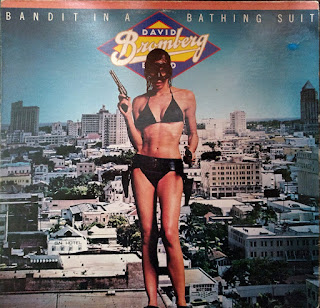
**** for Easy Love Pt. 1, Bluephoria, Easy Love Pt. 2, Nowhere Fast, If God Is A Woman, Pearls, You Are The River
*** for Mockingbird, Little Bit, Fool Outta Me, Bloom Again
I'm in the process of re-listening and re-evaluating my record collection, in no particular order. I'll be sharing the results of my evaluation and thoughts on the music in this blog.
**** for Easy Love Pt. 1, Bluephoria, Easy Love Pt. 2, Nowhere Fast, If God Is A Woman, Pearls, You Are The River
*** for Mockingbird, Little Bit, Fool Outta Me, Bloom Again
**** for The Dogs, Last Chance To Dance, You Angel You, Mighty Man
*** for Interviews, Cheap Perfume, Ten Figures, East Of East, Spark In The Dark, Rich Man, Back In My Baby's Arms Again
**** for Goin' Down (In A Whiskey Haze), Lean On Me, Mourner, Cherry Wine (Lullaby For The Wicked)
*** for Burden (A-You Can't Bear), Chain Gang Partners, Lil' Mefisto, Morning Blue, Junkyard Blues, Voodoo (That Burns), Marigold Walls, Just A Love Song, Land Ends, Death Don't Have No Mercy (In This Land)
I discovered Green On Red (GoR) around '85-'86 by chance. At the time I was into taping music from radio, especially Giannis Petridis' radio show "from 4 till 5". Petridis was a legendary radio figure - I think that for influence, raio show longevity, and popularity only John Peel can compare with him. At a time when radiowaves were strictly monopolized by the state, his show was our only regular source of information on "foreign" rock and pop, since state radio usually only promoted Greek and classical music. There were also pirate stations, of course, but these had weak signals and would appear and disappear without warning since the police were very much active in persecuting them. So I would sit next to the radio with my hand on the Rec button and wait for a song to start to press it. If, after a few seconds, I decided the song wasn't a keeper, I'd quickly rewind and wait for the next one. One of my favorite songs on these cassettes was Green On Red's "Sixteen Ways". The lyrics were dark and cryptic, and the music reminded me of my favorite classic rock bands but also sounded contemporary. I got their Gas Food Lodging LP soon afterwards, and played it a lot. I started going to concerts when I got into college in '88, which means I narrowly missed GoR's Athens concert in 1987. It was quite an eventful one, too: singer Dan Stuart apparently had a nervous breakdown onstage and left, marking the end of the band's classic line-up. I was sad I didn't get to see them, but all (well, some anyway) good things come to those who wait, so when the band reunited in 2006 they played Athens' Rockwave Festival, and I was there. I had a good time at their concert but, to be honest, the moment had passed. Sometimes timing is everything.
**** for Death and Angels, Hair and Skin, Black Night, Illustrated Crawling, Aspirin
*** for Lost World, Apartment 6
**** for Bandit In A Bathing Suit, If You Don't Want Me Baby, Love Please Come Home medley
*** for Queen Ellen, Sweet Sweet Sadness, Peanut Man, Ugly Hour, Travelling Man, Northeast Texas Woman
***** for Grumpus, Up with People
**** for The Old Gold Shoe, Nashville Parent, What Else Could It Be?, The Book I Haven't Read,
*** for You Masculine You, The Distance from Her to There, The Petrified Florist, The Butcher Boy
I own a dozen of V.F. albums, almost their complete output. Not because they're consistently great, but because since I was a teenager I've always had fun dancing to their early records at parties, clubs or in my room. Most of all for their concerts, never short of energy of good vibes. I saw them a few times in Athens during the 90's and 00's but the one I remember most vividly was in Lycabettus ('94 I think) with singer Gordon Gano speaking Greek (apparently he had recently spent some time vacationing and picked up enough to make conversation) and getting a great response from the crowd. At some point he said "Oh, vrehi (Oh no it's raining)" and then corrected himself "Ohi, psihalizei (no, it's drizzling)" at which point the theater shook with laughter and applause. I also remember the bassist (Brian Ritchie) playing rather good Greek bouzouki on a couple of songs, and the drummer (Victor De Lorenzo) always playing standing up. I went to one of their concerts with a metalhead friend of mine who liked the band's energy and he couldn't believe that all this ruckus was just acoustic guitar, bass and a tiny drum set hit by an upright drummer. De Lorenzo is regretfully absent in this, their latest and first post-reunion LP, but that doesn't seem to influence their sound much. If anything, it is the closest they've sounded to their historic debut for some time: basic rock'n'roll with folk/country overtones, earnest wide-eyed singing and kooky lyrics. Opener "Memory" is as typical Femmes as it gets, with its loud acoustic bass, simple upbeat melody, and funny, deceptively silly, text. It's followed by probably their most idiosyncratic song here "I Could Be Anything", a polka/country story right out of the Shrek universe, about an underdog turned dragon-slaying hero. "Holy Ghost" is a glam folk/gospel hybrid, "What You Really Mean" a heartfelt ballad, and "Issues" a hilarious take on an all-too-common relationship problem: the guy loves his girlfriend but can't stand her constant ranting. From the doo-wop-ish "Untrue Love" to country-ish "I'm Not Done", 60's teenage pop with a dark lyrical twist of "Big Car" and beyond, everything is true-to-form Violent Femmes, so if you're a fan you won't be disappointed. If, however, you're not already a fan this isn't the place to start: anything up to (and including) 1991's American Music is prime Femmes, everything else has its moments but is ultimately inessential. P.S. the cover features a drawing of the band by fellow musician Kevin Hearn. Everybody else is recognisable but he drew Gano a bit yellower than he is... with longer neck and spots on his back... not a good likeness, really, he looks more like a spotty humpless camel. 


Now, how exactly does a Glasgow girl fit into an event sub-labeled "Festival For Past, Present and Upcoming American music"? She does, not only because of her choice of collaborators, but foremost because of her songs drawing from American folk tradition, and especially the great country duets: Nancy Sinatra and Lee Hazelwood, George Jones & Tammy Wynette, June Carter-Cash and Johnny Cash. Nothing about the gentle pop of her former band Belle and Sebastian could have prepared you for this dive into Americana, which is why I was surprised to learn she was the creative force behind the duo. Another reason may have been that her sweet and soft voice on the record plays second fiddle to Lanegan's strong, gravelly baritone. Music critics invariably used the same metaphor for this pairing: the beauty and the beast. As well as their voices, the two singers' exterior justifies the simile: Isobel's fragile good looks make quite a contrast with Lanegan's unkempt gloomy lumberjack appearance. On stage, though, Campbell was the one in control: If Lanegan was the leading man, she was obviously the director, stepping in at the right moment with her vocals, guitar, cello, piano and other instruments. Theirs was a very successful (artistically, at least) partnership, but "Hawk" was to be their 3rd and last album together. Probably they felt the formula was getting old, which is why they try some different approaches here: the rich strings and R&B backbeat of "Come Undone" is a definitive winner, probably the duo's best moment. "You Won't Let Me Down Again" could have been an acoustic outtake from Lanegan's collaborations with desert rockers Queens Of The Stone Age - if it wasn't for Isobel's soft and sensual backing vocals. "Snake Song" is a similarly sturdy acoustic blues, featuring great vocals from both performers. "Get Behind Me" is a rockabilly scorcher and "Hawk" a rollicking instrumental with howling sax. On the one hand I applaud their desire to shake things up a bit, but on the other I have to admit that those two kinda break the mood of the album. Despite all the efforts to mess with the formula, the pair are at their best when they stick close to it: the Nancy-and-Lee style ballads "We Die And See Beauty Reign", "Time Of The Season", "Eyes Of Green", and the fantastic closer "Lately" with Lanegan channeling Leonard Cohen and gospel-style backing vocals. Then, as if we're witnessing a real-life idyll unravelling, Campbell goes at it alone for the haunted ballad "Sunrise" and Mazzy Star-soundalike "To Hell & Back Again", and even exchanges Lanegan for a younger man (American singer-songwriter Willy Mason) for a couple of duets: "No Place to Fall" and "Cool Water". Good songs, and the addition of a Celtic violin on the former (as well as "Eyes Of Green") is another nice touch by Campbell-the-record producer. Mason sounds like a cross between Tim Hardin and Johnny Cash. Actually, he's like a younger, less gritty and world-weary, Lanegan - now doesn't that sound like rebounding from a failed romance? But, as far as I know, Mark and Isobell's coupling was never a romantic one and just naturally ended for the singers to follow their muse elsewhere. At least they left behind three albums of beautiful music, all of which are highly recommended.
Red Star Belgrade was formed on 4 March 1945 by the "United alliance of anti-fascist Youth", a satellite organisation of the Yugoslavian Communist Party which had been the backbone of Tito's partisan army and which had just emerged victorious from WWII. It was soon taken under the wing of the country's Ministry of Interior and established as one of the most successful Balkan clubs ever, even winning the European football Cup in 1991. They branched out in many different sports, but until recently I didn't know they also had a music department. What confuses me is that they chose to base their band in Chapel Hill, North Carolina. Could it be part of a communist plot to corrode the “land of the free and the home of the brave” from the inside? Are singer/songwriter Bill Curry and his wife Graham Harris a couple of sleeper agents like The Americans' Philip and Elizabeth Jennings? They could hardly have found a better cover than that of an all-American alt-country musicians couple. But let's afford them the benefit of a doubt and suppose they're legit. One might then say that by the time they released their third album "Telescope", they had reached songwriting maturity but hadn't quite settled on their sound yet. Opener "Telescope" reminds me of 80's paisley underground band Green On Red. Other rockers in the same vein (think of a hybrid between Big Sleep, Velvet Underground and Gram Parsons) include "No Pound", "Count Me Out", "Uncle Tupelo" - the latter namechecking the alt.country pioneers who seem to have influenced RSB. "Dreaming 'Bout You" and "The Bottle" are Byrds-y folk rock, and "Long Cold Day" a sad piano ballad. "Nixon Stamp" has the trademark country pedal steel sound, while "Strum 'N Rhyme" and "Highway To Hell" (yes, the AC/DC hard rock anthem, unrecognizable in this form) offer more upbeat country. Two of the best songs touch on, uncharacteristically for American bands, international politics: The disillusionment in the state of post-revolutionary Iran in the beautiful ballad "After The Revolution", and the drama of Kossovar refugees in the bluesy "The Border" - another unexpected Balkan reference, after the band name. On a whole "Telescope" is quite varied and eclectic,which is both its strength and weakness, as it can feel a bit disjointed at times. Fans of Wilco, Giant Sand and Ryan Adams should definitely check this album out...**** for After The Revolution, The Border *** for Telescope, Dreaming 'Bout You, Strum 'N Rhyme, Highway To Hell, Nixon Stamp, No Pound ** for The Bottle, Count Me Out, Long Cold Day
The band that "broke up" was Dream Syndicate, a fantastic neo-psychedelic guitar band, influenced by the likes of Velvet Underground and Neil Young & Crazy Horse, and which in turn influenced a lot of indie rock bands in the 80's. Their singer, Steve Wynn, has gone on to make a string of well crafted yet underrated albums running the gamut from country-ish ballads to fiery garage rock. He was a frequent visitor in Greece and I got to see him many times, always delivering a great show and displaying an agreeable, fan-friendly personality. This compilation covers the first 15 years of his solo career, starting with 1990's Kerosene Man. Maybe as a reaction to Dream Syndicate's guitar excesses, it was more conventional singer-songwriter stuff, with echoes of Bob Dylan and Lou Reed. That record's "Carolyn" was an especially catchy and melodic single, but neither that nor "Tears Won't Help" nor Johnette Napolitano duet "Conspiracy of the Heart" became hits. 1994's Fluorescent ("Carelessly", "Collision Course") was a mostly acoustic affair and 1996's Melting in the Dark ("Shelley's Blues, Vol. 2," "Why") a return to the raw guitar sound of Dream Syndicate, with Bostonian indie band Come backing him instead of session musicians. 1999's My Midnight ("Nothing But the Shell", "Cats and Dogs","500 Girl Mornings") contained his most mature songwriting yet, while 2001's double CD Here Come the Miracles ("Sustain", "Death Valley Rain," "There Will Come a Day") is arguably his greatest achievement, combining the guitar fury of his Dream Syndicate days with a more varied approach that encompasses all indie Americana sounds. What I Did... works well as an introduction to the artist, but inevitably suffers from inconsistency, with different styles and backing bands form different periods mixed together. The second disc, entitled Visitation Rights, contains reworkings of older material with stark piano and/or organ backing by long-time associate (and former Green On Red keyboardist) Chris Cacavas. It provides an alternate setting for the songs and confirms that they can withstand transformation (a mark of great songwriting) but it's otherwise quite inessential listening. All in all, this makes for a nice introduction for an artist we'll be getting back to often in this blog, as I have more than 15 of his albums (solo, with Dream Syndicate, Gutterball, Danny & Dusty etc). Listening to it again brought back memories and made me realize I haven't seen him play live for 10 years, when he played on the last night of the historic Rodon Club. And now that I said Rodon Club; I really feel sad: The temple of music for my generation is gone and my mind goes to all the great artists I've seen there and are no more: The Ramones, Gun Club's Jeffrey Lee Pierce, the Cramp's Lux Interior and so many others close to my heart. I saw bluesman John Campbell giving a smokin' hot concert there only weeks before he died, just like Les Negresses Vertes whose 30-year old singer Helno also died only weeks after performing in Rodon. Now, let's just stop here with this list and return to Steve Wynn who is alive and well and, according to wikipedia, a billionaire who owns half of Las Vegas - WTF? could that be true?![]() |
| May 29, 2005: Last show at Rodon Club, the end of an era |
Heaven and Hell is collection of songs by the Mekons, a British punk collective started in 1977 by a bunch of Leeds University students. Over the years a lot has changed: the band has moved to the U.S. and embraced different kinds of music, to the point that they are now considered as one of the pioneers of the alternative country scene. The 1985 album "Fear and Whiskey" is a particular landmark in that direction. Importantly, whatever else changed, they have stayed true to their punk ethos and left wing politics. This 2CD compilation features tracks from about 20 albums released between 1978-2004 and is one of the more diverse collections by a single band you'll ever get to hear. Early singles "Never Been in A Riot" and "Where Were You" are pure punk, but you also get reggae-folk (Work All Week), garage-rock (Memphis Egypt), alt.country ballads ("Ghost of American Astronauts" sounds like the Cowboy Junkies), cajun-punk (Big Zombie) etc. The "Old Trip to Jerusalem" sounds like Sandinista-era Clash trying their hand at Gospel, "The Curse" like The Pogues and "One Horse Dub" merges blues and electronica years before Moby did. When Sally Timms takes the lead vocal, she sings so sweetly you'll be fooled into thinking you're listening to a love song when she's really singing about something like the drug trade as an imperialist control method from the days of the East India company to the CIA (in "Brutal'). Anarcho-popsters Chumbawamba must have been paying attention, because they have had a lot of success with the same mix of radical politics and honey-voiced pop. This compilation acts like a sampler of different periods and styles and is therefore rather uneven. It's a good point to start but you also can't go wrong with any Mekons album from the late 80's - early 90's.