I'm in the process of re-listening and re-evaluating my record collection, in no particular order. I'll be sharing the results of my evaluation and thoughts on the music in this blog.
One of my favorite Dylan albums is Desire; basically, it's my favorite Dylan album post- Blonde On Blonde, which covers what? the last 59 years? And a very big reason why I love this album is the violin playing of a young lady called Scarlet Rivera. The story of how she came to play in this album, and join Dylan's famous Rolling Thunder Revue tour has been told before, but I'll repeat it here: apparently Dylan was being driven around Greenwich Village, when he spotted Rivera walking with her violin case in hand. He stopped the car, rolled down the window and shouted to her "Hey, can you play that thing?". She obviously recognized him, and agreed to follow him to the studio where he asked her to play along to some songs. Having passed this test, he asked her if she wanted to accompany him to a club to listen to a friend of his. She did, and that friend proved to be Muddy Waters. After a while, Dylan joined Muddy on stage for a song, and then he went to the mic and announced, “Now I want to bring up my violinist." Scarlet passed that test too; by playing with two legends in one night while being totally unprepared, she had earned her place on the historic tour. After the tour and the recording of the Desire LP, she fell out of view - fot most people, that is. I certainly knew nothing of her subsequent career, which probably is also true for most people who know of her only through the Dylan connection. Martin Scorsese's documentary about the Rolling Thunder Revue confused things even further: the director mischievously inserted a number of fake stories in his narration; seeing as Scarlet is the least well-known of the participants, having come out of nowhere and receded back to the shadows as far as Dylan fans are concerned, she was a prime target for those: she supposedly painted mystical symbols on her face (true) she carried a sword with her everywhere (not really true) people avoided her because they took her for a witch (false), she was dating Gene Simmons from KISS at the time - absolutely nonsense, but Dylan uses this to spin a yarn about her taking him to see "her boyfriend" play live, and of the concert inspiring Dylan to paint his face white onstage. In reality, the tour was designed to imitate a travelling circus; everybody was encouraged to look and act eccentrically. When Dylan appeared with a painted face, he was probably thinking of mimes rather than Gene Simmons. Why exactly he and Scarlet parted ways after Desire I don't know; Maybe he wasn't interested in repeating that album's sonic experiment, or maybe Scarlet took advantage of her sudden rise to fame to start her own band; she certainly leads a very talented band of musicians here, especially Dominic Cardinale who played keyboards and co-wrote most of the material. The music isn't what I expected - though, to be honest, I didn't really know what to expect; I just bought it out of curiosity and because I like violins in rock. Not that this is a rock album; it's mostly an electric jazz rock one, not unlike the Jean Luc Ponty LP I reviewed some time ago. "Leftback" and "Earth Queen" feature great synth-and-violin interplay as well as some dazzling violin solos, while "Wicked Witch Of The East" and "Cloak And Dagger" veer into symphonic prog with many classical influences. "Gypsy Caravan" is less free-form, structured more like a folk song - it even has vocals, even though the focus is still on the gypsy-style violin playing. The human voice features minimally; a witchy laugh on the "Wicked Witch Of The East", a bit of singing in "Gypsy Caravan", and a narration about fairies and some wordless vocalizing on the closer "Ring Around The Moon", a song steeped in Celtic music and mythology. The latter shows the direction she would turn to in the future; with the exception of her second LP for Warner (Scarlet Fever, 1978) which was in the same style and with many of the same collaborators as this one, her long discography lies purely on the intersection of new age and traditional Irish music. Not surprising then, that mainstream rock fans lost sight of her; for most of us new age belongs to the world of yoga studios and aromatherapy (whatever that is). But maybe that's just a sign of our prejudice; based on this evidence, Rivera was a really talented musician; I'd be interested in hearing more of her stuff, even if the CD cover art features megalithic monuments and kitschy Celtic design motifs. In any case, the Scarlet Rivera LP makes for a great introduction, and original vinyl copies are cheap and easy to find second hand. Highly recommended for fans of jazz rock and violin music; not so much for Dylan fans.
**** for Leftback, Wicked Witch Of The East, Gypsy Caravan, Ring Around The Moon
A few months ago I went to the movies with my girlfriend and our friend Anastasia to see A Complete Unknown. It was at a cinema I used to go as a kid, ZEA at Pasalimani. How good it is to visit one of the few surviving neighborhood movie theaters in the age of multiplex entertainment! It was just as I remembered it - with a more advanced audio and video system, of course, and minus the psychedelic liquid light projections it used to show during the intermission - it was all that was missing to take you back to the 60's! The movie certainly brought that decade back to life, and featured fantastic music (of course!) and great performances by all the actors, who even sang themselves - now, anyone can imitate Dylan's characteristic singing voice, but Joan Baez must be more difficult, kudos to Monica Barbaro for that! As you may know, the story arc concerns Dylan's coming to New York to conquer the city's folk scene, and culminates with his decision to go electric, betraying all the people who believed in him by following his own muse. I was so familiar with the rock mythology behind it that watching the film was like watching the movie adaptation of a favorite book. Would they be faithful to the story? Which episodes would be included, which would be left out, and which would be invented in order to tie everything together? In the end I left satisfied, and so did the girls, even though they weren't the Dylanophiles that I am.
Soon after I watched the movie, I came across this CD. The Bootleg Series Vol. 12: The Cutting Edge 1965–1966 focuses in this most prolific and revolutionary stage of Dylan's career, covering an incredibly productive 14 month-period during which the artist recorded 3 electric folk rock masterpieces (Bringing It All Back Home, Highway 61, and Blonde On Blonde) and shocked the folk music world with his electric performance on the stage of Newport Festival, which provided one of the centerpieces of the movie. Cutting Edge comes in three different editions: The standard one (a.k.a. TheBest Of The Cutting Edge) is comprised of 2CDs featuring previously unreleased demos, rehearsals, and outtakes from the sessions that produced the aforementioned albums. The Deluxe Edition (6 CDs) also contains many half-finished rehearsals, false starts and whatnot. That much detail may be too overwhelming for most of us, but it allows one to track the development of certain songs in the studio. The Collectors' Edition (18 CDs) contains everything recorded during those sessions plus some hotel room demos - not sure that anyone sane would ever go through all of it. I already own some of Dylan's Bootleg Series, and always marvel at how he keeps changing his songs, trying out different tempos and arrangements; sometimes the finished product bears only passing resemblance to the original demo. And neither does it stay the same after it's committed to vinyl, Dylan keeps trying on different arrangements live. Before buying this compilation I looked it up at the metacritic website to see what reviewers were saying about it, and came across an unbelievable metascore of 99/100. How can any collections of demos and outtakes be so good? I asked myself, so I bought the CD and delved in. Amazingly, it's almost as good as advertised; I mean there's no escaping the fact that, however great these songs are, there are even better versions of them out there, which most of us are very familiar with. CD 1 opens with a barrage of acoustic demos: ballads "Love Minus Zero/No Limit" and "She Belongs to Me" sound as charming as ever, while the delirious "Bob Dylan's 115th Dream" works well as a solo acoustic number - the lyrics, at least, are more discernable - and what a surreal, comedic, ride of a song it is! There are two more ballads included here in acoustic demo form, which weren't used by Dylan but given away to ladies with whom he had affairs with: "I'll Keep It with Mine" to Nico, "Farewell Angelina" to Joan Baez. Another unused song is acoustic blues "California" - though some lyrics were recycled for "Outlaw Blues", a storming electric blues version of which is also included on CD 1. It's no surprise that the electric numbers are the best here; after all Dylan had gathered some fantastic musicians, including Michael Bloomfield (a.k.a. the Jewish blues wunderkind from Chicago) on guitar. He puts in some scorching solos on the (also unused at the time) blues "Sitting on a Barbed Wire Fence". Dylan actually adlibs in this song "I got this woman in LA/ she makes the sweat run down my brow/ she's good alright, but she ain't as good/ as this guitar player I've got right now" "Subterranean Homesick Blues", "On the Road Again", "It Takes a Lot to Laugh, It Takes a Train to Cry" are presented in rough-and-ready intense garage rock versions, while "If You Gotta Go, Go Now" (featuring backing vocalist Angeline Butler) has a New Orleans jazz groove that makes it sound like a prequel of The Basement Tapes. This, too, didn't appear in any of Dylan's albums, but it charted in the UK when it was covered by Manfred Mann, and again by Fairport Convention. A charming rendition of "Mr. Tambourine Man" is unfortunately incomplete - if it was finished, it could have surpassed the final album version. The most interesting moment of the CD is listening to back-to-back versions of "Like a Rolling Stone": Take 5 is typical harmonica-heavy Dylan folk rock, while take 11 is transformed by the introduction of Al Kooper's organ. Al recounts the story in the liner notes: he took his guitar along and invited himself to the recording sessions, hoping to play on the album. When he heard Bloomfield plug in and play, he realized he didn't have a chance himself, so he sat on the sidelines watching the proceedings. At some point, organist Paul Griffin left his place and moved to piano. Kooper had played keyboards before but he wasn't an organist - he didn't even know how to turn on a B-3 Hammond, but the other guy had left it on, so he sat in his place and, out of nowhere, came up with this fantastic melody. Dylan loved it, and changed the song structure to bring the organ to the fore; from that moment on, Kooper stopped being a guitarist and made a career for himself as an organist instead. I was delighted to see that little episode make the cut and get included in the movie. Disc 1 closes with 11-minute epic "Desolation Row". Once again, the sparse instrumentation allows one to focus more on the lyrics. And again, what a lyric - I mean, "they're selling postcards of the hanging" what kind of pop song starts off like that? CD 2 is, if anything, even better than the first. We get, slightly different, full band versions of classic Dylan tracks which mostly appeared on Highway 61 Revisited and Blonde On Blonde, often backed by The Hawks, soon to become known as The Band. On each track, the band sound spontaneous but tight - even the first takes included here sound like the songs had been well rehearsed beforehand. CD2 doesn't feature many solo demos or abandoned songs - with the exception of "Lunatic Princess" and the fantastic "She's Your Lover Now", both of which are cut short. The latter remains a band favorite although there has never been a full band version of it; the only finished take is a solo piano demo available only in the Collector's Edition of The Cutting Edge. Up-tempo versions of "I Want You" and "Just Like A Woman" are interesting to hear; pity that the latter flounders toward the end. All in all, what a great outpouring of songs, all created in such a short period of time. Listening to these songs again, I appreciate the garage rock intensity of the electric numbers, even though none of them trump the overtly familiar album/single versions; but above all I'm impressed by the quality of the lyrics. All the surrealistic imagery and the ingenious wordplay; no-one else wrote like that at the time, at least not in the world of popular music. Was it Nobel Prize-worthy? Irrelevant! None of it was written with literary prizes in mind, but it sure makes a solid case for young Dylan as a rare songwriting genius. At the film, when everyone is awed by his songs, their reaction seems exaggerated to convince us of the hero's brilliance. I think that's because we grew up with his songs, so we're taking them for granted. But imagine hearing them for the first time, coming out from the mouth of such a young person! Or listening to Jimi Hendrix for the first time, producing all those strange sounds with his guitar, or hearing the incredible sound mélange that was Sergeant Pepper - those were the days, bring me more sixties biopics please! I hear they'll be making four different Beatles films, one from the perspective of each member, now those I want to see! And you know Dylan will be making a cameo to introduce the Fab Four to marijuana - wouldn't it be fun if they cast Chalamet for the role? It'd be like one of those Marvel films where Daredevil makes an appearance at a court room scene of an Avengers movie, in his alter-ego as blind lawyer Matt Murdoch of course. And where's that Arthur Lee biopic I've been waiting for? How can a story like his not move Hollywood filmmakers?
***** for Bob Dylan's 115th DreamSolo Acoustic, Subterranean Homesick Blues Take 1, Outlaw Blues Take 2, On the Road Again Take 4,If You Gotta Go Go Now Take 2, It Takes a Lot to Laugh It Takes a Train to Cry Take 8, Like a Rolling Stone Take 11, Visions of Johanna Take 5, She's Your Lover Now Take 6, Stuck Inside of Mobile with the Memphis Blues Again Take 13, Tombstone Blues Take 1, Positively 4th Street Take 5, Can You Please Crawl Out Your Window? Take 1, Just Like Tom Thumb's Blues Take 3, Highway 61 Revisited Take 3, Queen Jane Approximately Take 5
**** for Love Minus Zero/No Limit" Take 2, I'll Keep It with Mine Take 1, She Belongs to MenTake 1, Farewell, Angelina Take 1, California Take 1, Mr. Tambourine Man Take 3, Like a Rolling Stone Take 5, Sitting on a Barbed Wire Fence Take 2, Medicine Sunday Take 1, Desolation Row Take 2, Desolation Row Take 1, Lunatic Princess Take 1, Leopard-Skin Pill-Box Hat Take 8, One of Us Must Know (Sooner or Later)Take 19,Absolutely Sweet Marie Take 1, Just Like a Woman Take 4, Alternate Take, Pledging My Time Take 1, I Want You Take 4
*** for You Don't Have to Do That Take 1, Highway 61 Revisited Take 7 (False Start)
Today (I'm writing on a Tuesday) I was free from work and had nothing planned for the day, so I started getting random records out to play. My eye fell on this double Bob Dylan LP entitled The Real Royal Albert Hall 1966 Concert. Of course I had listened to it a few times when I bought it, then put it aside; it sounded pretty good to me, but I was overly familiar with the songs, both from the studio versions and from the other live album recorded during the same tour: The Bootleg Series Vol. 4: Bob Dylan Live 1966, The "Royal Albert Hall" Concert (note the quotation marks). The story of the latter one is a huge part of Dylan's mythology, and so well-known it feels unnecessary to recount it again - yet, just like with well-worn jokes, there's always a first time one hears something, and this may be yours. Here's the story in a nutshell: a few short years into his career, Dylan had become the unwilling poster boy of protest folk. Resenting this, he strove for artistic freedom by abandoning political lyrics and going electric. The live unveiling of this new direction happened in July 1965 at the high profile Newport Folk Festival; after a short acoustic introduction, Dylan brought onstage The Paul Butterfield Blues Band for an electric set that shocked the conservative audience to their core. According to legend, veteran folkie Pete Seeger cut the electrical wires with an axe to stop Dylan from corrupting the audience's sensitive ears with his musical onslaught. This detail, which had been reported in press and endlessly repeated throughout the years, is untrue; yet it does convey the reaction of the folk establishment: Seeger has admitted to feeling offended by the sheer volume of the music, at the time the loudest anyone had experienced at a festival, and frustrated that the lyrics were impossible to hear. The latter has of course become a permanent fixture of Bob Dylan concerts; the few times I saw him perform I only got to recognize which tune was playing when he was already halfway through the song. Anyway, the controversy followed Dylan throughout his 1965-1966 tour. During this tour Dylan would play two sets, an acoustic one reminiscent of the "old" folkie, and a loud electric one, backed by rockers The Hawks, soon to be renamed The Band. Audiences politely applauded during the acoustic set, but had diverse reactions to the electric one: as word had gotten out, some fans came to the concerts not only to hear their old favorites but also to boo him for abandoning traditional folk and protest music. A few of the concerts were recorded, and the electric part of one of them came out in bootleg form around 1970. According to many, myself included, this is the ultimate Bob Dylan live album, yet it wasn't officially released until 1998 in the cader of the Bob Dylan Bootleg Series project. It was recorded at Manchester Trade Hall on May 17, but the bootleg was erroneously entitled Royal Albert Hall. Since it was already known thusly, the company also used "Royal Albert Hall" -albeit in quotes- for the official release title. Aside from the band's spirited playing (Robertson's electrifying guitar fills in particular) and the fact one gets carried away by the youthful enthusiasm and conviction (Dylan had just turned 25, Robertson was 23) the album is famous for an exchange between Dylan and an audience member: between songs, a punter shouts at Dylan "Judas!" This is greeted by the audience with laughter and applause - to which the singer replies "I don't believe you... You are a liar." and then turns to his guitarist with the following instruction "Play fucking loud!" as the band launches into a tremendous performance of "Like A Rolling Stone". This here is a piece of rock history captured on tape - it alone would be worth the price of admission, but of course what we have here is much more: an amazing document of Dylan live in his prime. And don't let the whole back story about him going electric distract you from listening to the acoustic disc, either: containing solo performances of hits ("She Belongs To Me", "It's all over now, Baby Blue", "Mr. Tambourine Man") and marathon song-poems ("Visions of Johanna", "Desolation row") this is the quintessential folk troubadour experience - just voice, acoustic guitar and harmonica.
As for The RealRoyal Albert Hall 1966 Concert, this came out on the semi-centennial anniversary of the concerts. As I said, I just listened to both albums back to back, track for track. It's extraordinary, how similar they sound: recorded with the same musicians within a few days from each other, they follow the same arrangements and identical setlist - deriving mostly from the three landmark albums Dylan had recently recorded, all in a space of 18 months (Bringing It All Back Home, Highway 61 Revisited and Blonde On Blonde). Which isn't to say that the performances are identical; seeing as Dylan wasn't a conventionally qualified vocalist, he probably couldn't sing a tune the same way twice if he tried. They're just very similar and -IMO- equivalent with each other. Don't expect me to get into details like in-between song banter, or which concert has a better guitar or harmonica solo here or there. I do have a slight preference for the London acoustic set and Manchester electric one, but in truth they are both fantastic in terms of performance and sound quality. I guess that, for everyone but the biggest fans, The "Royal Albert Hall" Concert (in quotes) is essential because of the history it caries, while The RealRoyal Albert Hall 1966 Concert is, however good, similar enough to be superfluous. I for one am very happy to have the former on CD (it is ridiculously rare on vinyl) and the latter on double vinyl; in this way I can choose which one to play depending on whether I feel like getting up to change sides or not. I just can't believe it took me this long to sit down for a combined listen.
P.S. Away from home, I re-listened to some tracks from the Manchester concert on Spotify to check something before posting, and guess what I discovered? The notorious Judas incident has been edited out of the Spotify version of the album. Could they have been so offended by Dylan using the F_ word? Hard to believe, when other singers (not to mention rappers) on the platform use much coarser language. This is another reason why streaming sucks, people! Vinyl or CD, that's the way to go!
The "Royal Albert Hall" Concert:
***** for It's all over now, Baby Blue, Desolation row, Just like a woman, Tell me Momma, I don't believe you (She acts like we never have met), Baby let me follow you down, Leopard-skin pill-box hat, Ballad of a thin man, Like a rolling stone
**** for She belongs to me, 4th time around, Visions of Johanna, Mr. Tambourine Man, Just like Tom Thumb's blues, One too many mornings
The Real Royal Albert Hall 1966 Concert:
***** for 4th time around, It's all over now Baby Blue, Desolation row, Just like a woman, Mr. Tambourine Man, Baby let me follow you down, Leopard-skin pill-box hat, Ballad of a thin man, Like a rolling stone
**** for She belongs to me, Visions of Johanna, Tell me Momma, I don't believe you (She acts like we never have met), One too many mornings
This double LP was one of the nicest presents I got for this year's Covid-miserable birthday. A beautifuledition with gatefold cover and olive-colored 180 gram vinyl. No lyric booklet though, which I found strange since this is famously Dylan's first collection of new songs since winning the Nobel prize for literature. You'd think the lyrics would be of some interest to record buyers, right? The first couple of singles from the album surfaced during the first and strictest lockdown, ideally for dylanologists to have ample time to dissect every tiny nuance. And there are so many of them, an unstoppable torrent of words about everything from The Rolling Stones to JFK to Shakespeare to... dick sizes. Some reviewers were especially impressed with the latter reference - like schoolchildren when the teacher says a bad word. I myself found the wordplay often inspired, and enjoyed all these historical and cultural references, but at first listen I didn't dwell too much on the lyrics. Songwriting isn't literature, you can't stop and ponder the meaning of a verse while you listen to the song. Musically, a lot of the songs here consist of Dylan effectively rhythmically reading his poems with subtle acoustic accompaniment. Songs in this category include "Black Rider" with its minimal Spanish guitar backing, "Mother of Muses"'s Celtic melody and Gothic fantasy "My Own Version Of You" with its eerie waltz-like motif playing in the background. "I contain Multitudes" is likewise poetry reading with a wistful musical backing, just like the 17-minute long "Murder Most Foul", which is inspired by the John Kennedy assassination. The latter has a richer instrumentation with piano and violin, but the music is nevertheless secondary to the recitation. I was more drawn to the more conventional tunes incorporating well-worn blues and folk melodies and riffs. The quality of his backing band, intelligence of the lyrics and Dylan's assured delivery more than make up for the lack of musical originality. Roots music is, after all, the most suitable vehicle for a veritable institution like Dylan. What did you expect, techno? "Goodbye Jimmy Reed" is, of course, a blues shuffle with harmonica reminiscent of the titular bluesman. "False Prophet" and "Crossing the Rubicon" are two more electric blues tunes, while "Give Myself To You" and accordion-led "Key West" are closer to the classic American Songbook tunes he covered in his last 3 records, as well as reminiscent of some Dire Straitsballadry (think "Romeo and Juliet"). Like every album of new Dylan material in the last 25 years, ...Rowdy Ways was hailed as an artistic triumph and topped many of 2020's Best-Of lists. Personally I don't think it adds much to Dylan's impressive body of work, other than re-confirm his status as a master lyricist. Maybe post-Nobel prize there was some pressure to deliver an "important" work - if Dylan ever feels the pressure of people's expectations - which prioritized the lyrics and made the music seem as a bit of an afterthought. Not that the album is ever less than sonically pleasant: there's some understated but classy playing, and Dylan's raspy voice carries more warmth now than the nasal and whiny instrument of his youth. In any case this may not be the masterpiece most critics make it to be, but neither is it one I would advise skipping. A middling Dylan album still has a lot to reveal if you listen carefully and are in the right frame of mind.
**** for False Prophet, My Own Version of You, I've Made Up My Mind to Give Myself to You, Goodbye Jimmy Reed, Key West (Philosopher Pirate), Murder Most Foul
*** for I Contain Multitudes, Black Rider, Mother of Muses, Crossing the Rubicon
Sometimes I wonder whether winning a Nobel Prize for literature is a sign that you're finished as an artist. It'd be good to go back and see if any Nobel laureate has ever published a major work after receiving the prestigious award. Bob Dylan became the first singer/songwriter to win a Nobel for literature in 2016 and, while he's been releasing records as often as ever, these are mostly archival recordings. Of the 4 new albums released in the last decade, 3 are collections of covers (from 2009's Christmas in the Heart to 2017's Triplicate) - a curious choice for someone who is (much more) celebrated for his songwriting rather than his singing abilities.
That said, there is a precedent: Dylan followed one of the lowpoints of his career (Under the Red Sky, 1990) with a couple of back-to-back cover albums: Good as I Been to You (1992) and World Gone Wrong (1993). Both, especially the latter, were well received - much better than his latest attempts at covering the classics. But then, they weren't Christmas songs or Sinatra covers like his latest work, they were the kind of traditional material that young Dylan had originally made his name with playing at The Village cafes. Both the material choice here and the instrumentation (just voice, acoustic guitar and harmonica) are a throwback to his eponymous first album, recorded at the age of 20. It starts with a gentle acoustic blues "World Gone Wrong", followed by "Love Henry" (an Appalachian variant of Child ballad no.68) which sounded immediately familiar to me - but that''s probably because it provided the inspiration for "Henry Lee", a Nick Cave/P.J. Harvey duet from Murder Ballads (1996). The rest of (the vinyl's) side 1 are acoustic 30's blues: Blind Willie McTell's "Broke Down Engine" is somewhat upbeat, followed by slower ballads "Ragged & Dirty" and "Blood in My Eyes". The latter is one of two songs (next to "World Gone Wrong") originally done by guitar/fiddle duo The Mississippi Sheiks - both are among the record's highlights. Side 2 opens with a couple of traditional murder ballads inspired by true stories. "Delia", also often attributed to Blind Willie McTell, is the story of a 14-year old girl shot dead by her teenage boyfriend in 1901. She was buried in an unmarked grave, so the song is all that's left to remind of her. "Stack a Lee", sometimes also known as "Stagger Lee", takes us even further in time to 1895, when infamous St. Louis pimp "Stag" Lee Shelton shot one Billy Lyons in a bar brawl for taking his Stetson hat. Depending on who you listen to, the fight was originally about a woman, or gambling, or political in nature. Coincidentally (or not) this is the second song from this album that later found its way to Nick Cave's Murder Ballads, even if Cave's version is very loosely based on the traditional song. Exactly why these specific crimes were immortalized in song out of thousands of similar stories is something that escapes me, but there are a lot of similarities between them: both happened on Christmas day, and in both cases victim and murderer were black but the song makes no mention of their race, which is quite rare for its time. "Two Soldiers" is a Civil War ballad while "Jack-A-Roe" (a.k.a. "Jack Monroe") is an English or Scottish 19th Century mid-tempo song about a young girl and her sailor lover who goes to war. The closing "Lone Pilgrim" is a hymn about dying and joining God in Heaven - lest we had forgotten that Dylan is now a Christian. Which makes 5 out of 10 songs where one of the heroes dies, while in another 4 out of 10 a lover is spurned and mistreated. Miraculously, the girl who sails to her embattled lover finds him on death's doorstep but manages to save him and marry him. But even with a happy ending like that, a song that features flying cannonballs and piles of corpses isn't exactly cheerful. The choice of lesser-known and darker songs, combined with Dylan's affinity for traditional material and his, often underrated, mastery of the acoustic guitar has made this one a cult favorite. Recommended if you like traditional folk and blues, not necessarily recommended for fans of Dylan the Nobel-laureate wordsmith.
**** for World Gone Wrong, Love Henry, Blood in My Eyes, Delia, Jack-A-Roe
*** for Ragged & Dirty, Broke Down Engine, Stack a Lee, Two Soldiers, Lone Pilgrim
I found this and a bunch of other rockabilly LP's at my neighborhood record store on sale for 3-for-€5. It is a beautiful French 1978 compilation on red vinyl containing songs originally recorded between 1959-1963. Just 12 tracks, 8 less than the UK version but all the hits are here. So I thought I'd get it, since I had nothing from The Hawk. My first contact with him was almost 30 years ago, watching "The Last Waltz" on Greek TV. At that point I was familiar with a few of the guests (Dylan, Van Morrison, Neil Young, Muddy Waters) but neither Hawkins nor The Band. More than his colorful appearance in the concert, it was the anecdotes of life on the road with him by the members of The Band that made an impression on me. And it's actually that stint of having The Band (who were then called simply The Hawks) as backing musicians that people mostly remember about Ronnie Hawkins - except from Canada where he was huge, a national rock and roll hero despite being born and raised in Arkansas, USA. The warm welcome he got in that cold land resulted in Ronnie and his band constantly touring Canada, and finally permanently relocating there. In the course of these recordings (1959-1963) his band kept evolving, with only Levon Helm remaining of the original American line-up, recruiting a bunch of Canadian boys until finally settling late 1961 in the line-up that later supported Dylan and found success as The Band: Robbie Robertson, Richard Manuel, Garth Hudson, Rick Danko and Helm. The first songs here hail from 1959, and they're first-rate rockabilly, all covers (Chuck Berry, Little Richard, Leiber-Stoller) with the exception of "One Of These Days". Credit must also be given for unearthing obscure R&B track "Mary Lou" by Young Jessie and turning it into a rock'n'roll classic. Two more covers ("Honey Don't" and "Sick And Tired") from 1960 are also good but typical rockabilly, but the ones featuring the future Band are amazing. Robertson in particular, then only 20, emerges as an electric guitar genius - it'd take 3 years for the likes of Jeff Beck to catch up with him. Just listen to the two Bo Diddley covers "Bo Diddley" and "Who Do You Love", and their fantastic version of "Susie Q" (written by Ronnie's cousin, Dale Hawkins). The Hawk already had a fearsome live reputation (he wasn't nicknamed "Mr. Dynamo" for nothing), so I can only imagine how incendiary his shows were with these young guns backing him. Bob Dylan was so impressed he recruited the Hawks for his 1966 world tour, and the rest is history: There's not a lot of difference between the smokin' version of "Who Do You Love" here to Robertson playing "fucking loud" as per Dylan's instruction during the "Judas!" concert. The Hawk would go on to make many more records, both rock and country. His fame will always be eclipsed by the deeds of his former proteges The Band, but one listen to this LP proves he really is worth a place among the great rock'n'roll pioneers.
***** for Mary Lou, Bo Diddley, Susie Q, Who Do You Love
**** for 40 Days, Matchbox
*** for Dizzy Miss Lizzy, Ruby Baby, Sick And Tired, One Of These Days, Honey Don't, Kansas City
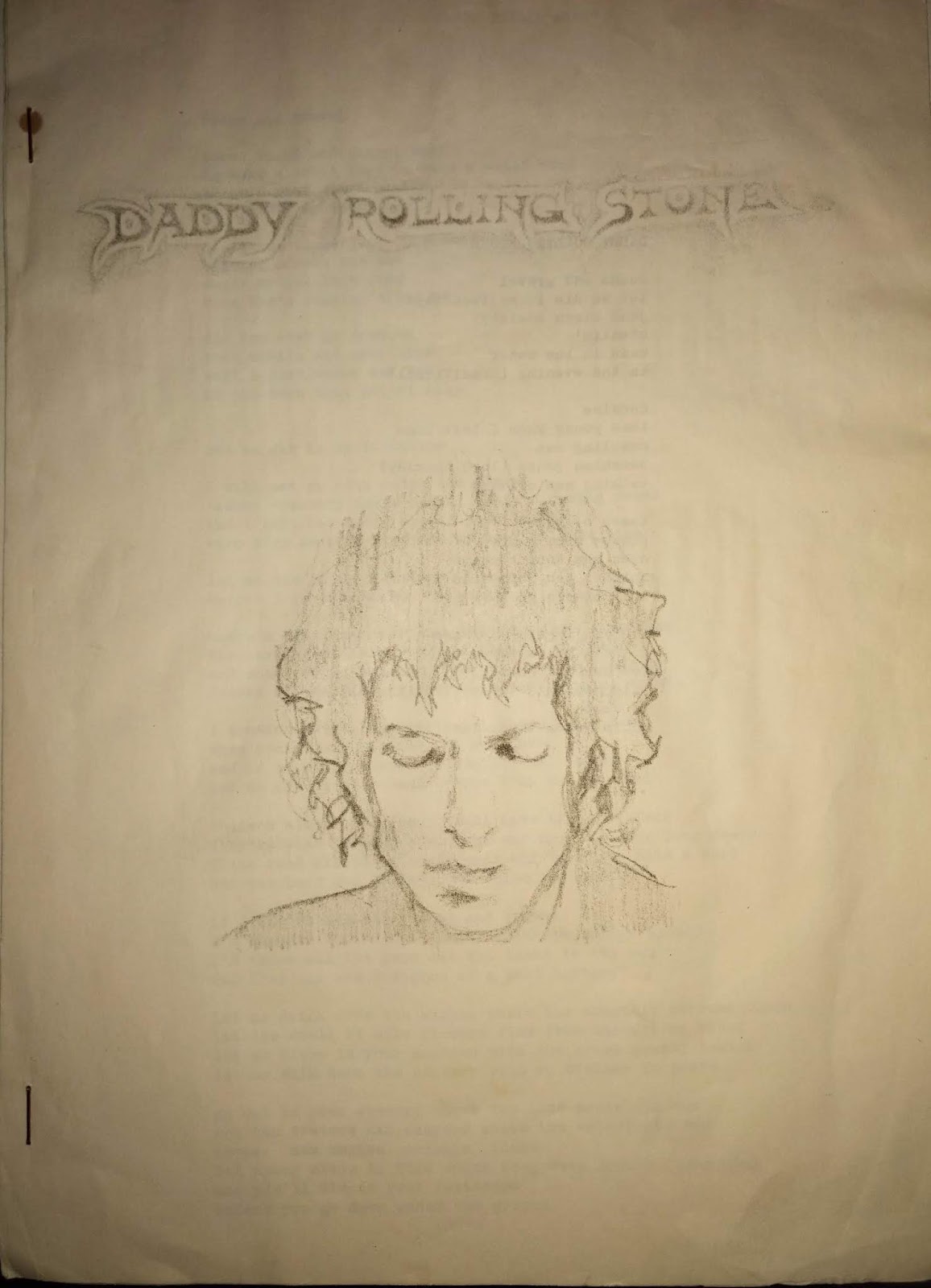
I got this 1969 or 1970 Bob Dylan bootleg from a record shop in Leiden. It's a great copy with very few hairline marks, and includes the original artwork by Dutch cartoonist and illustrator Peter Pontiac and original lyric booklet. All housed in an unmarked white sleeve, as can be expected for an illegally marketed product (even now, it's banned from sale in discogs). It's a collector's item, even though the contents are not the valuable rarities they once were: Dylan has recently been making his legendary archive of unreleased recordings available at an incredible rate: his official Bootleg Series is reaching now number 14, not mentioning unnumbered releases like Live At The Gaslight 1962 and various other copyright-free demos and live recordings from 1961-1962, all now available in superior quality. No, I bought it thinking about what it represented at the time of its release. Remember, Dylan retired from the public eye after his motorcycle accident in 1966. Up to then, people were looking forward to his next record as if he was a prophet pointing the way. When the psychedelic revolution came, instead of leading, he disappeared into a cabin with The Hawks (later renamed The Band) to make a bunch of recordings he initially left on the shelf, while the two albums he released in 1967 (John Wesley Harding) and 1969 (Nashville Skyline) were acoustic folk and country in stark contrast to what he had been doing before his accident and what his fans expected (and wanted) to hear. Which is when, in July 1969, rock's very first bootleg album appeared. It became known as the Great White Wonder because it was released in an unmarked white sleeve. Later editions came stamped with the title but still no artist name on. About half of it consisted of acoustic demos and solo recordings made in a Minnesota hotel room in December 1961. But what really blew people's minds were the new songs he had recorded with The Band at the Woodstock cabin in '67, and which were arguably superior to his recent LP's. Immediately other artists fell on this songwriting treasure trove: The Byrds, Jullie Driscoll, Joan Baez, Manfred Mann, and -of course- his co-conspirators The Band recorded their own hit versions many years before Dylan's own emerged (as The Basement Tapes, in 1975). GWW was quickly followed by other Dylan bootlegs, including Stealin', John Birch Society Blues andIsle of Wight Live. Drawing from all of these sources and released almost simultaneously, albeit in The Netherlands only, Daddy Rolling Stone must have been Europe's first introduction not only to these songs, but to music bootlegs in general.
LP1 contains Dylan solo acoustic demos and live recordings, while LP2 features The Band. No information is given other than the titles, but by comparing with what has been released elsewhere one can make an educated guess about the origin of these recordings. For example "Rocks & Gravel" (heavily borrowed from bluesman Mance Lipscomb) and "Let Me Die in My Footsteps" are known to have been recorded during the Freewheelin' sessions (1962) but left out of the album at the last moment. The former has officialy resurfaced in the True Detective series soundtrack, and the latter in Dylan's Bootleg Series Volumes 1 - 3, as has the talking blues "John Birch Society Blues", recorded live at Carnegie Hall at 1963 - provided of course it's the same version. A lot of the other acoustic tunes on LP1 come from the heavily bootlegged Minneapolis Party Tape, recorded in 1961 at the apartment of his activist/actress friend, Bonnie Beecher. These include the traditional "Wade in the Water" and "Stealin'", Brownie Mc Ghee's "In The Evening", Woody Guthrie's "Ramblin' 'Round", and the wonderful "I Was Young When I Left Home" (later included in The Bootleg Series Vol. 7: No Direction Home: The Soundtrack). Revd. Gary Davies' "Cocaine", Lord Buckley's "Black Cross" and the talking blues "Hezekiah Jones" were probably recorded at The Gaslight café in 1962 (the whole concert was officially released in 2005, initially only available to buy at... Starbucks). Two songs ("Cocaine","New Orleans Rag") are cut short, signifying that they have been lifted off another bootleg, Stealin', where they were also edited. Unlike the stark solo performances on disc 1, the songs on disc 2 are very familiar: recorded with the help of The Band at that Woodstock cabin, they include some of Dylan's best known songs, then appearing for the first time.
The lyric booklet
The poetry is as excellent as ever, while the music draws from all kinds of American tradition: folk, blues, soul, country and rock. The performances here may not be as fleshed out as the ones appearing in the official release but they still sound full, with The Band all playing with gusto and singing together with Dylan. His great song of hope and redemption "I Shall Be Released", sung from a prisoner's perspective, has a gospel feel. "Open The Door Homer" is warm folk rock, "Tears Of Rage" a soulful ballad, and "Please Mrs. Henry" a drunken bawdy tune. "Nothing Was Delivered" sports some bluesy piano and guitar, while the mystical "This Wheel's on Fire" is dominated by Garth Hudson's churchy organ. All of the songs have a singalong campfire quality to them, which is even more evident in the more country-ish "You Ain't Going Nowhere" and "Too Much of Nothing". The sound quality is generally below par, but otherwise the versions here do not depart too much from the ones officially released later. Three songs probably come from Dylan and The Band's live appearence in the Isle Of Wight festival in '69: the traditional ballads "Wild Mountain Thyme" and "Minstrel Boy", and a band version of Dylan's "To Ramona", originally a solo number from his '64 album Another Side Of Bob Dylan. Such was the quality of these unreleased songs that they were immediately snatched by other artists who had hits with them, but the importance of them appearing out of nowhere in an unmarked sleeve to be sold under the counter in '69 is easy to forget now that they've been available in better form for decades. As a testament to that age, bootlegs like this and Great White Wonder remain valuable and worth spending the extra penny to add in one's collection.
***** for I Shall Be Released
**** for Let Me Die in My Footsteps, I Was Young When I Left Home, Tears of Rage, Please Mrs. Henry, Open the Door Homer, Nothing Was Delivered, This Wheel's on Fire, You Ain't Going Nowhere, Wild Mountain Thyme, Minstrel Boy
*** for Rocks & Gravel, John Birch Society Blues, Stealin', Wade in the Water, In the Evening, Cocaine, Ramblin' 'Round, Black Cross, To Ramona
** for Hezekiah Jones, New Orleans Rag
With the possible exception of his '66 "Judas!" concerts, no Dylan tour has received as much attention as the 75/76 Rolling Thunder Revue. Conceived as the modern equivalent of a travelling theater troupe, it was packed with guests from the musical, thespian and literary world, high on drama and -allegedly- a unique experience of aural pleasure. One has to appreciate how high the expectations were for the audio document of the tour to really comprehend why this underwhelming live album immediately became Dylan's most derided LP. The general consensus seems to be that, by the end of the tour i.e. the time of the recording, the original euphoria had been replaced by tiredness and nerves. Dylan certainly sounds cranky, if not malicious. This contributes to a horrible version of his tender ballad "Lay Lady Lay", but fits the opening "Maggie's Farm" perfectly. It's as raucous and wild as the lyrics demand and, unfortunately, the only song in this collection featuring Mick Ronson's dynamic glam rock guitar - the rest of the band being mostly American folkies. "One Too Many Mornings" sounds fleshier with a full band. Scarlet Rivera's violin especially is a highlight of the tour, just as it was of Dylan's contemporary LP "Desire". "Oh, Sister" is the only song from that album present here, thankfully sporting a relatively warm vocal delivery. "Stuck Inside of Mobile..." rolls along nicely in a similar pace to the original, while "I Threw It All Away" is presented in a rather lackluster version. Which leaves us the three "Blood On The Tracks" songs which give the tone for "Hard Rain". Now I know it's considered Dylan's 70's masterpiece, but I was never crazy about B.O.T.T. People consider it heart wrenching, emotionally naked, the ultimate document of a disintegrating relationship. It may be all that, but musically the songs are over-long with too many verses and kinda monotonous. Thankfully each song included here is given a different approach: "You're A Big Girl Now" has a sensitive vocal with beautiful and poignant instrumental playing, while "Shelter from the Storm" is sped-up and transformed into arocker sung with conviction and passion. The closing "Idiot Wind" seems to be most people's favorite, Dylan spitting his words as viciously as the song's acerbic lyrics command. I get it, it's like a powerful scene from a play where the central character finally cracks up and spills his repressed emotions, shocking everyone with the intensity of his hate: "Idiot wind/ blowing every time you move your mouth". Not a sentiment I care for, and at 10 minutes it's still way too long. To be fair "Hard Rain" isn't worth its bad rep. Dylan's vocals are ragged but sung with passion, and if the live versions sound more clattered or inferior to the original ones at least they're sufficiently different to be interesting. Meanwhile, in 2002 Dylan released hitherto unheard excellent performances from the first leg of the Rolling Thunder Revue as part 5 of his Bootleg Series. There's almost no overlap (with the exception of "Oh, Sister") which means that you can use both albums to compile a 30-song, 3-hour extravaganza, close your eyes and pretend you're there in person.
**** for Maggie's Farm, Shelter from the Storm
*** for One Too Many Mornings, Stuck Inside Of Mobile With The Memphis Blues Again, Oh Sister, You're A Big Girl Now,Idiot Wind
This is a Dylan LP you rarely hear about, apparently one his most forgettable. Granted, none of his live albums is of earth shattering importance - with the possible exception of the 1966 bootleg Royal Albert Hall Concert - which, as we learned when it was officially released with a 30-something years' delay, was actually not recorded at the Royal Albert Hall after all. But some of his live albums are, if not famous, notoriously disappointing: Hard Rain an underwhelming document of a momentous tour, Dylan & The Dead the collective nadir of two legends. Real Live, on the contrary, is completely inoffensive, thus utterly forgettable. It was recorded during his 1984 tour of UK and Ireland, and features a predominately English band [Mick Taylor (Rolling Stones) on lead guitar, Ian McLagan (The Faces) on keyboards, Colin Allen (Stone The Crows) on drums, and American Greg Sutton on bass]. The song selection and the lean, muscular arrangements are a direct reference toDylan's Sixties heyday. Maybe his voice, never a fine instrument, here sounds more nasal and whiny than it did back then, but at least he sings like he means it.
The LP gets off to a flying start with "Highway 61 Revisited" and an incendiary "Maggie's Farm", Mick Taylor proving once again that he's the best guitarist The Stones ever had (sorry Keith!). His bluesy licks even elevate the relatively bland mid-tempo material from Dylan's latest album "Infidels" ("I and I", "License to Kill"). The acoustic solo numbers (just voice, guitar and harmonica) have a nostalgic air: On "It Ain't Me Baby" the audience joins in the chorus, while "Tangled Up In Blue" features changed lyrics which created a minor buzz with Dylanologists at the time. "Girl From The North Country" and "Ballad Of A Thin Man" stick close to the originals, while "Masters Of War" is the only track with a radically different arrangement. I like the faster tempo and cutting guitar, but I miss the original's sneering vocal delivery. It's as if Dylan disapproves of these masters of war, when in the older version he sounded like he hated their guts. Great rocking version nevertheless! The record closes with Carlos Santana from the support act joining the band for an fiery performance of "Tombstone Blues". It all adds up to a decent, enjoyable album few would object to - yet the live versions neither surpass the studio ones, nor are sufficiently different to give you something to write home about. I might have already forgotten about it if it wasn't for this nagging question: just who is the black bass player who takes pride of place in the inner sleeve photos? He's neither a member of Dylan's band, nor Santana (obviously). Does anyone know?
**** for Maggie's Farm, Masters of War, Tombstone Blues
*** for Highway 61 Revisited, I and I, It Ain't Me, Babe, Tangled up in Blue, Ballad of a Thin Man, Girl from the North Country
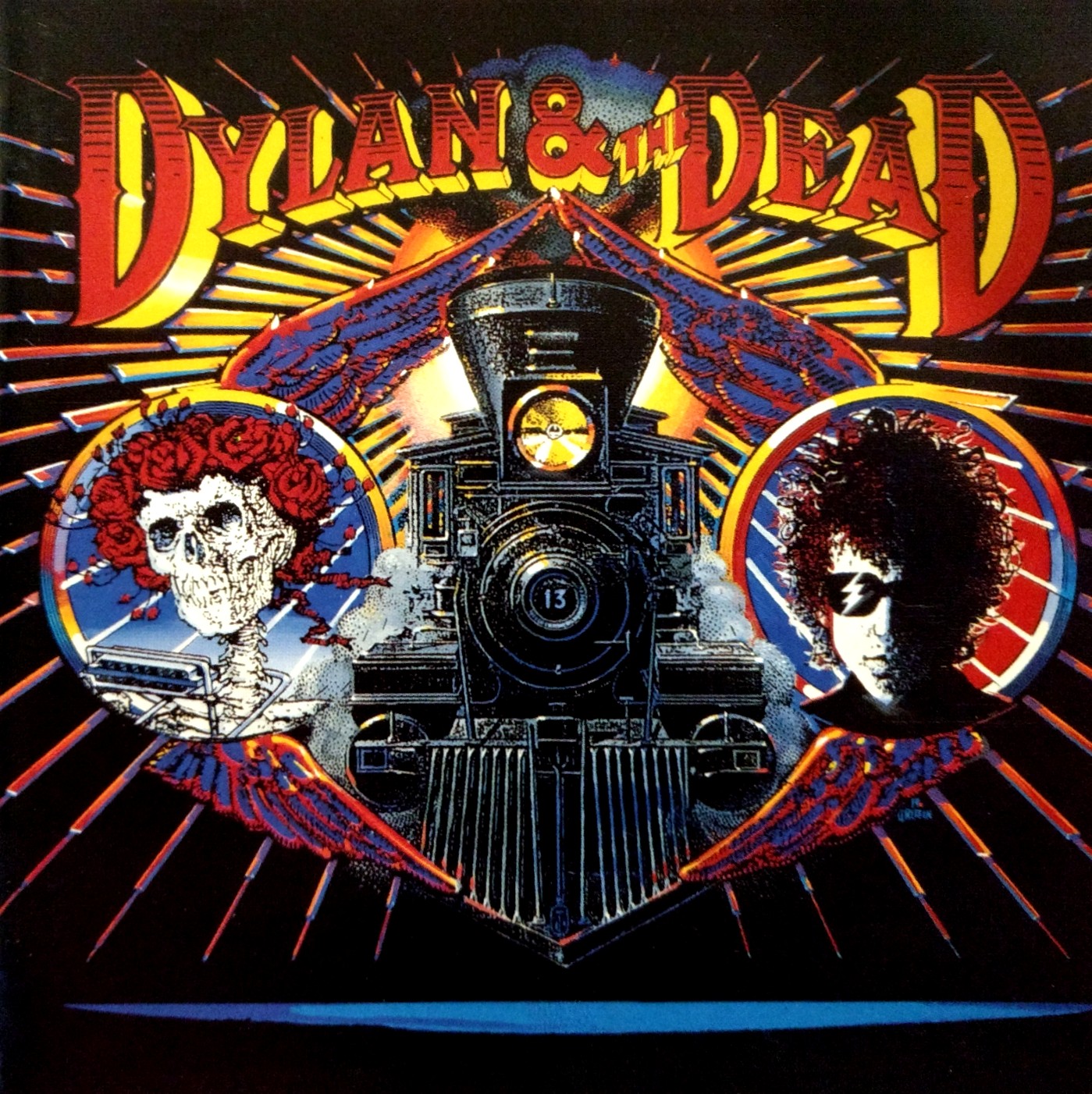
I took the advantage of my recent visit to Utrecht's Mega Record and CD Fair to buy some of Dylan's worst albums on CD. Why the worst? you ask. Why do you think? Because I already have his masterpieces, his critically acclaimed and his plain good ones. Time to buy the rest to have the complete discography and an overview of the artist's trajectory. Why on CD? you ask. Duh! because it's cheap! This vinyl LP for example is quite pricey since, in the crazy times we're living, the display of a Dylan vinyl in your living room -preferably casually left lying around- is a sign of sophistication, Nobel prize and all! Who cares what "Dylan and the Dead" sounds like when it has such a cool cover? It's not like you're going to listen to it! Incidentally, I read in a study that 40% of vinyl buyers never listen to the albums they buy (I forget where the sample was taken from, it must have been a real hipster place). Sounds unbelievable - yet often people who aren't surprised to see me carrying vinyl LP's ask me after a short conversation whether I actually own a record player. Duh! what did you think? that I just sit and look at them? Well, maybe I do sometimes, but that's none of your business! It's just that, just by looking at records, the music comes alive in my head. But of course I play them regularly too.
Back to the subject of Dylan's less loved albums - specifically the live ones. For some reason, his official live releases gain only fair-to-bad reviews while every new installment of the Bootleg Series is hailed like a lost treasure. I always wondered what is the reason. Was Dylan so daft that he released the sub-par recordings and kept the good ones on his shelf? Or were the expectations at the time of their release too high, resulting to bad or mediocre reviews? Can't trust reviewers, I have to listen for myself. For example, I happen to love one of Dylan's most maligned live recordings "Live At Budokan". The way he reinvented his songs in that set was a source of amazement, even if the new versions were not as good as the originals. So I had high expectations of his cooperation with The Grateful Dead. How would it affect the songs? And how can the pairing of America's greatest songwriter and a band that has consistently proved capable of onstage magic possibly produce a bad result? Well, first of all, together with Dylan the songwriter you get Dylan the singer. Never a great vocalist, his performance here is particularly weak. I saw him live around the same period (with his regular band) and he also sounded bored and disinterested in his own songs. The Dead take a back seat, following Dylan's lead instead of feeding off each other's energy like they usually do in their own concerts. As a result, on tracks like "Queen Jane Approximately" and "Joey" they sound asleep and playing on autopilot. Nobody's favorite Dylan songs, their inclusion would be justified only if the performance was especially strong. Unfortunately that's not the case. Jerry Garcia's fluid guitarwork is probably the record's only redeeming feature - save of course for the songs. Even so, a classic love song like "I Want You" is sung by Dylan as if he wants to punish his older self by butchering his songs. The band plays it a bit too fast, but that's the least of its problems. On the bright side the two songs from his "Christian" period "Slow Train" and "Gotta Serve Somebody" roll along with a relaxed country funk rhythm, almost J.J. Cale-like, while "All Along the Watchtower" is given an energetic hard rock twist that suits it well. The record closes with crowd pleaser "Knockin' On Heaven's Door" which, while not actually bad, is inferior to other versions - even Guns 'n' Roses did a better job with it. And that's all - just 7 songs of which only 3 or 4 are any good. I know they played more than 20 songs in that tour, some multiple times and some only once or twice. So the compilers had a lot of material to choose from, I just can't believe this is the best they could do. I mean there's stuff off that tour on youtube that would sound way better than what's in here, if properly cleaned and processed - so yes, maybe Dylan is so daft (or such a sadist) to keep the good stuff on the shelf and release anything he fancies for whatever reason. I mean, if there's one musician whose mind is impossible to fathom, that's Dylan. Maybe it's time for another installment of the Bootleg Series to restore the reputation of this line-up. Until then, this is a tour souvenir that will not satisfy the fans of either Dylan or The Grateful Dead. Even if, like me, you're prepared to acknowledge some virtues, it is at best an unnecessary record.
*** for Slow Train, Gotta Serve Somebody, All Along The Watchtower, Knockin' On Heaven's Door