I'm in the process of re-listening and re-evaluating my record collection, in no particular order. I'll be sharing the results of my evaluation and thoughts on the music in this blog.
Today (I'm writing on a Tuesday) I was free from work and had nothing planned for the day, so I started getting random records out to play. My eye fell on this double Bob Dylan LP entitled The Real Royal Albert Hall 1966 Concert. Of course I had listened to it a few times when I bought it, then put it aside; it sounded pretty good to me, but I was overly familiar with the songs, both from the studio versions and from the other live album recorded during the same tour: The Bootleg Series Vol. 4: Bob Dylan Live 1966, The "Royal Albert Hall" Concert (note the quotation marks). The story of the latter one is a huge part of Dylan's mythology, and so well-known it feels unnecessary to recount it again - yet, just like with well-worn jokes, there's always a first time one hears something, and this may be yours. Here's the story in a nutshell: a few short years into his career, Dylan had become the unwilling poster boy of protest folk. Resenting this, he strove for artistic freedom by abandoning political lyrics and going electric. The live unveiling of this new direction happened in July 1965 at the high profile Newport Folk Festival; after a short acoustic introduction, Dylan brought onstage The Paul Butterfield Blues Band for an electric set that shocked the conservative audience to their core. According to legend, veteran folkie Pete Seeger cut the electrical wires with an axe to stop Dylan from corrupting the audience's sensitive ears with his musical onslaught. This detail, which had been reported in press and endlessly repeated throughout the years, is untrue; yet it does convey the reaction of the folk establishment: Seeger has admitted to feeling offended by the sheer volume of the music, at the time the loudest anyone had experienced at a festival, and frustrated that the lyrics were impossible to hear. The latter has of course become a permanent fixture of Bob Dylan concerts; the few times I saw him perform I only got to recognize which tune was playing when he was already halfway through the song. Anyway, the controversy followed Dylan throughout his 1965-1966 tour. During this tour Dylan would play two sets, an acoustic one reminiscent of the "old" folkie, and a loud electric one, backed by rockers The Hawks, soon to be renamed The Band. Audiences politely applauded during the acoustic set, but had diverse reactions to the electric one: as word had gotten out, some fans came to the concerts not only to hear their old favorites but also to boo him for abandoning traditional folk and protest music. A few of the concerts were recorded, and the electric part of one of them came out in bootleg form around 1970. According to many, myself included, this is the ultimate Bob Dylan live album, yet it wasn't officially released until 1998 in the cader of the Bob Dylan Bootleg Series project. It was recorded at Manchester Trade Hall on May 17, but the bootleg was erroneously entitled Royal Albert Hall. Since it was already known thusly, the company also used "Royal Albert Hall" -albeit in quotes- for the official release title. Aside from the band's spirited playing (Robertson's electrifying guitar fills in particular) and the fact one gets carried away by the youthful enthusiasm and conviction (Dylan had just turned 25, Robertson was 23) the album is famous for an exchange between Dylan and an audience member: between songs, a punter shouts at Dylan "Judas!" This is greeted by the audience with laughter and applause - to which the singer replies "I don't believe you... You are a liar." and then turns to his guitarist with the following instruction "Play fucking loud!" as the band launches into a tremendous performance of "Like A Rolling Stone". This here is a piece of rock history captured on tape - it alone would be worth the price of admission, but of course what we have here is much more: an amazing document of Dylan live in his prime. And don't let the whole back story about him going electric distract you from listening to the acoustic disc, either: containing solo performances of hits ("She Belongs To Me", "It's all over now, Baby Blue", "Mr. Tambourine Man") and marathon song-poems ("Visions of Johanna", "Desolation row") this is the quintessential folk troubadour experience - just voice, acoustic guitar and harmonica.
As for The RealRoyal Albert Hall 1966 Concert, this came out on the semi-centennial anniversary of the concerts. As I said, I just listened to both albums back to back, track for track. It's extraordinary, how similar they sound: recorded with the same musicians within a few days from each other, they follow the same arrangements and identical setlist - deriving mostly from the three landmark albums Dylan had recently recorded, all in a space of 18 months (Bringing It All Back Home, Highway 61 Revisited and Blonde On Blonde). Which isn't to say that the performances are identical; seeing as Dylan wasn't a conventionally qualified vocalist, he probably couldn't sing a tune the same way twice if he tried. They're just very similar and -IMO- equivalent with each other. Don't expect me to get into details like in-between song banter, or which concert has a better guitar or harmonica solo here or there. I do have a slight preference for the London acoustic set and Manchester electric one, but in truth they are both fantastic in terms of performance and sound quality. I guess that, for everyone but the biggest fans, The "Royal Albert Hall" Concert (in quotes) is essential because of the history it caries, while The RealRoyal Albert Hall 1966 Concert is, however good, similar enough to be superfluous. I for one am very happy to have the former on CD (it is ridiculously rare on vinyl) and the latter on double vinyl; in this way I can choose which one to play depending on whether I feel like getting up to change sides or not. I just can't believe it took me this long to sit down for a combined listen.
P.S. Away from home, I re-listened to some tracks from the Manchester concert on Spotify to check something before posting, and guess what I discovered? The notorious Judas incident has been edited out of the Spotify version of the album. Could they have been so offended by Dylan using the F_ word? Hard to believe, when other singers (not to mention rappers) on the platform use much coarser language. This is another reason why streaming sucks, people! Vinyl or CD, that's the way to go!
The "Royal Albert Hall" Concert:
***** for It's all over now, Baby Blue, Desolation row, Just like a woman, Tell me Momma, I don't believe you (She acts like we never have met), Baby let me follow you down, Leopard-skin pill-box hat, Ballad of a thin man, Like a rolling stone
**** for She belongs to me, 4th time around, Visions of Johanna, Mr. Tambourine Man, Just like Tom Thumb's blues, One too many mornings
The Real Royal Albert Hall 1966 Concert:
***** for 4th time around, It's all over now Baby Blue, Desolation row, Just like a woman, Mr. Tambourine Man, Baby let me follow you down, Leopard-skin pill-box hat, Ballad of a thin man, Like a rolling stone
**** for She belongs to me, Visions of Johanna, Tell me Momma, I don't believe you (She acts like we never have met), One too many mornings
I found this and a bunch of other rockabilly LP's at my neighborhood record store on sale for 3-for-€5. It is a beautiful French 1978 compilation on red vinyl containing songs originally recorded between 1959-1963. Just 12 tracks, 8 less than the UK version but all the hits are here. So I thought I'd get it, since I had nothing from The Hawk. My first contact with him was almost 30 years ago, watching "The Last Waltz" on Greek TV. At that point I was familiar with a few of the guests (Dylan, Van Morrison, Neil Young, Muddy Waters) but neither Hawkins nor The Band. More than his colorful appearance in the concert, it was the anecdotes of life on the road with him by the members of The Band that made an impression on me. And it's actually that stint of having The Band (who were then called simply The Hawks) as backing musicians that people mostly remember about Ronnie Hawkins - except from Canada where he was huge, a national rock and roll hero despite being born and raised in Arkansas, USA. The warm welcome he got in that cold land resulted in Ronnie and his band constantly touring Canada, and finally permanently relocating there. In the course of these recordings (1959-1963) his band kept evolving, with only Levon Helm remaining of the original American line-up, recruiting a bunch of Canadian boys until finally settling late 1961 in the line-up that later supported Dylan and found success as The Band: Robbie Robertson, Richard Manuel, Garth Hudson, Rick Danko and Helm. The first songs here hail from 1959, and they're first-rate rockabilly, all covers (Chuck Berry, Little Richard, Leiber-Stoller) with the exception of "One Of These Days". Credit must also be given for unearthing obscure R&B track "Mary Lou" by Young Jessie and turning it into a rock'n'roll classic. Two more covers ("Honey Don't" and "Sick And Tired") from 1960 are also good but typical rockabilly, but the ones featuring the future Band are amazing. Robertson in particular, then only 20, emerges as an electric guitar genius - it'd take 3 years for the likes of Jeff Beck to catch up with him. Just listen to the two Bo Diddley covers "Bo Diddley" and "Who Do You Love", and their fantastic version of "Susie Q" (written by Ronnie's cousin, Dale Hawkins). The Hawk already had a fearsome live reputation (he wasn't nicknamed "Mr. Dynamo" for nothing), so I can only imagine how incendiary his shows were with these young guns backing him. Bob Dylan was so impressed he recruited the Hawks for his 1966 world tour, and the rest is history: There's not a lot of difference between the smokin' version of "Who Do You Love" here to Robertson playing "fucking loud" as per Dylan's instruction during the "Judas!" concert. The Hawk would go on to make many more records, both rock and country. His fame will always be eclipsed by the deeds of his former proteges The Band, but one listen to this LP proves he really is worth a place among the great rock'n'roll pioneers.
***** for Mary Lou, Bo Diddley, Susie Q, Who Do You Love
**** for 40 Days, Matchbox
*** for Dizzy Miss Lizzy, Ruby Baby, Sick And Tired, One Of These Days, Honey Don't, Kansas City
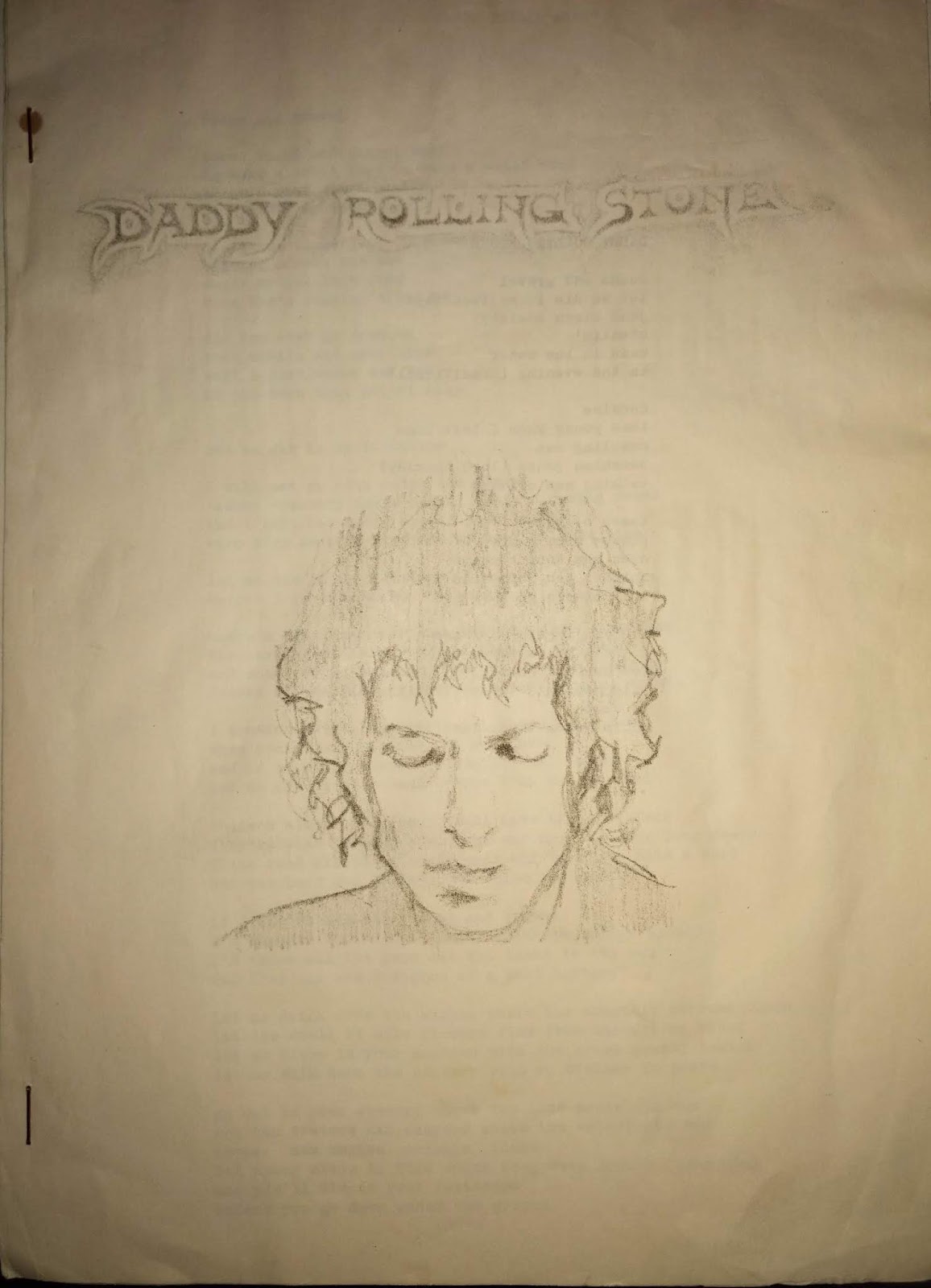
I got this 1969 or 1970 Bob Dylan bootleg from a record shop in Leiden. It's a great copy with very few hairline marks, and includes the original artwork by Dutch cartoonist and illustrator Peter Pontiac and original lyric booklet. All housed in an unmarked white sleeve, as can be expected for an illegally marketed product (even now, it's banned from sale in discogs). It's a collector's item, even though the contents are not the valuable rarities they once were: Dylan has recently been making his legendary archive of unreleased recordings available at an incredible rate: his official Bootleg Series is reaching now number 14, not mentioning unnumbered releases like Live At The Gaslight 1962 and various other copyright-free demos and live recordings from 1961-1962, all now available in superior quality. No, I bought it thinking about what it represented at the time of its release. Remember, Dylan retired from the public eye after his motorcycle accident in 1966. Up to then, people were looking forward to his next record as if he was a prophet pointing the way. When the psychedelic revolution came, instead of leading, he disappeared into a cabin with The Hawks (later renamed The Band) to make a bunch of recordings he initially left on the shelf, while the two albums he released in 1967 (John Wesley Harding) and 1969 (Nashville Skyline) were acoustic folk and country in stark contrast to what he had been doing before his accident and what his fans expected (and wanted) to hear. Which is when, in July 1969, rock's very first bootleg album appeared. It became known as the Great White Wonder because it was released in an unmarked white sleeve. Later editions came stamped with the title but still no artist name on. About half of it consisted of acoustic demos and solo recordings made in a Minnesota hotel room in December 1961. But what really blew people's minds were the new songs he had recorded with The Band at the Woodstock cabin in '67, and which were arguably superior to his recent LP's. Immediately other artists fell on this songwriting treasure trove: The Byrds, Jullie Driscoll, Joan Baez, Manfred Mann, and -of course- his co-conspirators The Band recorded their own hit versions many years before Dylan's own emerged (as The Basement Tapes, in 1975). GWW was quickly followed by other Dylan bootlegs, including Stealin', John Birch Society Blues andIsle of Wight Live. Drawing from all of these sources and released almost simultaneously, albeit in The Netherlands only, Daddy Rolling Stone must have been Europe's first introduction not only to these songs, but to music bootlegs in general.
LP1 contains Dylan solo acoustic demos and live recordings, while LP2 features The Band. No information is given other than the titles, but by comparing with what has been released elsewhere one can make an educated guess about the origin of these recordings. For example "Rocks & Gravel" (heavily borrowed from bluesman Mance Lipscomb) and "Let Me Die in My Footsteps" are known to have been recorded during the Freewheelin' sessions (1962) but left out of the album at the last moment. The former has officialy resurfaced in the True Detective series soundtrack, and the latter in Dylan's Bootleg Series Volumes 1 - 3, as has the talking blues "John Birch Society Blues", recorded live at Carnegie Hall at 1963 - provided of course it's the same version. A lot of the other acoustic tunes on LP1 come from the heavily bootlegged Minneapolis Party Tape, recorded in 1961 at the apartment of his activist/actress friend, Bonnie Beecher. These include the traditional "Wade in the Water" and "Stealin'", Brownie Mc Ghee's "In The Evening", Woody Guthrie's "Ramblin' 'Round", and the wonderful "I Was Young When I Left Home" (later included in The Bootleg Series Vol. 7: No Direction Home: The Soundtrack). Revd. Gary Davies' "Cocaine", Lord Buckley's "Black Cross" and the talking blues "Hezekiah Jones" were probably recorded at The Gaslight café in 1962 (the whole concert was officially released in 2005, initially only available to buy at... Starbucks). Two songs ("Cocaine","New Orleans Rag") are cut short, signifying that they have been lifted off another bootleg, Stealin', where they were also edited. Unlike the stark solo performances on disc 1, the songs on disc 2 are very familiar: recorded with the help of The Band at that Woodstock cabin, they include some of Dylan's best known songs, then appearing for the first time.
The lyric booklet
The poetry is as excellent as ever, while the music draws from all kinds of American tradition: folk, blues, soul, country and rock. The performances here may not be as fleshed out as the ones appearing in the official release but they still sound full, with The Band all playing with gusto and singing together with Dylan. His great song of hope and redemption "I Shall Be Released", sung from a prisoner's perspective, has a gospel feel. "Open The Door Homer" is warm folk rock, "Tears Of Rage" a soulful ballad, and "Please Mrs. Henry" a drunken bawdy tune. "Nothing Was Delivered" sports some bluesy piano and guitar, while the mystical "This Wheel's on Fire" is dominated by Garth Hudson's churchy organ. All of the songs have a singalong campfire quality to them, which is even more evident in the more country-ish "You Ain't Going Nowhere" and "Too Much of Nothing". The sound quality is generally below par, but otherwise the versions here do not depart too much from the ones officially released later. Three songs probably come from Dylan and The Band's live appearence in the Isle Of Wight festival in '69: the traditional ballads "Wild Mountain Thyme" and "Minstrel Boy", and a band version of Dylan's "To Ramona", originally a solo number from his '64 album Another Side Of Bob Dylan. Such was the quality of these unreleased songs that they were immediately snatched by other artists who had hits with them, but the importance of them appearing out of nowhere in an unmarked sleeve to be sold under the counter in '69 is easy to forget now that they've been available in better form for decades. As a testament to that age, bootlegs like this and Great White Wonder remain valuable and worth spending the extra penny to add in one's collection.
***** for I Shall Be Released
**** for Let Me Die in My Footsteps, I Was Young When I Left Home, Tears of Rage, Please Mrs. Henry, Open the Door Homer, Nothing Was Delivered, This Wheel's on Fire, You Ain't Going Nowhere, Wild Mountain Thyme, Minstrel Boy
*** for Rocks & Gravel, John Birch Society Blues, Stealin', Wade in the Water, In the Evening, Cocaine, Ramblin' 'Round, Black Cross, To Ramona
** for Hezekiah Jones, New Orleans Rag
I first became aware of Jesse Winchester through the TV series "The Wire". One of his songs soundtracked the closing of the 1st season and while I watched I made a mental note to seek out the artist. It's not included here, but I did some digging and I was convinced this is the place to start. This CD gathers his first 2 albums, recorded in Canada to which he fled to avoid the draft and the Vietnam war. His exile from the U.S. meant he remained a cult artist whose songs were to become famous by other performers. Some songs from his debut have graced the country charts covered by other artists, but the one I knew and loved forever (without knowing it was his) was "Black Dog", in its unlikelyhard rock version by Babe Ruth. Anyway, country was only one of the elements of is sound, which also embraced blues and rock and roll. His same-named debut from 1970 was produced by The Band's Robbie Robertson who also plays guitar in the album alongside another Band alumni, Levon Helm (on drums and mandolin). Opener "Payday" is a potent blues rocker with rolling boogie woogie piano. "Biloxi" and "Skip Rope Song" are introspective folk, while "Snow", "That's A Touch I Like" and "Rosy Shy" are mid-tempo country rock. The Band's influence is evident in the music, just as the nostalgia for his Southern homeland is evident in the lyrics - for instance in "The Brand New Tennessee Waltz" with its old timey country fiddle and the Byrds-y ballad "Yankee Lady" which earned him some radio play and was covered by many of his peers. "Quiet About It" and "The Nudge" are rootsy Southern rock and "Black Dog" is the odd song out. Its funereal beat and creepy organ go well with the dark lyrics and it gives off a vibe I can only compare to Dr John's voodoo Gris-gris stuff. Much as I like Jesse's soft delivery, though, Babe Ruth's Jenny Haan wins this contest - if only by sheer volume and vocal power.
***** for Black Dog
**** forPayday, Biloxi, Snow, The Brand New Tennessee Waltz,Yankee Lady, Quiet About It, Skip Rope Song,The Nudge
*** for That's A Touch I Like, Rosy Shy
The second album (from 1972) is noticeably less rock and I was prepared to like it less, but after a few listens it stuck by me. The sound is more laid-back and acoustic. Opener "Isn't That So?" and "Full Moon" mix blues and country in a relaxed way that reminds me of J.J. Cale. The album consists mainly of acoustic folk ballads, and most songs are around (or less than) 2 minutes - with the exception of the beautiful "Glory To The Day". Together with country ballad "Silly Heart" and the Creedence-like "Midnight Bus", these are the 3 songs that survived an earlier recording session with Full Tilt Boogie (Joplin's last band) and producer Todd Rundgren. Interspersed among the ballads are country ditties "Do It" and "The Easy Way" and the curious rockabilly rhumba "God's Own Jukebox". Many of Winchester's songs reference religion, but they're always good-natured and never preachy. The album also includes a couple of lullabies written for his baby, the sweet "Do La Lay" and "Lullaby For The First Born" which reminded me of early Tim Buckley. It sports acoustic percussion, flute, violin and wordless vocals. Beautiful songwriting and singing on this second album, but I'm kind of conflicted about the sparse instrumentation and short duration of the songs: on the one hand it makes them sound like underdeveloped song sketches (which they aren't) but on the other it gives them a more direct, homey feel, like he's singing at a small friendly gathering. In any case, both albums are terrific - coupled together they make an irresistible package!
**** for Isn't That So?,Dangerous Fun,Full Moon, Lullaby For The First Born,Glory To The Day,Do La Lay,God's Own Jukebox
*** for North Star, Do It,Midnight Bus,The Easy Way,Silly Heart, All Of Your Stories